 blog
5 Best Roof Cleaning Solutions for Shingles in 2026
Table of Contents
- Roof Cleaning Solutions for Shingles: Quick Comparison
- 1. Soft Wash Roof Cleaning: The Safest Solution for Asphalt Shingles
- 2. Oxygen-Based Cleaners: A Gentler Way to Remove Algae From Roof Shingles
- 3. DIY vs Professional Roof Cleaning: What Homeowners Should Weigh
- 4. Soft Wash Roof Cleaning Benefits: Why Homeowners Choose This Method
- 5. Eco-Friendly Roof Cleaning Solutions for Shingles
- How Often Should You Clean Your Roof Shingles?
- Frequently Asked Questions
Last Updated: September 28, 2026
Roof Cleaning Solutions for Shingles: Quick Comparison
Roof cleaning solutions for shingles fall into two main categories: soft washing and oxygen-based cleaners. Soft washing uses low pressure and specialized cleaning solutions to safely remove algae, moss, and dirt without damaging asphalt shingles. Oxygen-based cleaners rely on sodium percarbonate to gently lift stains over time.
The right approach protects your shingles while restoring curb appeal.
Here's what matters most:
| Solution | Best For | Method | Risk to Shingles |
|---|---|---|---|
| Soft wash cleaning | Most asphalt shingle roofs | Low pressure + cleaning solution | Low |
| Oxygen-based cleaners | Mild algae, DIY-friendly | Spray and wait | Low |
| DIY pressure washing | Concrete, not shingles | High pressure | High |
| Professional soft wash | Heavy algae, moss, large roofs | Trained application | Low |
| Eco-friendly soft wash | Sensitive landscaping | Biodegradable solutions | Low |
The five solutions we cover below range from gentle DIY options to full professional service. Each works best in different situations.
1. Soft Wash Roof Cleaning: The Safest Solution for Asphalt Shingles
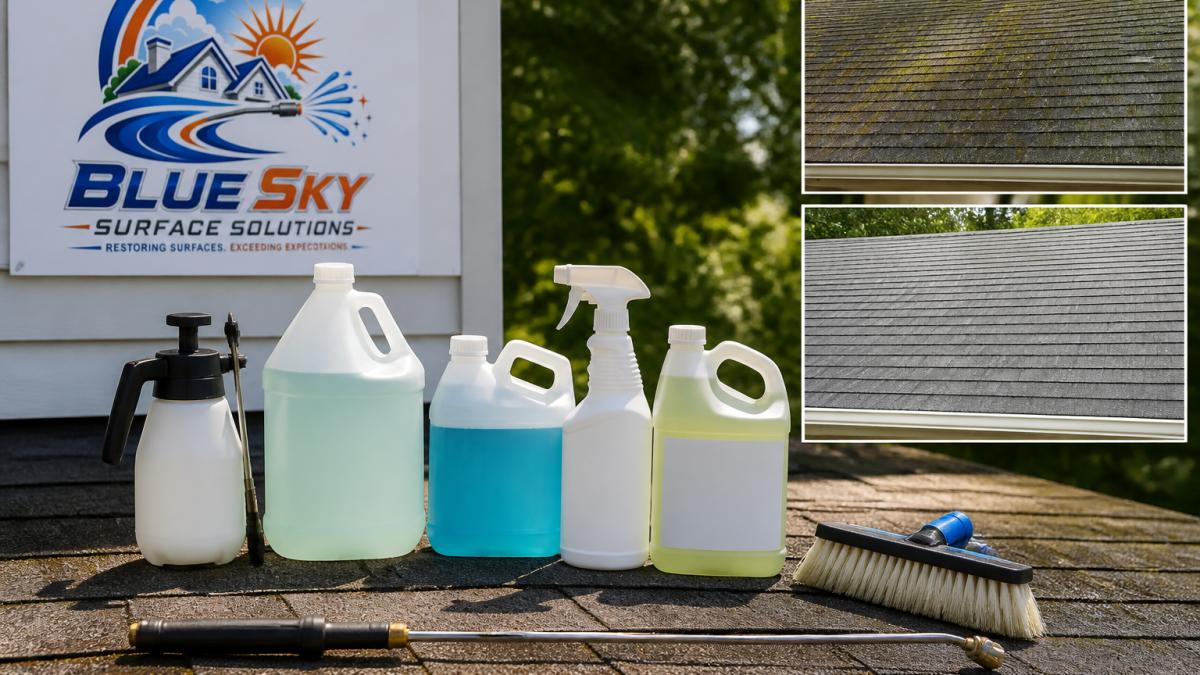
Soft wash roof cleaning is the safest method for asphalt shingles because it uses low water pressure combined with specialized cleaning solutions to kill algae and moss at the root. Unlike pressure washing, soft washing won't strip the protective granules that shield your shingles from sun and rain.
The process works in stages. A technician applies a cleaning solution that breaks down organic growth, lets it dwell, then rinses with gentle pressure. This kills algae rather than just blasting it off the surface, so stains stay gone longer. The Asphalt Roofing Manufacturers Association guidance on roof cleaning recommends this low-pressure approach for asphalt shingles.
What most homeowners don't realize: the black streaks on their roof aren't dirt. They're algae feeding on limestone filler in the shingles. Pressure washing spreads the spores and removes granules, which accelerates the problem.
For homes with heavy algae or steep rooflines, professional soft washing is the practical choice. Professional soft washing can clean roofs without voiding shingle warranties.
2. Oxygen-Based Cleaners: A Gentler Way to Remove Algae From Roof Shingles
Oxygen-based cleaners use sodium percarbonate to remove algae from roof shingles without harsh bleach. When mixed with water, the powder releases oxygen that lifts organic stains over several weeks. These cleaners work best on mild algae and light discoloration.
The trade-off is patience. You spray the solution, then wait. Rain does most of the rinsing work. Results take longer than soft washing, but the process is gentle on shingles and surrounding plants.
A few practical notes:
- Apply on a calm, overcast day to avoid drift onto landscaping
- Wet plants before and after application to protect them
- Expect full results in two to four weeks, not hours
- Reapply if heavy staining persists after the first rain
For homeowners who want a low-intervention option, oxygen cleaners are a reasonable starting point. If stains return quickly or the roof is steep, call a professional instead.
3. DIY vs Professional Roof Cleaning: What Homeowners Should Weigh
DIY vs professional roof cleaning comes down to three factors: safety, results, and warranty protection. Walking a roof is the leading cause of falls for homeowners, and mistakes with pressure or chemicals can damage shingles permanently. The useful question isn't "can I do this?", it's "which parts of this job can I safely own, and which parts require a trained applicator?"
Here's a simple risk-assessment framework you can run from the ground before you touch a ladder:
Step 1, Measure the pitch. Stand back and look at the roof line. If you can't comfortably walk up and down a ladder while carrying a sprayer, the job is already past the DIY line. Anything steeper than a low-slope walkable roof is a professional job, full stop.
Step 2, Identify the growth. Light gray or black streaking is usually algae. Green fuzz in shaded valleys is moss. Moss holds moisture against the shingle mat and lifts edges, so it's a different risk category than algae. If you see moss, treat it as a professional job, moss removal often involves gentle scraping or hand-pulling that's easy to get wrong from a ladder.
Step 3, Check your warranty paperwork. Most asphalt shingle manufacturers require that cleaning be done in a way that doesn't damage the shingle surface. High-pressure washing leaves visible granule loss, and manufacturers can and do deny claims when they see it. Before you spray anything, read the maintenance section of your shingle warranty.
Step 4, Look at what's below the roof. Landscaping, gutters feeding rain barrels, pets, kids' play areas, and nearby vehicles all change the chemical and rinse plan. A DIY sprayer gives you less control over drift than a professional soft wash system with a downstream injector.
Step 5, Decide who owns the risk. If any of the first four steps made you hesitate, that's your answer.
DIY makes sense for:
- Single-story, low-slope roofs you can see entirely from the ground
- Light algae with no moss and no heavy staining
- Homeowners already comfortable working on ladders and roofs
- A small test area you can monitor for a few weeks before committing
Professional service makes sense for:
- Two-story or steep roofs
- Heavy moss, lichen, or widespread staining
- Homes under a shingle warranty you want to keep intact
- Roofs with complex valleys, dormers, or skylights
- Anyone uneasy with heights, or anyone who'd be working alone
If you're on the fence, the cheapest move is a professional inspection. Contact us for a professional inspection. We can assess whether your roof needs service now or can wait, and provide a quote for a soft wash that protects your shingles and your warranty.
4. Soft Wash Roof Cleaning Benefits: Why Homeowners Choose This Method
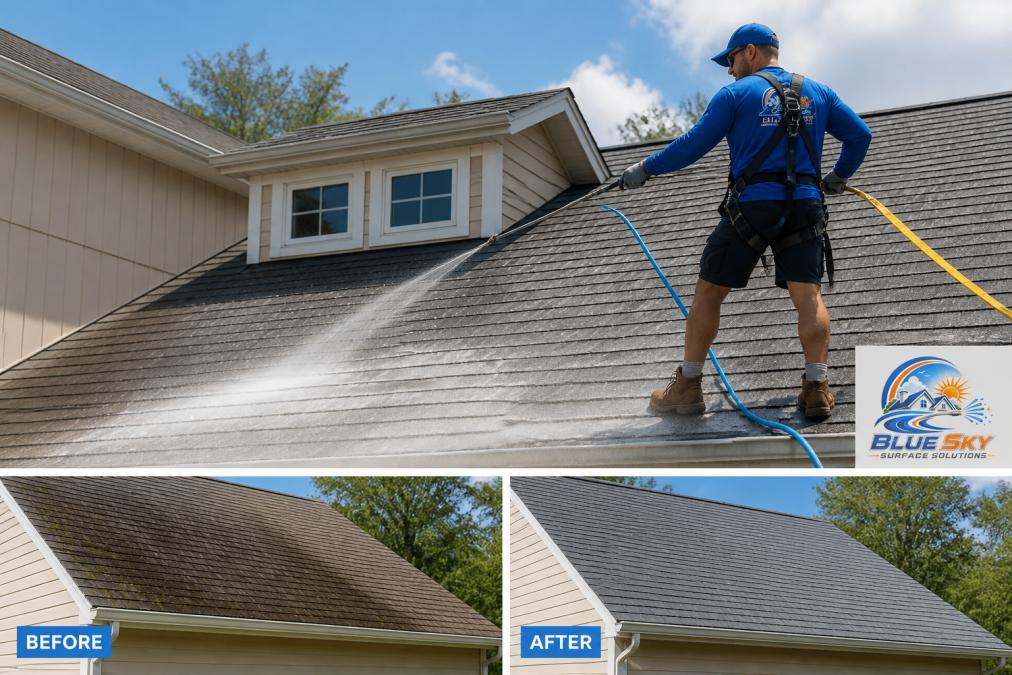
Specific advantages include:
- Kills algae and moss at the source instead of just removing surface stains
- Preserves shingle granules, which protect against UV damage
- Safe for gutters, siding, and nearby plants when applied correctly
- Results last longer than pressure washing because the growth is dead, not just displaced
5. Eco-Friendly Roof Cleaning Solutions for Shingles
Eco-friendly roof cleaning solutions for shingles use biodegradable detergents and lower-toxicity ingredients that break down without harming soil or waterways. These options matter when your roof drains near gardens, gutters feed rain barrels, or you have pets and kids in the yard.
Look for:
- Sodium percarbonate-based powders instead of straight bleach
- Plant-safe surfactants
- No added fragrances or dyes
- Clear instructions for protecting landscaping
- A label that states the dilution ratio, so you can control strength
The real trade-offs, stated plainly:
- Speed. Bleach-based soft washing kills algae within minutes. Percarbonate takes days to weeks, and full results often show after the first good rain.
- Cost per job. Percarbonate powders usually cost more per square of roof than a bleach-and-surfactant mix, because you need a higher concentration to get comparable results.
- Effectiveness on heavy growth. On thick moss or decades-old staining, eco-friendly products often need repeat applications. A professional soft wash may be the more practical first step, with eco-friendly maintenance afterward.
- Runoff behavior. "Biodegradable" doesn't mean "safe to dump in a storm drain." Most municipalities prohibit discharging any cleaning runoff, eco-friendly or not, into storm drains, because those drains typically lead straight to creeks and rivers without treatment. Plan your rinse water accordingly.
How Often Should You Clean Your Roof Shingles?
Most asphalt shingle roofs need cleaning every two to three years, or sooner if you notice dark streaks, moss patches, or staining that returns quickly after rain. Homes surrounded by trees or in humid climates often need annual attention.
Signs it's time to schedule cleaning:
- Black or green streaks spreading across shingles
- Moss or lichen growing in shaded areas
- Granules collecting in gutters (a sign of surface breakdown)
- Visible staining on north-facing slopes
Frequently Asked Questions
What is the safest way to clean asphalt shingles?
The safest method is soft washing, which uses low pressure and specialized cleaning solutions to remove algae and dirt without damaging shingles. Avoid pressure washing, as high pressure can strip granules and void warranties. For DIY, a garden hose, soft brush, and oxygen-based cleaner work well. Professional soft wash roof cleaning is recommended for steep or heavily soiled roofs to ensure safety and effectiveness.
Does bleach damage roof shingles?
Bleach can damage shingles if used improperly. It may discolor them, degrade asphalt, and harm nearby plants. However, when diluted correctly and applied by a professional, bleach-based solutions can effectively kill algae without causing damage. Always follow manufacturer guidelines and consider oxygen-based cleaners as a gentler alternative. For best results, consult a professional roof cleaning service.
How often should you clean your roof shingles?
Most roofs benefit from cleaning every 2 to 3 years, depending on climate and tree cover. In humid areas, annual cleaning may be needed to prevent algae and moss. Inspect your roof each spring for dark streaks or debris. Regular maintenance extends roof life and preserves curb appeal. If you notice heavy growth, schedule a professional assessment to determine the best approach.
Can I use a pressure washer on my roof?
No, pressure washing is not recommended for asphalt shingles. The high pressure can strip protective granules, crack shingles, and void manufacturer warranties. Instead, use a soft wash system or a garden hose with a gentle cleaner. For stubborn stains, hire a professional who uses low-pressure techniques. This protects your roof and ensures a thorough clean without damage.
Roof cleaning isn't a job to guess at. The wrong method costs more than the right one, and shingle damage rarely shows up until it's expensive. Blue Sky Surface Solutions provides professional soft washing, house and gutter cleaning, and exterior care across Hamilton County, with a team trained to protect your roof while restoring its appearance. Request a free quote and see what a properly cleaned roof does for your home's curb appeal.