 blog
5 Best Tree Trimming Safety Gear for Homeowners
Table of Contents
- Quick Comparison: 5 Best Tree Trimming Safety Gear Picks
- How We Ranked This Tree Trimming Safety Equipment
- 1. Arborist Helmet With Face Shield: Head and Face Protection
- 2. Safety Glasses and Goggles: Eye Protection From Flying Debris
- 3. Cut-Resistant Gloves: Hand Protection for Branch Cutting
- 4. Chainsaw Chaps for Homeowners: Leg Protection That Meets ASTM F1897
- 5. Steel-Toed Boots and Ear Protection: Footing and Hearing Safety
- DIY Tree Trimming Safety Tips: Matching Gear to Task and Hazard
- Frequently Asked Questions
Last Updated: October 6, 2026
Quick Comparison: 5 Best Tree Trimming Safety Gear Picks
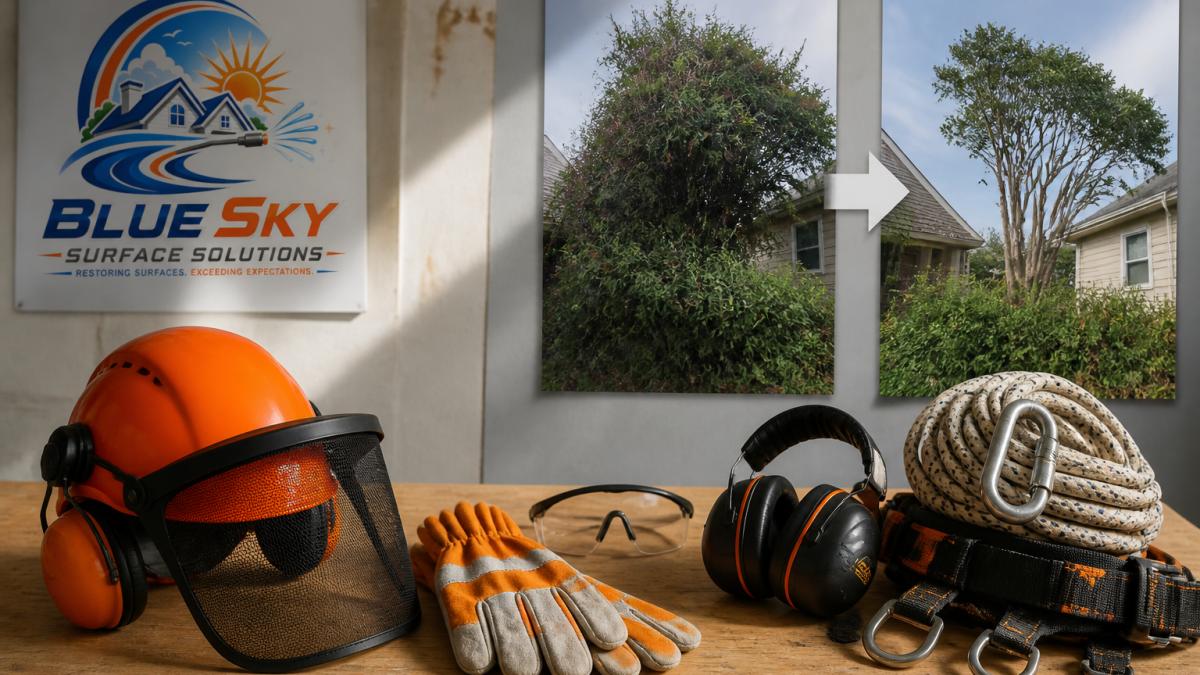
Tree trimming safety starts with the gear you put on before you touch a saw. We work around trees across Hamilton County all year, and the injuries we hear about most often come from homeowners skipping basic protection.
Below, we rank the five pieces of tree trimming safety gear that matter most for homeowners, explain how we judged them, and show you which items fit which jobs.
Tree trimming safety equipment is the set of protective items a person wears and uses while cutting branches, including head, eye, hand, leg, and foot protection plus the cutting tools themselves.
How We Ranked This Tree Trimming Safety Equipment
We ranked each item on four factors: how much injury risk it removes, how well it fits an occasional user, how comfortable it stays over a full afternoon, and how easy it is to inspect and maintain. Certification mattered too. Gear that meets a published standard, such as ASTM F1897 for leg protection, earned higher marks than unrated alternatives.
We did not rank by price alone. A cheap item you leave in the garage protects nobody.
What separates protective gear from ordinary workwear
A lot of what gets sold as "tree work gear" is just sturdy clothing. The difference is a published standard and a tested failure point. Look for these markings:
- ANSI Z87.1 on eye protection, confirms the lens and frame passed basic impact testing.
- ASTM F1897 on chainsaw chaps, confirms the leg protection was tested against a running chain.
- A published NRR on hearing protection, the noise reduction rating, so you can compare muffs and plugs on the same scale.
- A cut-resistance rating on gloves, usually an ANSI cut level, which tells you how much slicing force the material resists.
If a product has no rating, treat it as workwear, not protection.
Fit, sizing, and maintenance
Gear that does not fit does not protect. A few practical rules:
- Helmet: sits level, about an inch above the eyebrows, and stays put when you shake your head. Replace after any hard impact.
- Eyewear: should not slide when you look down. Over-the-glasses models must clear your prescription frames without pressing them into your face.
- Gloves: make a fist, no bunching at the fingertips, no loose cuff near a powered blade.
- Chaps: length should cover from waist to the top of your boots. Match the protection level to the saw you actually run.
- Boots: deep tread, ankle support, and a toe that does not pinch. Cracked soles are a replacement signal, not a repair job.
Inspect everything before each use. Worn cuffs, cloudy or scratched lenses, and frayed chap straps are all reasons to replace.
Budget tiers
You do not need to buy everything at once. Build up in tiers:
- Starter (hand tools only): safety glasses, cut-resistant gloves, sturdy boots.
- Mid (pole saw and light powered work): add the arborist helmet with face shield and ear protection.
- Full chainsaw kit: add ASTM F1897 chaps and upgrade to heavier cut-resistant gloves.
Here is how the five picks compare at a glance:
| Gear Item | Protects Against | Key Feature to Look For | Best For |
|---|---|---|---|
| Arborist helmet with face shield | Falling branches, flying debris | Chinstrap, mesh or polycarbonate shield | Any overhead work |
| Safety glasses and goggles | Wood chips, dust, splinters | ANSI Z87.1 marking, side coverage | All cutting tasks |
| Cut-resistant gloves | Cuts, thorns, splinters | Cut-resistance rating, snug fit | Hand pruning, limb handling |
| Chainsaw chaps | Chainsaw contact on legs | ASTM F1897 certification | Any chainsaw use |
| Steel-toed boots and ear protection | Crushed toes, hearing loss | Steel or composite toe, NRR rating | Chainsaw and chipper work |
1. Arborist Helmet With Face Shield: Head and Face Protection
An arborist helmet with face shield is the single most important purchase on this list. It protects your skull from falling branches and your face from flying debris, and it does both jobs at once.
Look for a helmet with a ratcheting suspension so it stays put when you look up. A chinstrap is not optional. A mesh face shield works well in heat because it breathes, while a polycarbonate shield gives clearer vision and better impact resistance.
Fit matters more than brand. The helmet should sit level, about an inch above your eyebrows, and stay in place when you shake your head.
2. Safety Glasses and Goggles: Eye Protection From Flying Debris
Safety glasses and goggles keep wood chips, dust, and splinters out of your eyes. This is the cheapest item on the list and the one homeowners skip most often.
Choose eyewear marked with the ANSI Z87.1 standard, which confirms it has passed basic impact testing. Wraparound safety glasses give side protection, which matters when you cut overhead. If you generate a lot of fine dust, sealed goggles beat glasses because they keep particles from drifting in around the edges.
If you already wear prescription glasses, look for over-the-glasses models or prescription safety lenses. Regular eyeglasses are not impact rated.
3. Cut-Resistant Gloves: Hand Protection for Branch Cutting
Cut-resistant gloves protect your hands from saw blades, thorns, and splinters while you handle branches and drag debris.
For hand pruners and loppers, a snug glove with a cut-resistant palm gives you grip and feel. For hauling limbs and working near a chainsaw, go heavier. A loose glove is dangerous near any powered blade because it can catch and pull your hand in.
Check the fit by making a fist. The glove should not bunch at the fingertips.
4. Chainsaw Chaps for Homeowners: Leg Protection That Meets ASTM F1897
Chainsaw chaps for homeowners are the one piece of gear that most weekend cutters do not own, and they are the piece that saves legs.
Buy chaps labeled as meeting ASTM F1897, the standard for leg protection. That label tells you the chaps were tested against a running chain. Match the chap length to your height so the protection covers from waist to the top of your boots.
Chaps only work if you wear them. Keep them with the saw so you never start a cut without them.
5. Steel-Toed Boots and Ear Protection: Footing and Hearing Safety
Steel-toed boots and ear protection cover the two hazards homeowners underestimate: dropped weight and long-term hearing damage. A falling limb or a rolling log can crush a foot, and a chainsaw runs loud enough to damage hearing over time.
Choose boots with a steel or composite toe, deep tread for traction on grass and slopes, and ankle support. Good footing prevents the slips that cause most chainsaw accidents.
Gloves, boots, and eyewear should all be inspected before each use. Cracked soles and worn cuffs are reasons to replace, not repair.
DIY Tree Trimming Safety Tips: Matching Gear to Task and Hazard
Match your gear to the job, not to your toolbox. A quick prune of a low shrub needs far less protection than dropping a mid-size limb with a chainsaw. The reason is simple: the hazard changes with the task, and so does the gear that actually stops it.
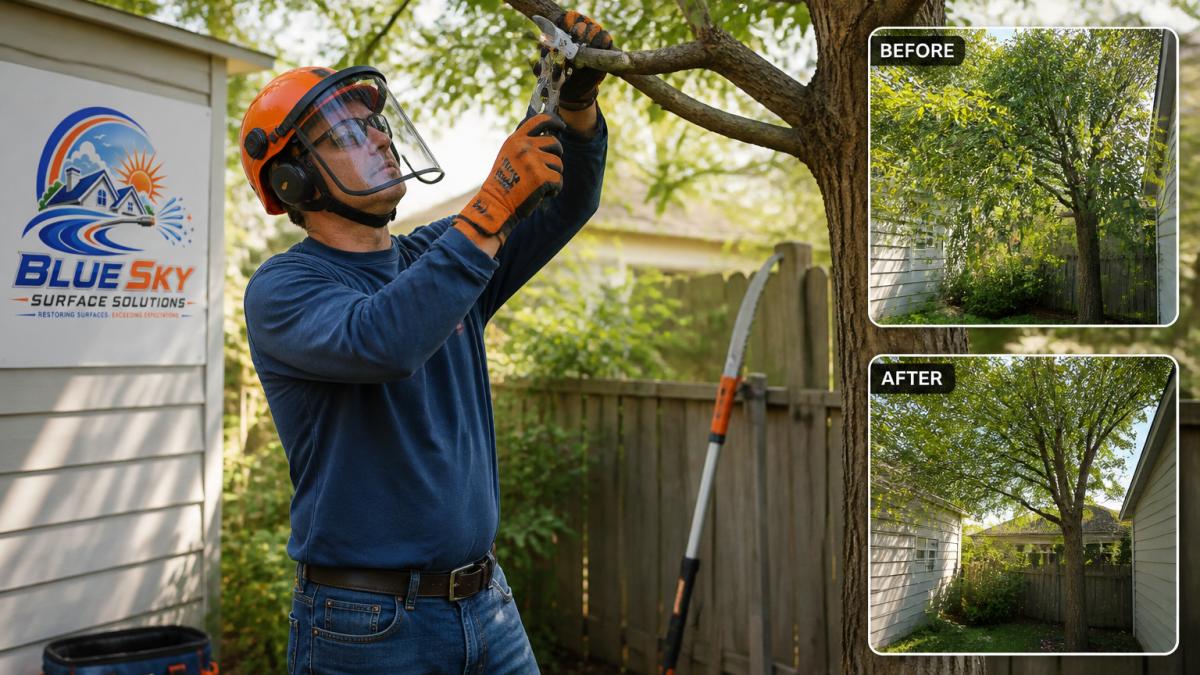
DIY tree trimming safety tips come down to three habits: wear the right gear for the hazard, keep your tools sharp and well maintained, and know when to stop.
Hand pruning and light branch cutting
Hazard: nicks from a bypass blade, thorns, and eye injury from springy twigs. Gear: safety glasses, cut-resistant gloves, sturdy boots. Keep your non-cutting hand behind the blade at all times, most hand-pruner cuts land on the hand holding the branch, not the one holding the tool.
Pole saw and pole pruner work overhead
Hazard: falling cut limbs and sawdust raining straight down into your face. Gear: add the helmet with face shield, and clear the drop zone below before the first cut. Never stand directly under the limb you are cutting, and never cut with the pole above your shoulders for long stretches, fatigue turns a controlled cut into a dropped one.
Chainsaw work at ground level
Hazard: kickback, chain contact with legs, and hearing damage. Gear: add ASTM F1897 chaps and ear protection, and never cut alone. Keep your left thumb wrapped around the front handle, stand to the side of the cut line rather than behind the bar, and let the saw reach full speed before the chain touches wood.
Storm breakage and hanging limbs
Hazard: tension wood. A limb pinned under another limb or hung up in the canopy stores energy, and releasing it can snap the branch back toward you with no warning. This is the cut that hurts experienced crews, not just homeowners.
A few more habits protect you every time. Keep both feet on stable ground before you start a cut. Clear your work area of debris so you can move without tripping.
The CDC guidance on chainsaw safety and the U.S. Consumer Product Safety Commission both stress that most chainsaw injuries happen to people without training or protective gear. That is a solvable problem.
When homeowner gear is not enough
Some jobs sit past what any helmet or chap can protect you from. Treat these as hard stops:
- Working at height. Any cut that requires a ladder, climbing, or roping in is a fall hazard first and a cutting hazard second. Homeowner gear does not arrest a fall.
- Near power lines. Even a pole saw can conduct or arc. Stay well clear and call the utility or a qualified professional.
- Overhead chainsaw work. One-handed chainsaw use above shoulder height is a leading cause of serious cuts, and no chap protects an arm or neck.
- Large or leaning trees. A tree that is bigger than you can safely control on the ground, or that leans toward a structure, needs rigging and experience.
Know your limits. If a tree is tall, leaning over a structure, or anywhere near power lines, the risk climbs past what homeowner gear can manage. Blue Sky Surface Solutions handles tree trimming and removal across Hamilton County, along with house washing, gutter cleaning, and leaf removal, so you get the job done without the risk. Contact us for a free quote.
Frequently Asked Questions
What safety gear do you need for tree trimming?
At minimum, homeowners should wear an arborist-style helmet with a face shield, safety glasses or goggles, cut-resistant gloves, hearing protection, and sturdy steel-toed boots. A chainsaw calls for chainsaw chaps rated to ASTM F1897. If you are working overhead with a pole saw or chainsaw, all five categories matter because falling branches, flying wood chips, and noise are present at the same time.
Are chainsaw chaps necessary for tree trimming?
They are necessary any time a chainsaw is running. Chaps are designed to jam the chain on contact, which reduces the severity of a leg cut. Look for chaps labeled ASTM F1897, the U.S. standard for leg protection. If you only use hand pruners, loppers, and a pruning saw, chaps are not required, but cut-resistant gloves and eye protection still are.
Can homeowners safely trim trees from a ladder?
Ladder work with a chainsaw or pole saw is one of the most common ways homeowners get hurt. A chainsaw needs two hands and a stable stance, which a ladder does not provide. Use a pole pruner from the ground for low limbs, and hire a professional tree service for anything above your comfortable reach or near power lines.
When should you hire a professional tree service instead of trimming a tree yourself?
Call a pro when limbs are within 10 feet of power lines, when the tree is taller than your pole saw can safely reach, when a branch overhangs a roof or vehicle, or when storm damage has left a tree unstable. A professional arborist carries the training, insurance, and equipment to handle those jobs. For routine low pruning, DIY with proper gear is fine.