 how-to
Best Methods for Removing Roof Algae: 2026 Guide
Table of Contents
- Why Roof Algae Is More Than a Cosmetic Problem
- Safety Precautions and Tools for Roof Algae Removal
- Soft Washing vs Pressure Washing Roof Surfaces
- Step-by-Step: Applying the Best Roof Cleaning Solution
- How to Prevent Roof Algae Growth Long-Term
- Professional Roof Cleaning Cost and When to Hire a Pro
- Frequently Asked Questions
Last Updated: September 16, 2026
Why Roof Algae Is More Than a Cosmetic Problem
Those black streaks running down your shingles aren't dirt, and they aren't going to wash away with the next hard rain. The best methods for removing roof algae start with understanding what you're actually fighting: a living organism that feeds on your roof and shortens its life. This guide from Blue Sky Surface Solutions breaks down what works, what damages your shingles, and when it's worth calling in a professional.
Roof algae is a cyanobacteria that colonizes asphalt shingles, feeding on the limestone filler used in their construction. As it spreads, it stains the surface and gradually compromises the granules that protect the asphalt underneath.
Here's what most homeowners get wrong: they treat the streaks as a cleaning problem when it's really a material problem. The algae itself doesn't just sit on top of your roof. It eats into it.
Identifying Roof Algae vs. Moss and Lichen
Algae appears as dark, flat streaks that run vertically down a roof slope, following the path of water runoff. Moss grows in thicker, green clumps, usually in shaded areas and along roof valleys. Lichen shows up as crusty, gray-green patches that cling tightly to shingles.
The distinction matters because each requires a different removal approach. Scrubbing moss off with a stiff brush can work. Scrubbing algae does nothing but wear down your granules.
How Gloeocapsa Magma Damages Asphalt Shingles
Gloeocapsa magma is the specific cyanobacteria responsible for most black roof streaking. It produces a dark protective sheath that shields it from UV radiation, which is why the damage shows up as black rather than green.
The long-term impact goes beyond appearance. As the organism feeds on limestone filler, it loosens the granules that give asphalt shingles their UV resistance. Once those granules wash away, the asphalt beneath dries out, cracks, and fails years earlier than it should. That's a replacement bill instead of a cleaning bill.
Safety Precautions and Tools for Roof Algae Removal
Working on a roof is genuinely dangerous, and no cleaning result justifies a fall. Before anything else, assess whether you can do this safely at all.
Protective Gear and Roof Pitch Considerations
If your roof pitch is steeper than 6:12, or if you're uncomfortable at height, stop here and hire a professional. The tools below assume a walkable roof and a homeowner who is steady on their feet.
- Safety harness and anchor point for any roof above single-story height
- Non-slip shoes with soft rubber soles
- Chemical-resistant gloves and eye protection
- Respirator if you're mixing or spraying any chlorine-based solution
- Garden pump sprayer with a plastic (not brass) nozzle, since chlorine corrodes metal
- Garden hose for low-pressure rinsing
A common mistake is wearing athletic shoes with hard soles. They slide on granules the moment the roof gets damp.
Soft Washing vs Pressure Washing Roof Surfaces
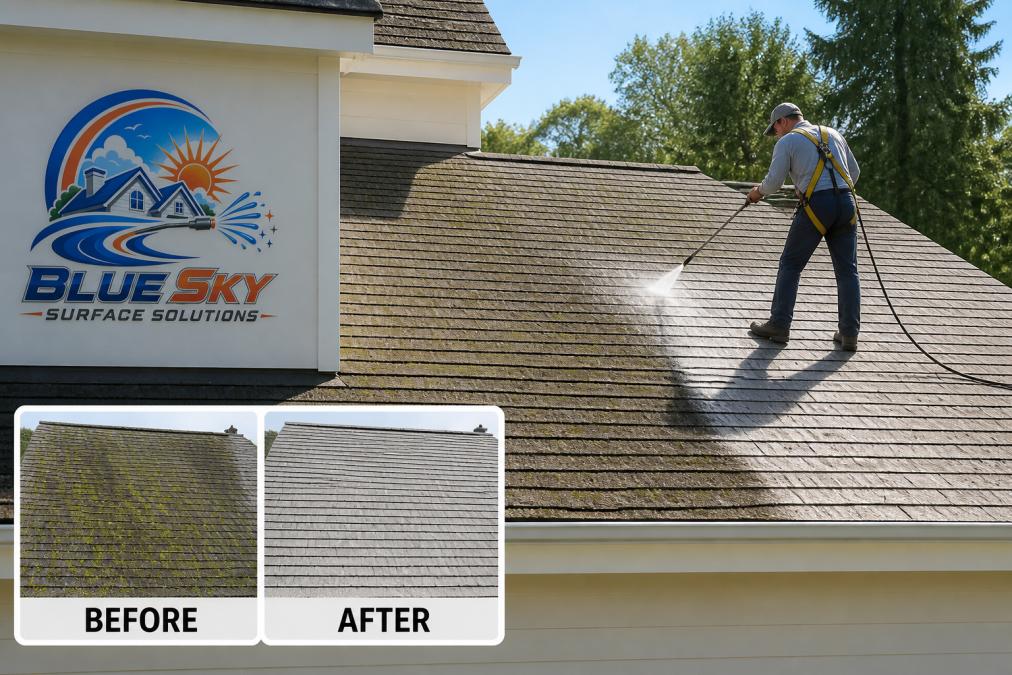
Soft washing is the only method most shingle manufacturers will accept without risking your warranty. Pressure washing forces water under shingles and strips granules, while soft washing relies on a cleaning solution to kill the algae and lets rain do the rinsing.
The difference comes down to pressure and chemistry. Soft washing uses low pressure, typically under 500 PSI, paired with a sodium hypochlorite solution. Pressure washing uses high pressure and water alone.
Method | Pressure | How It Works | Best For |
|---|---|---|---|
Soft washing | Under 500 PSI | Chemical kills algae, low-pressure rinse | Asphalt shingles, most roofs |
Pressure washing | 1,500+ PSI | Mechanical force strips growth | Concrete, brick, flat surfaces |
DIY spray-and-wait | Garden sprayer | Solution dwells, rain rinses | Light algae, cautious homeowners |
If you're comparing soft washing vs pressure washing roof, the short answer is that pressure washing has no place on an asphalt shingle roof. Save it for your driveway.
Step-by-Step: Applying the Best Roof Cleaning Solution
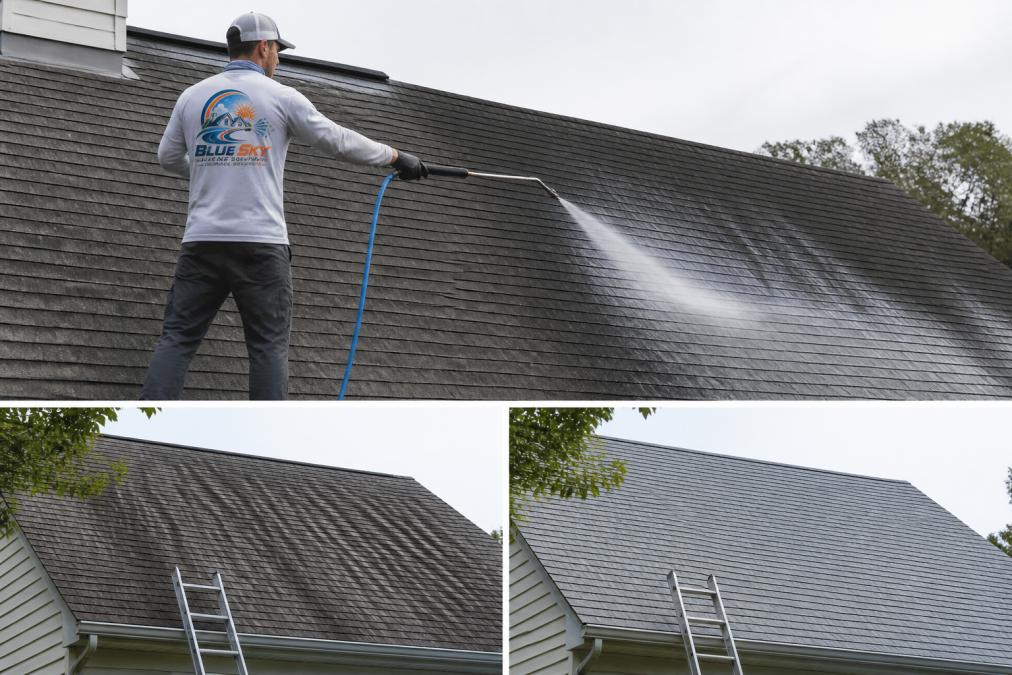
The most reliable roof cleaning solution is a diluted sodium hypochlorite mix applied at low pressure, allowed to dwell, and rinsed gently. What separates a job that lasts from one that streaks back within a season is getting three variables right: concentration, dwell time, and surface temperature. Here's how a professional approach works.
- Wet down landscaping, siding, and gutters with plain water before any chemical touches the roof. A saturated plant is a protected plant; a dry one absorbs runoff.
- Mix your solution at the correct dilution ratio for the growth level (see the table below). Always add surfactant after the bleach is diluted, never before.
- Apply from the bottom up using a pump sprayer, working in manageable sections so the solution doesn't dry before you finish the slope.
- Let it dwell for 15-20 minutes. The algae will visibly lighten from black to gray-brown as the organism dies.
- Rinse with low pressure, working top to bottom, then re-wet landscaping and any hardscape that caught overspray.
Chemical Dilution Ratios and Dwell Time Requirements
Dwell time is where DIY jobs usually fail. Homeowners spray, panic about the plants, and rinse within two minutes, before the biocide has done its work. Give the solution 15-20 minutes to kill the organism, longer in cool weather, shorter in direct sun where evaporation cuts the window short.
Growth Level | Sodium Hypochlorite : Water | Typical Dwell |
|---|---|---|
Light streaking | 1 : 4 | 10-15 min |
Moderate streaking | 1 : 3 | 15-20 min |
Heavy, established growth | 1 : 2 | 20-30 min |
Adding a surfactant helps the solution cling to shingles instead of running straight off, which matters most on steep slopes where contact time is short. Always check manufacturer recommendations for your specific shingle brand before applying anything, some warranties specify approved cleaning agents.
Matching the Method to Your Roof Material
Not every roof responds to the same approach. Asphalt shingles tolerate a diluted sodium hypochlorite soft wash, but metal roofs are more sensitive to chloride-based cleaners because they can accelerate corrosion at seams and fasteners.
Apply your solution on an overcast day with little wind and moderate temperatures. Direct sun dries the chemical before it can dwell, and wind carries spray onto siding, cars, and neighboring property. Cool, still mornings after a dry stretch are ideal.
Never mix sodium hypochlorite with ammonia-based cleaners or acids. The reaction releases toxic gas. If you're unsure what's already on your roof or in your sprayer, rinse everything thoroughly before switching products.
How to Prevent Roof Algae Growth Long-Term
A post-cleaning maintenance schedule keeps you ahead of regrowth:
- Inspect twice a year, in spring and fall
- Spot-treat small streaks before they spread
- Re-clean lightly every two to three years in high-humidity areas
- Check gutters after every heavy storm season
Professional Roof Cleaning Cost and When to Hire a Pro
When considering roof algae removal, it's helpful to compare the investment in equipment, chemicals, and your time against the benefits of professional service, factoring in the risks of a DIY approach.
The DIY Cost-Benefit Reality
A DIY soft wash setup isn't just a sprayer and a jug of bleach.
When Hiring a Pro Is the Clear Call
- Your roof pitch is steep or your home is more than one story
- Algae has spread across a large area and light spot-treatment won't touch it
- You have a shingle warranty you want to keep intact
- Landscaping, siding, or a pool sits directly below the runoff path
- You simply don't want to be on a ladder, which is a perfectly good reason
What to Ask Before You Book
A reputable company will want to see the property before quoting, because roof size, pitch, height, and growth severity all move the number.
Frequently Asked Questions
What is the best algae killer for roofs?
Sodium hypochlorite mixed with a surfactant is the most effective roof cleaning solution for killing gloeocapsa magma. This combination breaks down the algae's protective sheath and helps the chemical cling to shingles rather than running off. Dilution ratios typically range from 1:10 to 1:3 depending on the severity of the growth. Always follow manufacturer recommendations and apply with a low-pressure rinse to protect your roof granules and warranty.
Is pressure washing safe for asphalt shingles?
No. Pressure washing damages asphalt shingles by stripping away the protective granules that give the roof its fire rating and UV resistance. This shortens the lifespan of your roof and can void the manufacturer's warranty. Soft washing with low pressure and a biocide is the safe alternative. It kills the algae at the root without blasting away the shingle surface, keeping your roof intact and your coverage valid.
How can I prevent algae from returning to my roof?
After cleaning, apply a preventative biocide treatment or install zinc or copper strips near the roof ridge. These metals release ions that inhibit algae spores from settling. Trim overhanging tree branches to improve sunlight exposure and airflow, since gloeocapsa magma thrives in shaded, damp conditions. Scheduling a professional roof cleaning every 18 to 24 months helps you stay ahead of regrowth and protects your shingle integrity over time.
What time of year is best to remove moss from a roof?
Late spring or early fall is ideal for moss removal in most climates. Moss is actively growing during these periods, making it more responsive to treatment. Avoid cleaning in freezing temperatures because the cleaning solution works slower and wet shingles become dangerously slippery. Scheduling during dry, mild weather also gives your roof time to dry thoroughly, reducing the chance of algae spores returning before the next season.