 how-to
10 Leaf Removal Steps for a Cleaner Lawn This Fall
Last Updated: October 27, 2026
Quick Summary
Leaf removal means clearing fallen leaves from your lawn before they smother grass, trap moisture, and block sunlight. Small yards can be handled with a rake and tarp, while larger properties usually need a blower or bagging mower. Clean the visible areas first, then repeat every week or two during peak drop.
- Leaves block sunlight and air, and wet leaf piles invite mold.
- Small yards and beds often need only a fan rake and a tarp.
- Blow leaves into long windrows on medium and large properties.
- Mulch light cover, compost what you can, and bag or set out the rest.
- Schedule cleanups when leaves are dry and before the first hard freeze.
Table of Contents
- Why Leaf Removal Matters for Your Lawn and Curb Appeal
- How to Remove Leaves From Lawn Efficiently, by Property Size
- Choosing the Right Leaf Removal Tools and Equipment
- Mulching, Composting, Bagging or Collection: Which Fits Your Yard
- Safe and Accessible Leaf Disposal Options
- Scheduling Cleanup Around Weather, Wet Leaves and Lawn Health
- Book Your Fall Leaf Cleanup With Blue Sky Surface Solutions
- Frequently Asked Questions
Leaves on the lawn can turn a nice yard into a messy one fast. Wet leaves smother grass, block sunlight, and make the whole property look neglected. A clean yard in the fall makes a strong first impression. This guide walks you through the steps to remove leaves well, so your lawn stays healthy and your curb appeal stays high.
Why Leaf Removal Matters for Your Lawn and Curb Appeal
Leaf removal is more than a cosmetic chore. A thick layer of leaves traps moisture and can block light from reaching the grass below. Over a few weeks, that can leave bare patches and give pests and mold a place to settle.
Curb appeal matters too. Buyers and neighbors notice a yard that is clear and tidy. Regular leaf removal helps protect your lawn's health and keeps the property looking cared for through the season.
- Leaves block sunlight and air from reaching grass
- Wet leaf piles hold moisture and invite mold
- A clean yard supports better curb appeal
How to Remove Leaves From Lawn Efficiently, by Property Size
The right method depends on how big your yard is, how many leaves you are dealing with, and how much time you want to spend. A small city lot needs a different approach than a half-acre covered in oak leaves. Below are three practical workflows, pick the one that matches your property, then adjust for the leaf volume you actually see.
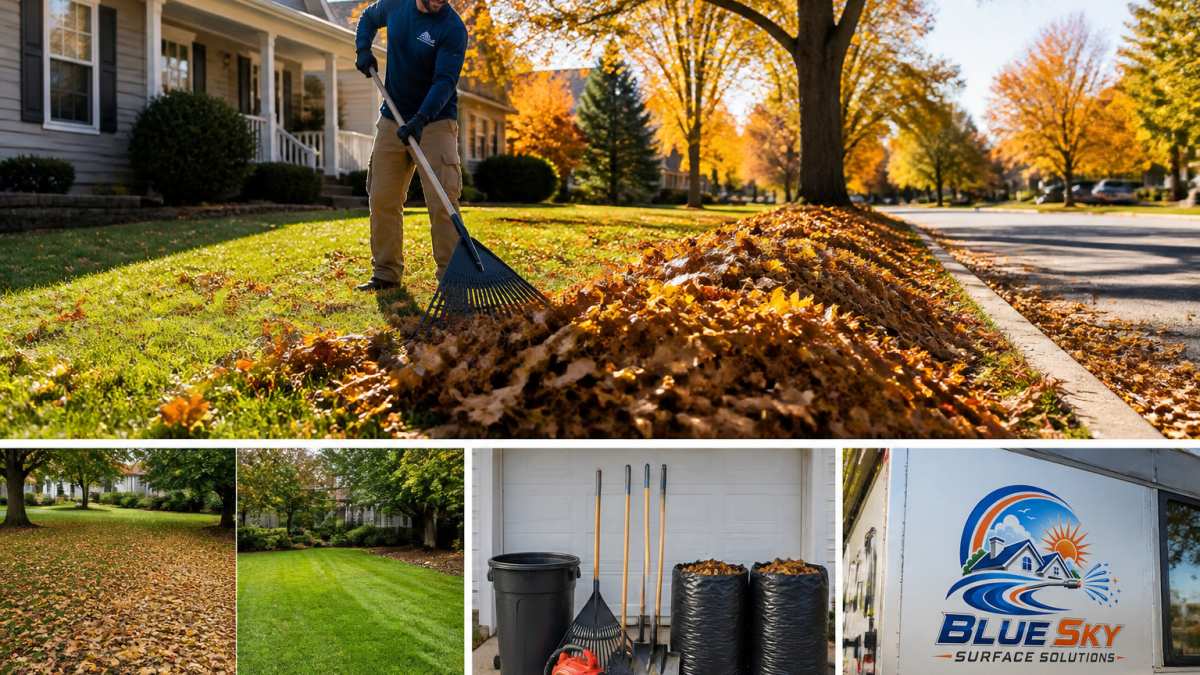
A quick way to size up the job: a light dusting of leaves is roughly a single layer across the lawn; a moderate load hides the grass in patches; a heavy load buries the grass and forms drifts along fences and foundations. Match your workflow to the load, not just the lot size.
Small Yards and Garden Beds (roughly a quarter acre or less, light to moderate leaves)
For small yards and garden beds, a fan rake and a tarp are often all you need. Work in this order:
- Start at the farthest corner and rake toward your collection point so you are not walking through finished areas.
- Pull leaves into loose piles, not tight mounds, loose piles are easier to lift and bag.
- Rake beds gently. Lift leaves out of flower beds with a narrow rake rather than dragging, which can damage young plants and shallow roots.
- Transfer to a tarp or bin. Drag the tarp to the curb or compost pile instead of carrying armloads.
- Do a second pass along edges, under shrubs, and against the foundation, where leaves collect first.
For a small yard, plan on one pass every week or two during peak drop. That cadence keeps the load light enough that a rake stays practical.
Medium Yards (roughly a quarter to a half acre, moderate to heavy leaves)
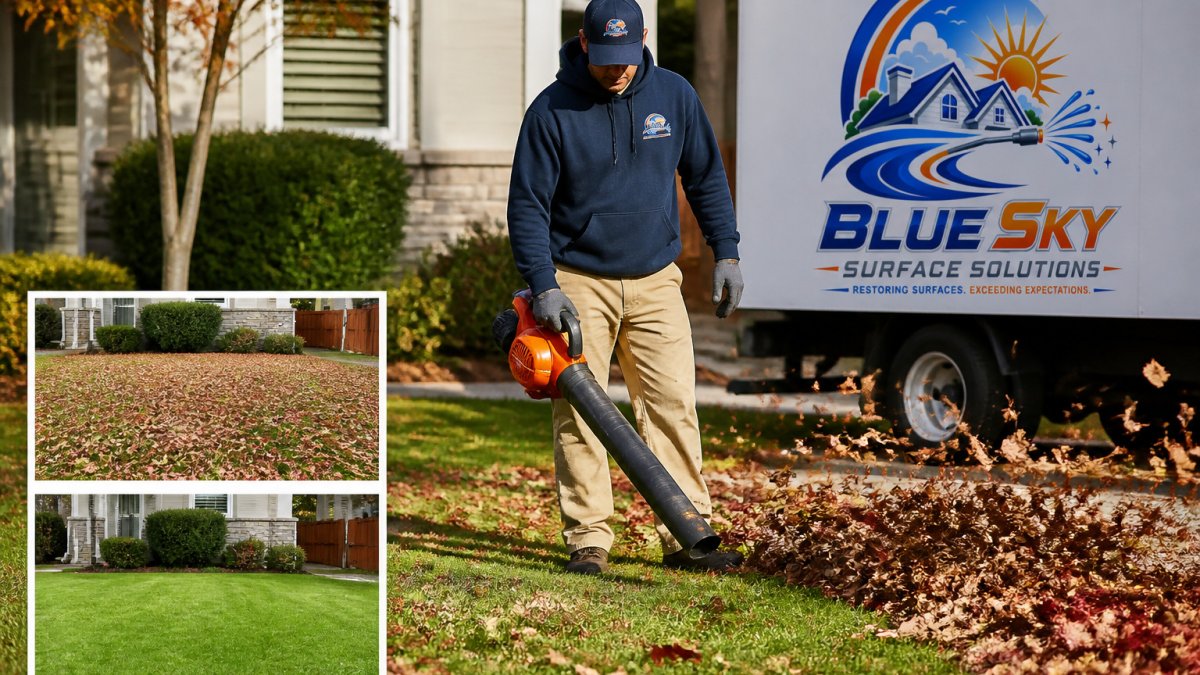
This is where a blower starts to pay for itself. A common pattern is to blow leaves into long windrows, narrow rows running parallel to each other, and then collect the rows with a rake, a bagging mower, or a tarp.
- Blow with the wind, not against it, and work from the center of the yard toward the edges so leaves do not blow back over cleaned areas.
- Use a bagging mower for the bulk. Running a mower with a bagging attachment over a moderate layer chops leaves and collects them in one pass, which cuts the number of times you handle the same leaf.
- Collect in windrows, then tarp. Drag the tarp along the row and roll leaves onto it rather than raking them into a pile and then lifting.
Expect two passes on a medium yard during heavy drop: one to clear the bulk, and a second a week or two later for what falls behind.
Large Properties With Heavy Leaf Volume (half an acre or more, or heavy drifts)
Large properties often need a backpack blower or a walk-behind mower with a bagging attachment, plus a plan for hauling. Blowing leaves into long windrows makes collection faster, and a tow-behind collector or a large tarp cuts the hauling time.
- Divide the property into zones and finish one zone before moving to the next. This prevents leaves from blowing back into cleaned areas.
- Blow leaves away from the house first, then work outward toward the curb or compost area.
- Plan on several passes. A single pass rarely catches everything, so expect to go over the same areas twice, and budget a final pass after the last big drop.
- Consider mulching in place on the lawn if the layer is light enough, a mulching mower chops leaves fine enough to break down over winter, which reduces how much you have to haul.
If the volume or the schedule feels like more than you want to take on, consider contacting a professional service. Request a free quote from Blue Sky Surface Solutions and we will size the job to your property.
Choosing the Right Leaf Removal Tools and Equipment
Good tools make leaf removal faster and easier on your body. The best choice depends on your yard size, your budget, and how often you plan to clean.
- Rakes: A fan rake handles light leaves well, while a steel rake works better on matted leaves, and you can compare ladder-free gutter cleaning methods before buying any equipment.
- Handheld blowers: Good for small yards, patios, and driveways
- Backpack blowers: Useful for medium to large properties
- Leaf vacuums and mulchers: Break leaves down and collect them in one pass
- Tarps and yard bags: Simple, low-cost tools for hauling leaves
Pricing for tools varies widely by brand and model, so compare options before you buy. For current equipment prices, check with local retailers or the manufacturer's website.
Watch out: Gas blowers and mowers produce noise and fumes. Wear hearing and eye protection, and avoid running equipment in enclosed spaces.
Mulching, Composting, Bagging or Collection: Which Fits Your Yard
Once leaves are off the lawn, you have four main options. Most competitors list them; the useful part is knowing which one fits your yard, your time, and your local rules. Here is a practical comparison.
Mulching
What it is: Chop leaves with a mower and leave the pieces on the lawn.
Best for: Light to moderate leaf cover, healthy lawns, and homeowners who want to skip hauling.
Effort: Low, one or two mowing passes.
Watch-outs: A thick layer of whole leaves can smother grass, so mulch only when the layer is light enough that you can still see grass through it. Run the mower slowly and consider a second pass to chop finer. Avoid mulching leaves that are wet and matted.
Composting
What it is: Pile leaves in a bin or a corner of the yard and let them break down into leaf mold or compost for garden beds.
Best for: Gardeners, properties with space for a pile, and homeowners who want to keep leaves on-site.
Effort: Low to moderate, build the pile, turn it occasionally, and wait. Leaves break down faster when shredded and mixed with green material.
Watch-outs: A pile of wet leaves can mat and slow decomposition; turn it and keep it from staying soggy. Check local rules on open piles and setbacks from property lines.
Bagging
What it is: Collect leaves in yard bags for disposal.
Best for: Heavy leaf loads, yards with limited space, and situations where you need leaves gone quickly.
Effort: Moderate to high, bagging and hauling is the most labor-intensive option, especially with wet leaves.
Watch-outs: Wet leaves are heavy, so bag them dry when you can and do not overfill. Confirm what your hauler or municipality accepts, some programs require paper bags, some accept only clear bags, and some limit volume per pickup.
Municipal Collection
What it is: Some towns pick up bagged or piled leaves on set dates.
Best for: Homeowners in areas with a curbside program who want to avoid hauling.
Effort: Low, rake to the curb on the right day.
Watch-outs: Rules vary widely by town: bag type, pile placement, and pickup dates all matter. Check your local rules before you rake, and put leaves out only on the scheduled dates so they do not sit at the curb.
If sorting through all of this sounds like more time than you have, Request a free quote.
Here is a quick way to compare the four main leaf disposal options covered above.
| Method | Best for | Effort |
|---|---|---|
| Mulching | Light to moderate leaf cover | Low: one or two mowing passes |
| Composting | Gardeners with space for a pile | Low to moderate |
| Bagging | Heavy loads and limited space | Moderate to high |
| Municipal collection | Areas with a curbside program | Low: rake to the curb |
Safe and Accessible Leaf Disposal Options
Safe disposal protects your back, your neighbors, and the environment. Lift bags with your legs, not your back, and avoid overfilling them. Heavy wet leaves are much harder to move than dry ones.
Keep walkways clear so no one trips on a pile. If you have limited mobility, consider a tarp-and-drag method or a lightweight collection bin on wheels. Never place leaves in storm drains, since they can clog the system. For more tips, see our gutter maintenance advice for Indiana homeowners.
Scheduling Cleanup Around Weather, Wet Leaves and Lawn Health
Timing matters. Rake when leaves are dry, since wet leaves are heavy and clump together. Plan cleanups between rain showers, and avoid walking on a frozen or soggy lawn.
Clear leaves regularly during peak fall, rather than waiting until the lawn is buried. A light cleanup every week or two prevents heavy buildup. Remove leaves before the first hard freeze to keep grass healthy into winter. Our seasonal guide to how often to clean gutters in Indiana explains how timing should shift with the weather.
Book Your Fall Leaf Cleanup With Blue Sky Surface Solutions
If the work feels like too much, please contact us for a quote.
Ready to get your yard clean this fall? Request a free quote from Blue Sky Surface Solutions.
Frequently Asked Questions
How often should you remove leaves from your lawn?
Remove leaves whenever they cover the grass thickly enough to block sunlight, typically every one to two weeks during peak fall drop. Wet leaves that stay on turf for long periods can smother grass and encourage disease, so clear them sooner after heavy rain. Light, scattered leaves can often be mulched in place with a mower instead of collected. If you notice matted, yellowing patches, that is a sign the leaves have stayed too long. Regular cleanup can help keep the lawn clear through the season.
Is it better to rake or mulch leaves?
Mulching is often better when leaves are dry and light, because the shredded pieces return nutrients to the soil and reduce bagging work. Raking or blowing into piles makes more sense when leaves are thick, wet or heavy with debris, since mulching those can clog the mower. Many yards use both methods, mulching light coverage and collecting heavy drifts from garden beds and walkways. Choose based on leaf depth, moisture and how much lawn area you need to clear.
What is the best way to dispose of dry leaves?
The best option depends on your property. Mulching dry leaves on the lawn or adding them to a compost pile are both low-effort ways to keep them on site. If you have more than you can use, check whether your city or county offers curbside leaf collection, and follow local rules for bag or pile placement. Hauling leaves to a yard waste facility is another option. Avoid burning leaves unless local rules specifically permit it.