 how-to
Get a Residential Gutter Cleaning Estimate: 2026 Guide
Table of Contents
- What a Residential Gutter Cleaning Estimate Should Include
- Average Cost of Gutter Cleaning and What Drives It
- Factors Affecting Gutter Cleaning Quotes
- How to Prepare for a Gutter Cleaning Estimate
- DIY vs. Professional Gutter Cleaning: A Risk Assessment
- Surface-Specific Safety and Environmental Impact
- Maintenance Schedules and Preventative Care
- Frequently Asked Questions
Last Updated: September 14, 2026
What a Residential Gutter Cleaning Estimate Should Include
A residential gutter cleaning estimate is a written quote that itemizes the labor, equipment, and disposal costs for clearing debris from your home's gutter system. Getting a written estimate before work begins protects you from surprise charges and gives you a clear basis for comparing providers. Getting a written estimate before work begins protects you from surprise charges and gives you a clear basis for comparing providers.
The best estimates share one trait: you can read them and know exactly what happens on service day. A vague "we'll clean your gutters" quote tells you nothing about ladder access, downspout flushing, or where the debris goes.
Line Items to Expect on Every Quote
A complete quote breaks the job into discrete tasks rather than one bundled price. Ask for these line items specifically:
- Gutter run measurement, usually quoted in linear feet
- Downspout flushing and flow testing
- Debris bagging and haul-away
- Hand-clearing versus rinsing method
- Second-story or steep-pitch access surcharge
- Post-service photo documentation
If a quote omits haul-away or downspout flushing, treat it as incomplete. Those are the two line items most often quietly dropped to make a bid look cheaper.
Average Cost of Gutter Cleaning and What Drives It
Pricing for gutter cleaning varies widely by region, home size, and access difficulty, so no single average applies to every property. What matters more than any headline number is understanding the pricing model behind the quote, because that's what determines whether a bid is fair or padded.
The Three Pricing Models You'll See
Most providers quote using one of three structures:
- Flat rate by home size. The provider buckets homes into tiers (for example, single-story, two-story, and large or multi-wing) and charges a set price per tier. Simple to compare, but it hides access surcharges until the technician arrives.
- Per linear foot. The provider measures your gutter run and multiplies by a per-foot rate, then adds surcharges. This is the most transparent model because you can verify the measurement yourself.
- Hourly plus materials. Common for heavily clogged or unusual jobs. You pay for time on site plus any disposal or specialty cleaning products. Riskier for the homeowner because the clock is open-ended.
A common pattern is that per-linear-foot quotes produce the fewest disputes, because the homeowner can walk the roofline and confirm the number before signing.
What Actually Moves Your Price
- Total gutter length, not square footage of the house
- Number of stories and roof pitch steepness
- Whether gutter guards are installed and whether they must be removed and re-seated
- Debris volume and how long it has accumulated
- Access constraints such as landscaping, fences, locked gates, or steep grade
- Whether downspouts are flushed and tested or just cleared at the opening
- Disposal method: bagged and hauled away versus left on site
A single-story ranch with clear access sits at the low end. A three-story home with steep pitch, packed debris, and guards that require disassembly sits at the high end. The spread between those two jobs can be several times the base rate, which is why phone-quoted prices often change once a technician sees the property.
How to Sanity-Check a Bid
Before you accept any quote, run these three checks:
- Confirm the unit. Ask whether the price is per linear foot, per story, or flat. A number without a unit is not a quote.
- Confirm what's excluded. Downspout flushing, debris haul-away, and second-story access are the three line items most often left out to make a bid look cheaper. Ask directly.
- Confirm the measurement. If the quote is per linear foot, ask for the measured length. You can approximate it by pacing the perimeter of your roofline.
Why the Cheapest Bid Usually Isn't
A low bid typically means one of three things: the provider plans to skip downspout flushing, the provider plans to leave debris on your property, or the provider plans to add surcharges after arrival. Any of those outcomes erases the savings on the first visit. The bid you want is the one where every task is named and priced, even if the total is higher than the flyer you got in the mail.
Factors Affecting Gutter Cleaning Quotes
Factors affecting gutter cleaning quotes fall into two categories: structural (the shape and height of your home) and situational (what's actually in the gutters and how you can reach them). Both get assessed during a proper walkthrough.
Home Height, Roof Pitch, and Gutter Length
Height drives labor time and equipment needs more than any other variable. A two-story home requires extension ladders or a ladder stabilizer; a three-story home may require a different access approach entirely. Roof pitch matters because steep roofs limit where a technician can safely stand and work.
Gutter length sets the base labor estimate. Measure your roofline if you want a rough sense of scale before requesting quotes. Most homes fall somewhere between a compact single-story run and a large multi-wing layout, and the linear-foot count scales the job proportionally.
Debris Type, Guard Systems, and Access Issues
What's in the gutter changes how long removal takes. Dry leaves and grit clear quickly. Wet, compacted debris, moss, or seedlings take far longer and often require hand removal before any rinsing. Asphalt shingle cleaning debris adds grit that must be flushed rather than bagged.
Gutter guards complicate the job. Some guard systems pop out easily; others require partial disassembly and re-seating, which adds labor. Access issues, including locked gates, dense landscaping, or parked vehicles, add time even when the gutter itself is straightforward.
How to Prepare for a Gutter Cleaning Estimate
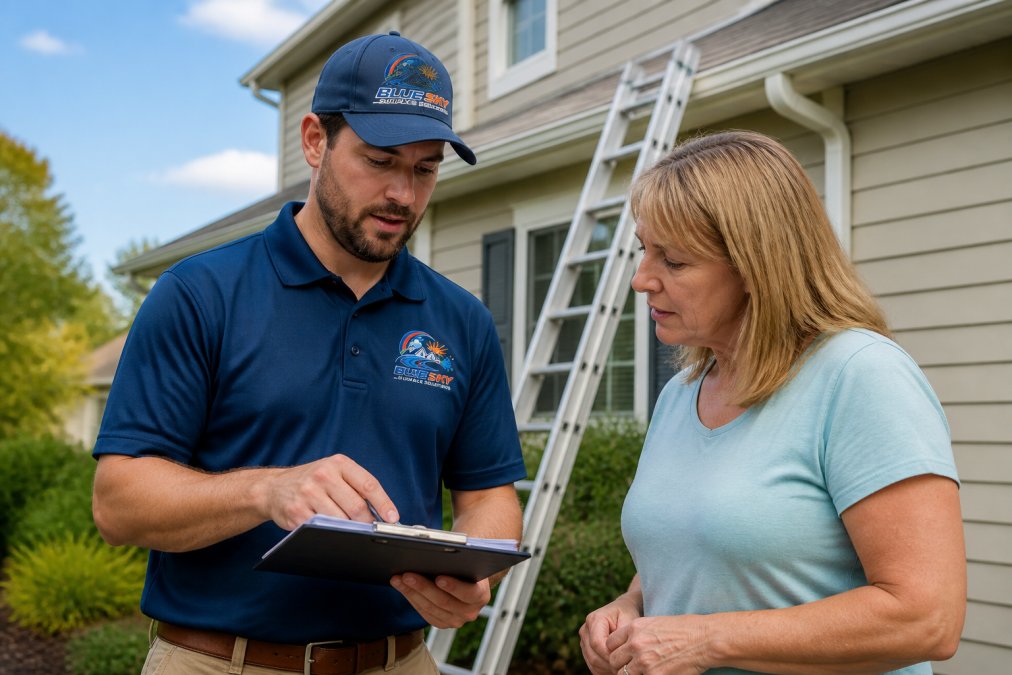
Preparing for a gutter cleaning estimate takes about fifteen minutes and makes the quote more accurate. Clear the path first: move vehicles, unlock gates, and trim back any branches blocking ladder placement. Technicians who can reach the roofline without obstruction give tighter quotes.
Then gather information the provider will ask for:
- Approximate gutter length or a rough roofline measurement
- Number of stories and any known roof pitch
- Whether gutter guards are installed and their type
- Any known problem areas, such as a downspout that backs up
- Preferred timing and whether you want recurring service
Have photos ready if you're requesting a remote estimate. Wide shots of each side of the house plus close-ups of the gutters and downspouts usually give a provider enough to quote accurately without a visit.
DIY vs. Professional Gutter Cleaning: A Risk Assessment
Most gutter cleaning content is written to sell you a service. This section isn't. Here's an honest framework for deciding whether to do the job yourself or hire it out, based on the actual hazards and the equipment required to manage them.
The Four Hazards That Define the Job
Gutter cleaning is a working-at-height task, and the risks stack:
- Fall risk. Ladder falls are the dominant injury category for this work. The hazard scales with height, ground slope, and surface condition (wet grass, gravel, mulch).
- Electrical contact. Service drops and mastheads run near rooflines on many homes. Metal ladders near energized lines are a serious hazard; fiberglass is the safer choice.
- Roof-edge and pitch exposure. If you have to step onto the roof to reach a gutter run, you've added a second fall surface with its own traction and pitch variables.
- Debris and biological exposure. Wet leaf litter, moss, bird droppings, and standing water in gutters carry bacteria and mold. Gloves, eye protection, and a respirator are reasonable precautions, not overkill.
Equipment the Job Actually Requires
A safe DIY setup typically includes:
- A fiberglass extension ladder rated for your working load, plus a ladder stabilizer or standoff so the ladder doesn't rest against the gutter itself
- Non-slip footwear and gloves
- A gutter scoop or trowel for hand removal
- A bucket or tarp for debris, plus bags for haul-away
- A hose with a controlled nozzle for flushing downspouts (not a pressure washer)
- Eye protection and, if debris is dry and dusty, a respirator
If you don't own or can't safely use the ladder and stabilizer, the DIY math already fails, the equipment cost for a one-time job exceeds the service fee.
When DIY Is Defensible
DIY is a reasonable choice when all of the following are true:
- The home is single-story, or the gutters are reachable from a ladder placed on level, firm ground
- The ladder can be positioned without leaning on the gutter or resting on a slope
- There are no electrical service drops or mastheads near the work area
- Debris is dry and light, not compacted, mossy, or holding standing water
- You have a second person available to spot the ladder
If any of those conditions fails, the risk profile changes materially.
When to Hire Out
Hiring is the better call when any of these apply:
- Two or more stories, or gutters that require stepping onto the roof
- Steep roof pitch, or a roof surface you're not comfortable walking
- Gutter guards that require disassembly and re-seating
- Electrical service drops or mastheads near the roofline
- Compacted, wet, or mossy debris that resists hand removal
- Any medical condition, medication, or balance issue that affects working at height
The Insurance Question Most Guides Skip
This is the part that rarely gets said out loud. If you fall off a ladder cleaning your own gutters, your health insurance handles the medical bills, and there's no one else to pursue. If a hired technician falls on your property, the provider's liability coverage is the layer that matters, which is why you should confirm a provider carries general liability and workers' compensation coverage before work begins. Ask for a certificate of insurance; legitimate providers supply one without hesitation. A provider who can't produce one is shifting the risk back onto you.
The DIY-versus-professional decision comes down to height, access, and hazard exposure, not price. Single-story, level ground, no electrical hazards, dry debris: DIY is defensible. Anything above that, the injury risk and equipment cost tip the balance toward hiring insured technicians, and you should verify that insurance before the first visit.
Surface-Specific Safety and Environmental Impact
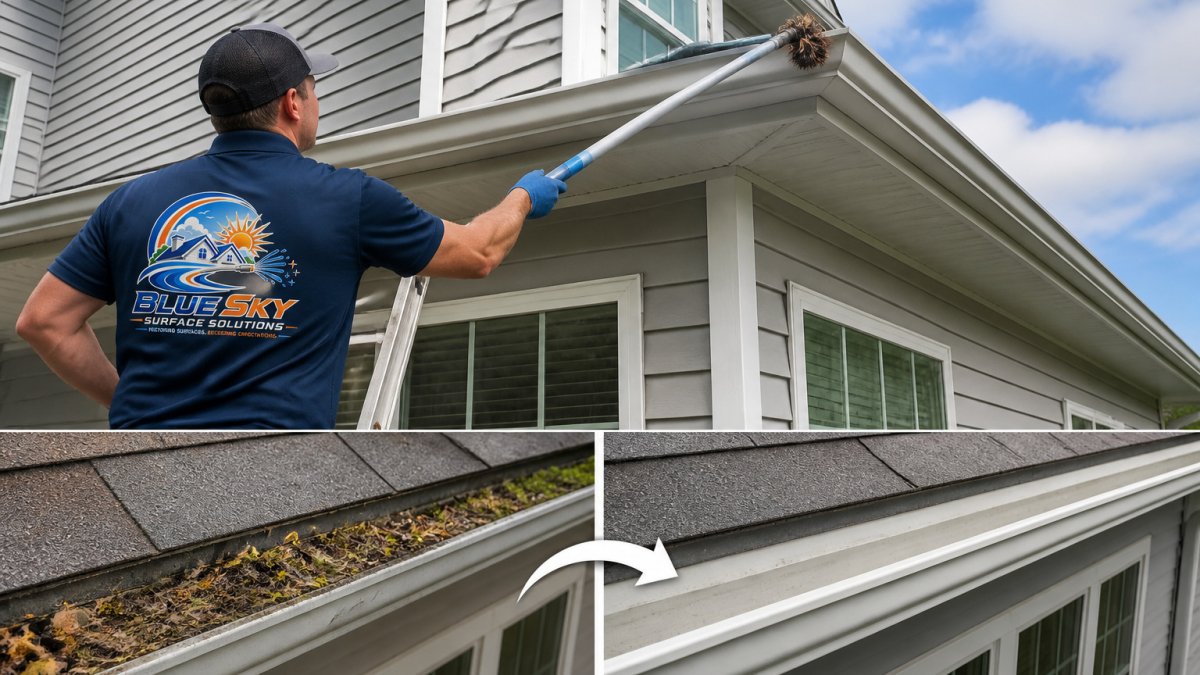
Surface-specific care matters because gutters sit against roofing, siding, and fascia that can all be damaged by the wrong cleaning method. Aggressive pressure washing can force water behind siding, strip shingle granules, and gouge painted fascia. Safe cleaning methods rely on controlled rinsing and hand removal instead of high-pressure blasting.
Environmental impact is the other half of the equation. Debris hauled to a landfill or composted properly keeps gutters clear without sending leaf litter into storm drains. Biodegradable cleaning solutions break down without harming landscaping or nearby waterways, which matters on properties with gardens, wells, or sensitive drainage.
If your gutters show algae or mildew streaks on adjacent siding, that's a sign the cleaning scope should include exterior surface sanitization, not just debris removal. Addressing both at once prevents the growth from returning within weeks.
Maintenance Schedules and Preventative Care
Twice-yearly cleaning, typically late spring and late fall, keeps most gutter systems flowing freely. Homes surrounded by mature trees may need quarterly service. The schedule depends on tree cover and local rainfall more than on the gutters themselves.
Preventative maintenance extends beyond debris removal. Check downspouts for proper drainage away from the foundation, watch for sagging gutter sections that indicate loose hangers, and note any rust or joint separation before it becomes a leak. Salt corrosion removal matters on homes near treated roads, where winter spray accelerates metal breakdown.
Staying ahead of dirt and grime buildup protects roof longevity, siding, and foundation drainage all at once. A recurring schedule costs less over a year than repeated emergency calls after a clog causes water damage.
Gutter cleaning is one of those jobs where the estimate tells you almost everything about how the work will go. A detailed, itemized quote from insured technicians is worth more than a low bid with missing line items. Blue Sky Surface Solutions provides written estimates covering gutter cleaning, downspout flushing, and debris haul-away. Get started with Blue Sky Surface Solutions and request a free estimate for your home's exterior maintenance.
Frequently Asked Questions
What factors influence the cost of residential gutter cleaning?
The main factors are home height, total gutter length, roof pitch, and the amount of debris. Two-story homes and steep roofs require more time and safety equipment. Gutter guards, heavy buildup, and hard-to-reach sections add labor. Local market rates also vary. Because every property is different, Blue Sky Surface Solutions provides a free on-site estimate so you get an accurate number instead of a phone guess.
Do gutter cleaning companies provide free estimates?
Most reputable companies do. Blue Sky Surface Solutions offers a free estimate with no obligation, so you can compare quotes before committing. Ask whether the estimate is based on an on-site inspection or a flat rate. On-site estimates are more accurate because the technician can see roof pitch, gutter condition, and debris volume firsthand.
How often should I have my gutters professionally cleaned?
Twice a year is standard for most homes, typically in late spring and late fall. Homes surrounded by mature trees may need quarterly service. Regular cleaning prevents overflow, fascia rot, and foundation damage. If you notice water spilling over the edge during rain or plants growing in the gutter, schedule service right away rather than waiting for the next seasonal visit.
Can I get a gutter cleaning estimate without an on-site visit?
Some companies offer remote estimates using satellite imagery or photos you submit. These can work for simple, single-story homes but often miss access issues, gutter damage, or heavy debris. For a two-story home or a property with gutter guards, an on-site visit gives you a firm price. Blue Sky Surface Solutions recommends an on-site estimate for the most accurate quote.