 ultimate-guide
Gutter Maintenance Tips for Indiana Homeowners
Table of Contents
- Why Gutter Maintenance Matters for Indiana Homes
- Your Gutter Maintenance Schedule: Spring to Winter
- How to Remove Leaves From Gutters Safely
- Warning Signs Your Gutters Need Attention Now
- When to Call Professional Gutter Cleaning Services
- Gutter Guards, Ice Dams, and Other Indiana-Specific Challenges
- Conclusion: Protect Your Home Before the Next Storm
- Frequently Asked Questions
Last Updated: September 23, 2026
Why Gutter Maintenance Matters for Indiana Homes
Gutter maintenance is the seasonal work of clearing debris, checking fasteners, and confirming roof runoff moves away from the house before it reaches the foundation. For Indiana homeowners, it is the difference between a dry basement and a flooded one. Blue Sky Surface Solutions handles this work across Hamilton County, and the homes that stay dry are the ones cleaned on schedule, not after the first overflow.
How Indiana Weather Tests Your Gutters
Indiana asks a lot of a gutter system: spring rain and seed pods, summer roof grit and shingle granules, fall leaves, then a winter freeze.
The freeze-thaw cycle is the real problem. Water trapped in a clogged gutter expands overnight and contracts by afternoon for months, stressing hangers, fascia boards, and seams. A gutter that survives one winter with a clog may not survive the next.
What Clogged Gutters Cost You
An overflowing gutter sends water down the fascia, behind the siding, and into the soil beside the foundation, usually along the path leading into your basement.
The damage compounds quietly. Soffit protection fails. Foundation drainage saturates. Wood trim softens. By the time a homeowner notices, the repair list has grown from a cleaning to a carpentry project. Preventative maintenance is almost always the cheaper decision.
Your Gutter Maintenance Schedule: Spring to Winter
A workable gutter maintenance schedule has two cleanings and two inspections per year: spring and fall for cleanings, early summer and late winter for inspections. What changes in this region is when those windows open, because the freeze-thaw cycle and local tree mix move the calendar.
Season | Task | Timing Window | Watch For |
|---|---|---|---|
Spring | Clear winter debris, check hangers | After the last hard freeze (typically mid-April) | Loose fasteners, pulled seams, granules in the trough |
Summer | Inspect downspouts and drainage | Mid-season, before storm season peaks | Slow water flow, pooling at the splash block |
Fall | Full clean after leaf drop | Late October through Thanksgiving; twice on wooded lots | Heavy debris accumulation, matted leaf layer |
Winter | Check for ice dams after storms | After each major snow or ice event | Ice at the gutter edge, icicles hanging from the fascia |
Spring: Clear Winter Debris and Check for Damage
Spring cleaning is about undoing winter. Pull out the matted debris that froze in place, then walk the run and test every hanger by hand, gutters that sagged under ice load usually show it first at the hangers.
The freeze-thaw cycle makes this region's spring cleaning different from a generic one. Water trapped in a clogged trough expands and contracts for weeks, stressing hangers, fascia, and seams, which is why the spring pass is a damage check, not just debris removal.
Flush the system with a hose and watch the water leave. If it backs up at a downspout, the blockage is below the gutter line. Shingle granules are normal after a hard winter; a sudden heavy accumulation means the roof above is shedding faster than it should.
Fall: The Most Important Cleaning of the Year
Fall is the cleaning that decides whether your winter goes smoothly. Once the leaves are down, clear the troughs completely rather than skimming the top layer. Debris left at the bottom holds moisture against the metal all winter.
The tree mix on your lot sets the timing. Maples drop early and fast, so one well-timed cleaning after the main drop covers them.
Winter: Watch the Ice Dam Window
Winter is not a cleaning season, but it is a watching season. Ice dams form when warm attic air melts snow, the water runs to the cold eave, and it refreezes at the gutter edge, pushing meltwater under the shingles. Clean gutters give that meltwater somewhere to go; clogged ones force it back up under the roof.
What to Do Between Scheduled Visits
Between the four anchor points, keep an eye on the obvious. After a heavy storm, check below the downspouts for displaced splash blocks or eroded soil. Water pooling where it did not before means the run has shifted or a clog is forming, a five-minute fix in the first week, a fascia repair by spring.
How to Remove Leaves From Gutters Safely
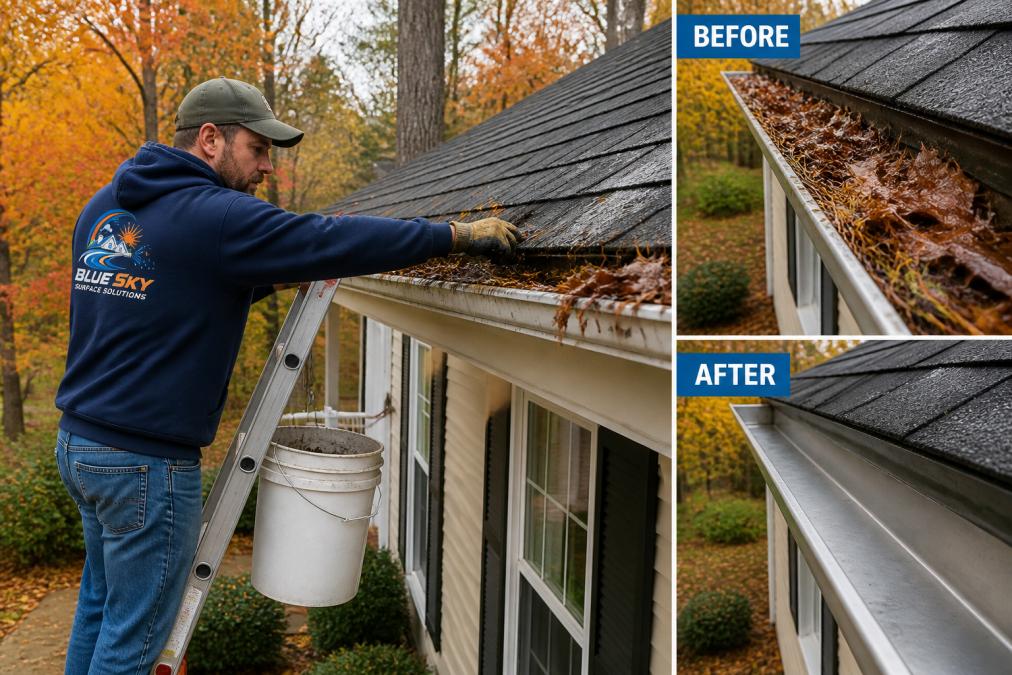
Learning how to remove leaves from gutters safely starts with one rule: never work from the roof. Most gutter injuries come from overreaching instead of repositioning the ladder.
Warning Signs Your Gutters Need Attention Now
Certain symptoms mean the gutter has already stopped doing its job: overflow during a moderate rain, water staining on the fascia, or a visible sag between hangers. The system is failing now, not eventually.
When to Call Professional Gutter Cleaning Services
Call a professional when the job involves height, steep roof pitch, heavy debris, or any sign of structural damage. The decision is easier if you look at what the DIY route actually entails in tools, time, and risk.
The DIY Tool and Time Picture
A one-time gutter cleaning looks cheap until you add up what it takes to do it safely. Most homeowners end up buying or borrowing:
- A ladder tall enough to clear the gutter line with three feet of extension above it
- A stabilizer or standoff so the ladder does not dent the trough
- A gutter scoop and a bucket that hooks to the ladder
- Gloves, eye protection, and a hose long enough to reach every run
- A ladder tie-off or a second person to spot you
The Risk Side of the Ledger
The bigger cost is the one you cannot see coming. Ladder falls are the injury most associated with gutter work, and most happen during overreaching rather than a ladder failure. Add a wet roof, a frosty rung, or a steep drop, and the risk climbs fast. A single emergency room visit can be a significant expense.
What a Professional Visit Actually Includes
A professional cleaning is not just someone else on the ladder. It includes a full inspection of hangers, seams, downspouts, and drainage, plus the equipment to clear a stubborn clog without crushing the trough, and someone who can tell you when a repair is worth doing now rather than after the next freeze.
A Simple Way to Decide
- Two or more stories, or a roof pitch you would not walk on
- Mature oaks or maples dropping debris twice a year
- Gutters that pull away from the fascia or sag between hangers
- A history of ice dams or water in the basement
- A schedule you know you will not keep
If you would rather not guess, reach out for a quote. We will look at the roofline, the tree cover, and the drainage, and tell you what the property actually needs, no pressure, just a straight answer.
Gutter Guards, Ice Dams, and Other Indiana-Specific Challenges
Gutter guards help, but they are not a substitute for cleaning. Micro-mesh guards keep out leaves and large debris while letting water through; they still need periodic clearing of shingle grit and seed pods, just far less often.
Conclusion: Protect Your Home Before the Next Storm
Every season in Hamilton County puts your gutters through something: spring rain, summer grit, fall leaves, winter ice. The homeowners who avoid water damage are not lucky; they are on a schedule, and they call for help before a small clog becomes a fascia repair.
Frequently Asked Questions
How often should gutters be cleaned in Indiana?
Most Indiana homes need gutter cleaning at least twice a year, in late spring and again after the leaves fall in late October or November. If your property has mature trees nearby, you may need a third cleaning in late summer. Following a consistent gutter maintenance schedule prevents debris accumulation from blocking water flow during heavy spring rains or winter freeze-thaw cycles.
What is the best time of year to clean gutters?
The two most important cleanings happen in late spring and late fall. Spring cleaning removes debris left from winter storms and ice dams, while fall cleaning clears leaves before the first freeze. If you can only manage one cleaning per year, make it the fall session, because clogged gutters heading into winter can cause ice dams and water damage to your foundation.
Can clogged gutters cause foundation damage?
Yes. When gutters overflow, water pools around your foundation instead of being routed through downspouts and away from the house. Over time, that standing water can crack foundation walls, cause basement flooding, and erode landscaping. Proper pitch, clear downspouts, and regular gutter inspection are the simplest ways to protect your home's structural integrity.
Should I hire professionals for gutter maintenance?
Professional gutter cleaning services make sense if your home is two or more stories, if you're uncomfortable with ladder safety, or if your gutters have recurring clogs. Professionals also spot early signs of damage like loose gutter hangers, failing gutter sealant, or fascia boards that need attention. For a free quote on gutter cleaning and leaf removal, contact Blue Sky Surface Solutions.