 ultimate-guide
Step by Step Guide to Soft Washing Roofs
Table of Contents
- Why Soft Washing Beats Pressure Washing for Roofs
- Roof Cleaning Safety Equipment You Need Before You Start
- Choosing the Right Roof Soft Washing Solution
- Step-by-Step: How to Soft Wash a Roof
- How Long Does Roof Soft Washing Take?
- Protecting Plants During Roof Cleaning
- Common Mistakes That Ruin a Soft Washing Job
- When to Call a Professional for Soft Washing Roofs
- Frequently Asked Questions
Last Updated: October 8, 2026
Why Soft Washing Beats Pressure Washing for Roofs
Soft washing roofs is the practice of cleaning shingles with low pressure and a cleaning solution instead of a high-pressure jet. It matters because asphalt shingles are far more fragile than they look. According to asphalt shingle guidance from the Asphalt Roofing Manufacturers Association, high-pressure washing strips the protective granules that shield shingles from sun and rain, which shortens the life of the roof.
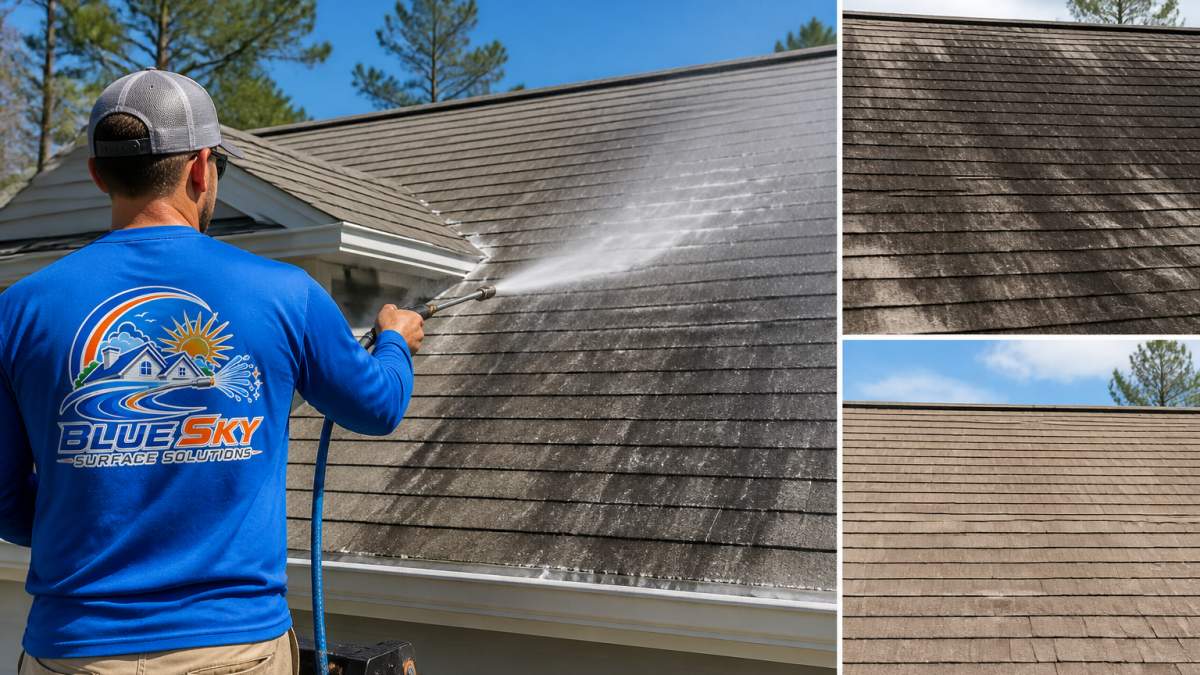
That is the core argument of this guide from Blue Sky Surface Solutions: on a roof, pressure is the enemy, not the tool. A pump sprayer applying a diluted solution at garden-hose pressure does the actual cleaning. The pressure washer stays on the driveway.
Below, we walk through the full process, from safety gear to the final rinse, plus the mistakes that turn a weekend project into a roof replacement.
Roof Cleaning Safety Equipment You Need Before You Start
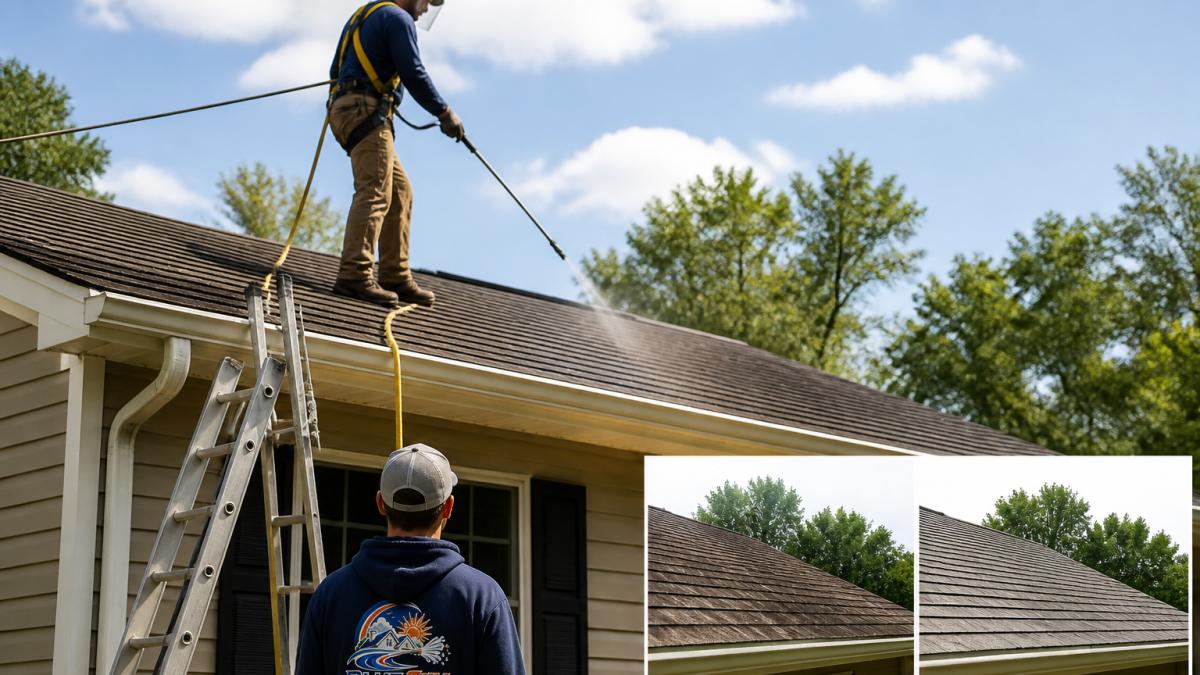
Roof cleaning safety equipment is non-negotiable on a wet, sloped surface. At minimum, you need fall protection rated for roof work, non-slip shoes, eye protection, chemical-resistant gloves, and a respirator for the cleaning solution. A spotter on the ground is worth more than any single piece of gear.
Here is the working checklist we use on every job:
- Fall-arrest harness anchored to a rated point, not a chimney or vent pipe
- Non-slip roofing shoes with soft soles
- Safety glasses or a face shield rated for chemical splash
- Chemical-resistant gloves and long sleeves
- Respirator rated for the solution you are spraying
- Ladder stabilized on level ground and secured at the top
- Ground spotter to watch hose runs and warn of slipping
The Occupational Safety and Health Administration sets the fall-protection standard for work at height, and OSHA's fall protection guidance is the reference to check before anyone steps on a ladder. If you are not comfortable working at height, no cleaning result is worth the risk.
Choosing the Right Roof Soft Washing Solution
The best roof soft washing solution for most asphalt shingle roofs is a diluted sodium hypochlorite mix, the same active ingredient as household bleach, cut with water and a small amount of surfactant. Mix it too strong and you risk damaging plants and metal; too weak and the algae survives and returns within a season.
A common starting ratio is one part bleach to three or four parts water, adjusted for how heavy the staining is. Add a surfactant to help the solution cling to sloped shingles instead of running off. Never mix bleach with ammonia or with any acid-based cleaner; the reaction produces dangerous gas.
For homeowners who prefer to avoid bleach, oxygen-based cleaners are an option, but they work more slowly and often need a second application. Whichever route you take, test on a small, out-of-the-way section first.
Step-by-Step: How to Soft Wash a Roof
The full process takes three stages: set up and pre-rinse, apply and dwell, then rinse and inspect. Each stage has its own timing, and rushing the dwell stage is the single most common reason a soft wash job fails.
Step 1: Set Up and Pre-Rinse
Cover or wet down plants, then pre-rinse the roof with plain water to loosen surface dirt and saturate the shingles. Wetting the roof first also keeps the cleaning solution from drying too fast once it is applied.
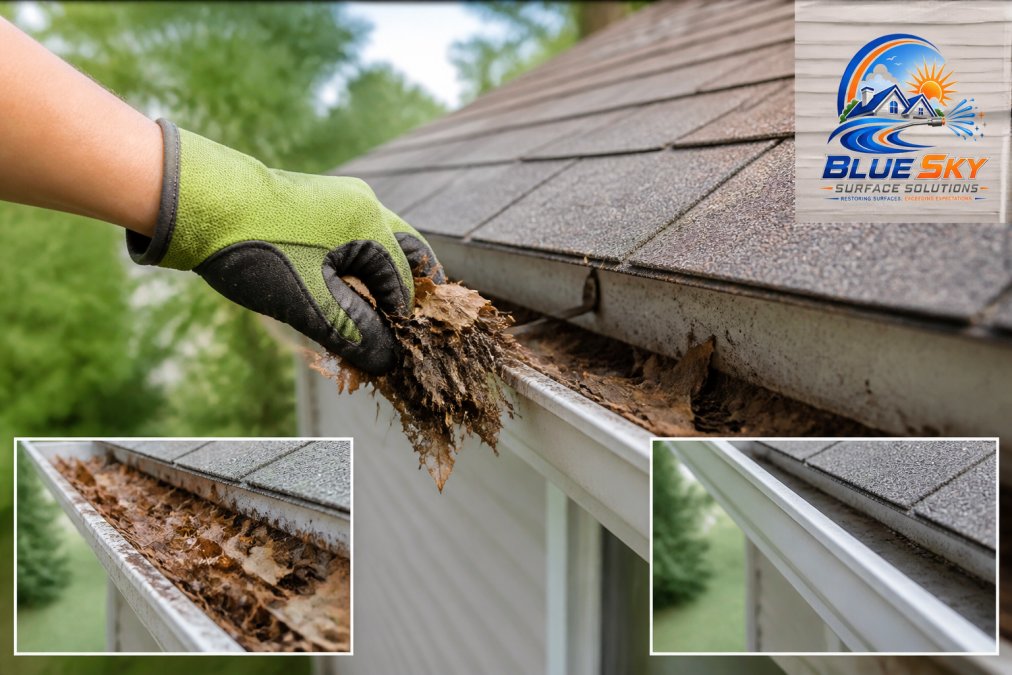
Run your hose and sprayer lines so they will not kink or drag across the shingles. If you are working near gutters, check that they are clear so runoff has somewhere to go.
Step 2: Apply the Solution and Let It Dwell
Apply the mix from the bottom of the roof upward, working in manageable sections so the solution does not dry before it finishes working. Once applied, leave it alone. Dwell time does the cleaning; scrubbing and pressure do not.
Let the solution sit for roughly ten to fifteen minutes, then check the test area. If the stains have lightened, you are on track. If not, give it a few more minutes rather than reaching for a stronger mix.
Step 3: Rinse and Inspect
Rinse the roof thoroughly with plain water, again working top-down so dirty runoff does not stain sections you already cleaned. Pay attention to gutters and downspouts, where residue collects.
Once the roof is dry, walk the perimeter and check for missed patches, especially in shaded areas where algae grows heaviest. A second light application on stubborn spots is normal.
How Long Does Roof Soft Washing Take?
How long does roof soft washing take? For a typical single-story home, plan on two to three hours from setup to final rinse. Two-story homes and heavily stained roofs often run longer, mostly because of safety setup and the extra dwell time.
The breakdown usually looks like this:
| Stage | Typical Time | What Slows It Down |
|---|---|---|
| Setup and safety | 30-45 minutes | Steep pitch, tall ladder placement |
| Pre-rinse | 15-20 minutes | Large roof area, heavy debris |
| Apply and dwell | 30-45 minutes | Heavy staining, cool weather |
| Rinse and inspect | 30-45 minutes | Gutters, landscaping protection |
Weather matters more than most people expect. On a hot, sunny day the solution can dry before it finishes working, so many crews start early in the morning or work in sections on shaded sides first.
Protecting Plants During Roof Cleaning
Protecting plants during roof cleaning comes down to two moves: saturate them with plain water before you start, and rinse them again immediately after any runoff touches them. Bleach-based solutions burn foliage fast, and a prized shrub does not recover from a direct hit.
Cover delicate plants and outdoor furniture with plastic sheeting, and pull pots away from the drip line. Keep pets and kids indoors for the duration, and do not let runoff pool around garden beds.
If you are cleaning near a vegetable garden, treat the area with extra care and rinse thoroughly, since the solution does not discriminate between weeds and tomatoes.
Common Mistakes That Ruin a Soft Washing Job
The most damaging mistake is reaching for a pressure washer because the stains look stubborn. Pressure strips granules, and once they are gone, the shingle underneath ages fast.
Other frequent errors:
- Letting the solution dry on the roof instead of rinsing while it is still wet
- Mixing bleach with ammonia or an acid cleaner, which creates toxic gas
- Working in direct midday sun, which speeds up drying and reduces dwell effectiveness
- Skipping the pre-rinse, so the solution has to fight through loose dirt first
- Spraying upward from the ground with too much force near vents and flashing
A soft wash that follows the process beats a fast, aggressive job every time. The roof looks better, and it lasts longer.
When to Call a Professional for Soft Washing Roofs
Call a professional when the roof is steep, two stories or higher, heavily stained, or surrounded by landscaping you cannot afford to lose. The equipment and safety setup alone, from fall protection to a proper pump sprayer, often costs more than hiring the job out once.
At Blue Sky Surface Solutions, we handle soft washing as part of a full exterior care routine, alongside house and gutter cleaning and tree services. Our team works in Hamilton County and the surrounding area. Request a free quote and we will assess your roof, walk you through the process, and give you a straight answer on whether it needs a soft wash or something else entirely.
Frequently Asked Questions
What is the correct way to soft wash a roof?
Apply a low-pressure solution of sodium hypochlorite and surfactant, let it dwell for 10-15 minutes, then rinse gently. Never use high pressure, which damages shingles.
What solution is used for soft washing a roof?
A mix of sodium hypochlorite (bleach) and a surfactant is standard. Dilution varies by roof type and stain severity. Always follow manufacturer instructions for the roof soft washing solution you choose.
Can you soft wash a roof yourself?
Yes, but it requires safety equipment like a harness, non-slip boots, and eye protection. If you lack experience with heights or chemicals, hiring a professional is safer and often more cost-effective.
How long does it take to soft wash a roof?
Most single-family homes take 1 to 3 hours, depending on roof size, pitch, and staining. The dwell time for the solution adds 10-15 minutes per section.
How long should a roof-cleaning solution sit before rinsing?
Let the solution dwell for 10-15 minutes. Do not let it dry on the roof, as this can damage shingles. Rinse before it evaporates.
Is soft washing safe for asphalt shingles?
Yes, soft washing is safe for asphalt shingles when done correctly with low pressure and proper chemicals. High pressure is what causes damage, not the soft washing method itself.
How do you protect plants when soft washing a roof?
Cover plants with plastic sheeting and pre-wet the soil around them. After cleaning, rinse plants thoroughly with fresh water to dilute any runoff. This protects plants during roof cleaning.
When should you hire a professional roof cleaner?
Hire a professional if your roof is steep, tall, or heavily stained, or if you lack safety gear and experience. Professionals also carry insurance and know how to protect your landscaping.
A roof that stays coated in algae and mildew does not just look tired; it ages faster and drags down your curb appeal. If you would rather not spend a weekend on a ladder with a sprayer, Blue Sky Surface Solutions offers professional soft washing, house and gutter cleaning, and tree services across Hamilton County. Get started with Blue Sky Surface Solutions and request your free quote today.