 ultimate-guide
Average Cost of Residential Roof Cleaning in 2026
Table of Contents
- What Drives the Average Cost of Residential Roof Cleaning
- Soft Wash vs. Pressure Washing: Methods That Affect Your Quote
- Soft Wash Roof Cleaning Benefits for Shingle Longevity
- How Often to Clean Roof Shingles to Protect Your Investment
- Professional Gutter Cleaning Services and Their Impact on Roof Health
- Getting an Accurate Roof Cleaning Quote: What to Ask
- DIY vs. Professional Roof Cleaning: Weighing the Real Costs
- Conclusion: Protect Your Roof and Your Budget
- Frequently Asked Questions
Last Updated: September 27, 2026
What Drives the Average Cost of Residential Roof Cleaning
The average cost of residential roof cleaning depends on a handful of measurable factors: roof size, pitch, height, material, and how much organic growth has taken hold. Two homes on the same street can receive quotes that differ by hundreds of dollars for reasons that have nothing to do with the contractor's mood that morning.
At Blue Sky Surface Solutions, we quote exterior cleaning work across Hamilton County every week, and the same variables come up every time. Below, we'll break down exactly what moves the number up or down, how soft washing compares to pressure washing, and how to read a quote so you know what you're actually paying for.
Here's the part most homeowners get wrong: the roof itself is only part of the job. Access, runoff control, and gutter condition often decide the final figure more than the shingle count does.
Roof Size, Pitch, and Stories: The Big Three Cost Variables
Roof size is measured in roofing squares, where one square equals 100 square feet of surface area. That distinction matters because a steep roof has more surface area than its footprint suggests. A two-story house with a steep pitch can carry nearly double the square footage of a single-story ranch with the same footprint.
Pitch and height add labor and safety costs on top of that:
- Low-slope roofs are walkable and faster to treat
- Steep pitches require fall protection and slower, more careful movement
- Two-story homes need taller equipment reach and more setup time
- Complex rooflines with valleys, dormers, and skylights take longer to work around
A common mistake is comparing quotes without confirming whether the contractor measured actual surface area or just the home's footprint. Ask which one they used. The answer tells you whether the quote is realistic.
Roof Material and Condition: Why Some Jobs Cost More
Asphalt shingles, tile, metal, and wood shake each respond differently to cleaning agents and pressure. Asphalt shingles are the most common and generally the most straightforward to treat. Tile and metal hold up well but may need gentler chemistry to protect finishes. Wood shake requires the most caution of all.
Condition matters just as much as material. Light algae staining is a surface issue. Heavy moss, lichen, and accumulated debris removal take multiple passes, longer dwell times, and more chemical solution, all of which raise labor costs.
Soft Wash vs. Pressure Washing: Methods That Affect Your Quote
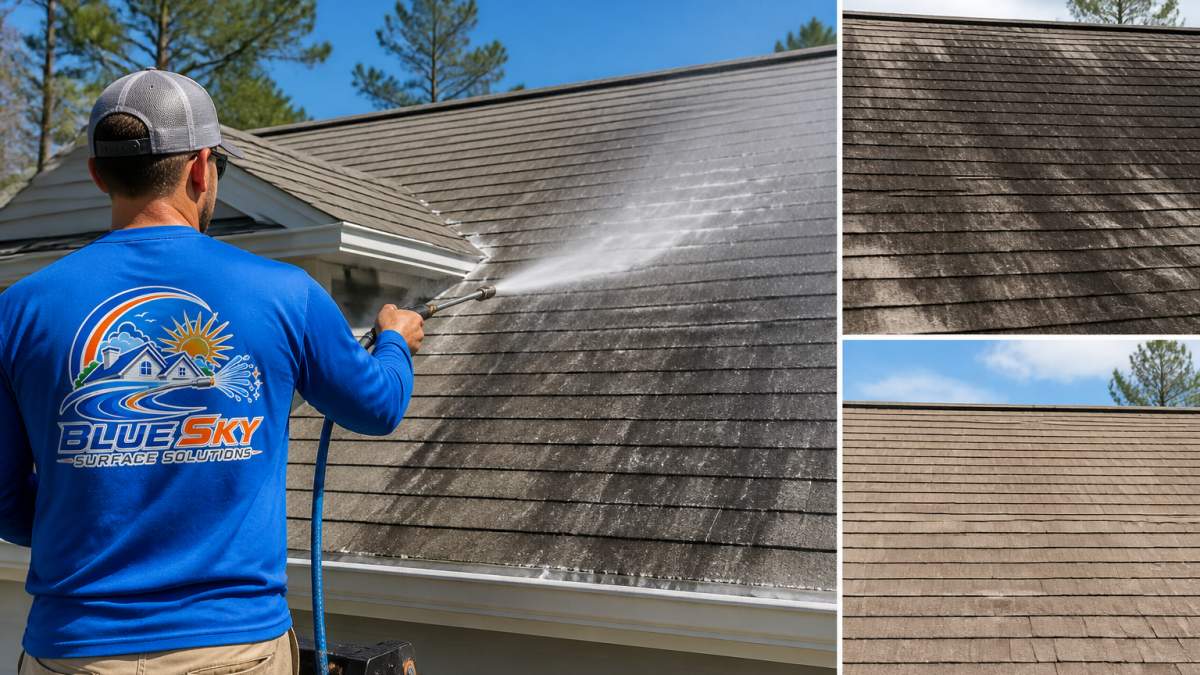
Soft washing is the standard method for shingle roofs, and it is what most manufacturers' guidelines point to. The process applies a diluted chemical solution at low pressure, letting the cleaning agent do the work, then rinses everything away. Pressure washing relies on force instead of chemistry, which is why it costs less upfront and far more later.
| Factor | Soft Wash | Pressure Washing |
|---|---|---|
| Pressure used | Low, garden-hose level | High, mechanical force |
| Best for | Asphalt shingles, tile, painted surfaces | Concrete, driveways, masonry |
| Effect on shingles | Preserves granules | Strips granules |
| Warranty risk | Low when done correctly | High |
| Typical labor time | Longer dwell and rinse cycles | Faster pass per area |
The cost difference between the two methods usually comes down to time and materials, not equipment. Soft washing takes longer and uses more chemical, so it quotes higher. That gap is the price of not destroying your roof.
Soft Wash Roof Cleaning Benefits for Shingle Longevity
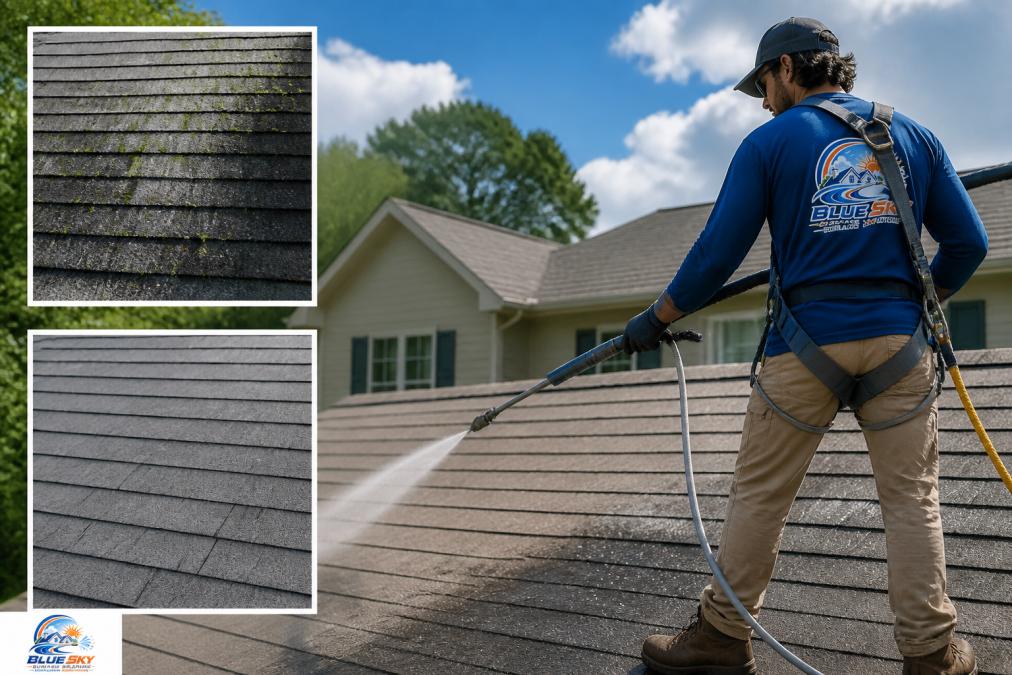
Soft wash roof cleaning benefits shingle longevity by removing the organisms that feed on shingles rather than blasting the surface they live on. Algae, moss, and lichen hold moisture against the roof deck and slowly break down the material beneath them. Removing that growth stops the process.
There is a second benefit that rarely gets mentioned: appearance. Those black streaks running down a roof are not dirt. They are algae, and they spread. A soft wash clears them completely, and the difference in curb appeal is immediate.
What most guides miss is that soft washing also protects the rest of your exterior. The runoff from a properly managed soft wash is controlled and diluted, so it does not stain siding, kill landscaping, or streak windows the way an uncontrolled spray can.
How Often to Clean Roof Shingles to Protect Your Investment
Most homes need roof cleaning every two to three years, though shaded roofs and homes surrounded by trees often need it annually. How often to clean roof shingles is really a question about your specific conditions, not a fixed calendar.
Watch for these signals that it's time:
- Visible black streaks or green patches spreading across shingles
- Moss growing in the valleys or along the ridge
- Granules collecting in gutters, which suggests surface breakdown
- Debris from overhanging branches piling up on the roof plane
Regular preventative maintenance costs far less than waiting. Once moss establishes a root structure under the shingle edges, removal takes longer and the risk of lifting shingles rises.
Professional Gutter Cleaning Services and Their Impact on Roof Health
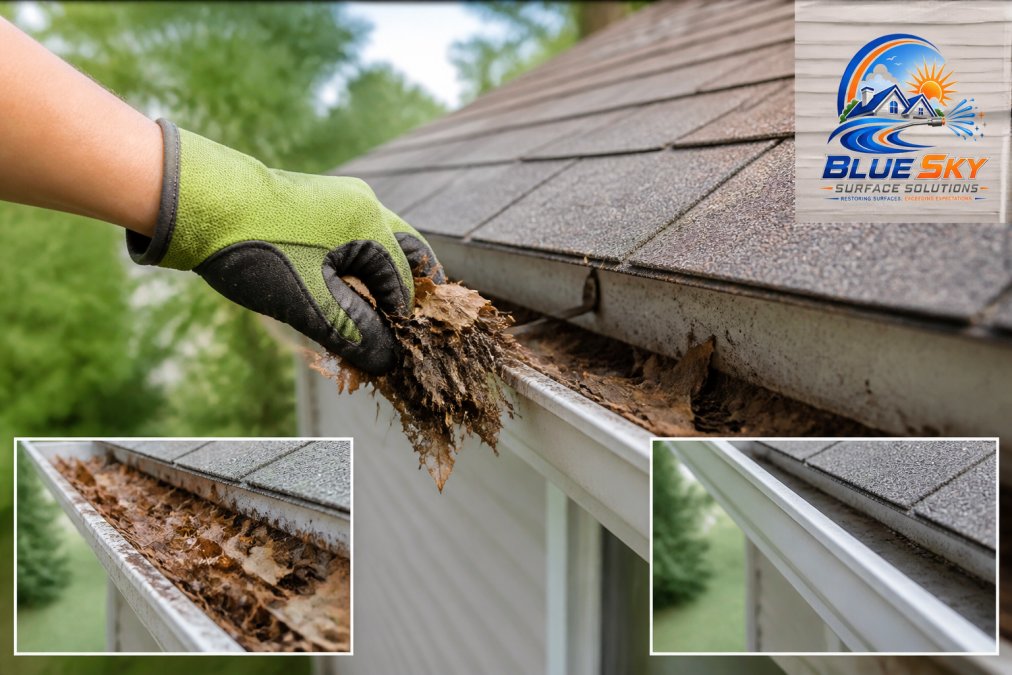
Professional gutter cleaning services protect the roof by keeping water moving away from it. When gutters clog, water backs up under the roof edge, rots the fascia, and eventually works into the deck. A clean roof with clogged gutters is still a roof with a water problem.
This is where bundling makes financial sense. A contractor already on the roof for cleaning can clear the gutters in the same visit, which removes a second trip charge and a second setup. The debris removal from the roof surface and the gutters happens in one pass.
For homes with heavy tree cover, gutter cleaning is not optional maintenance. It is the difference between a roof that drains and one that holds water against its own edge.
Getting an Accurate Roof Cleaning Quote: What to Ask
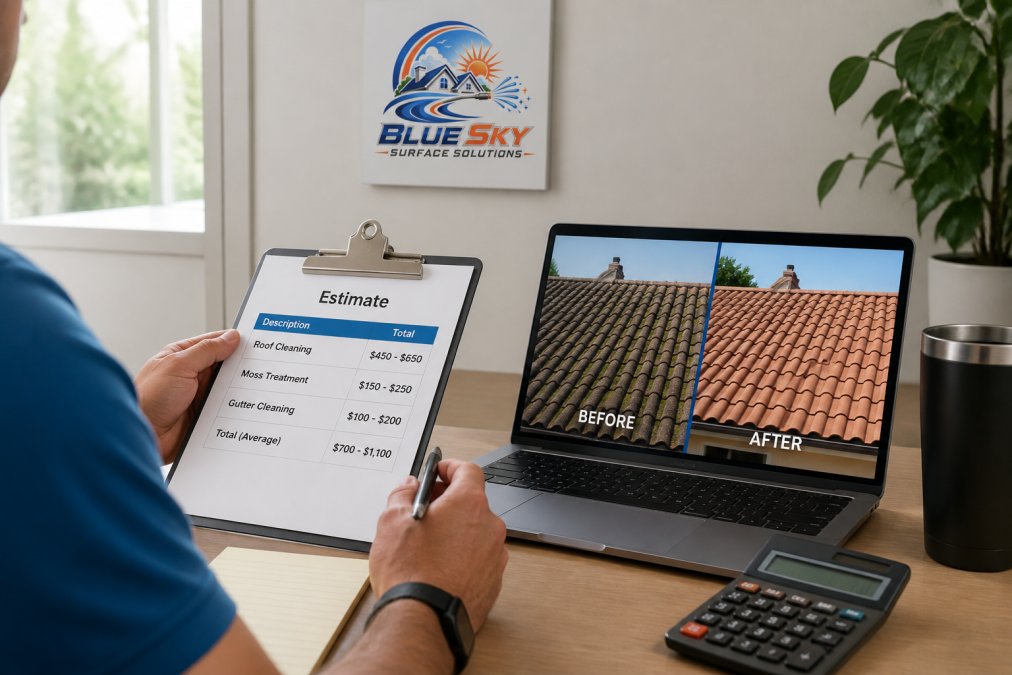
An accurate roof cleaning quote comes from an on-site inspection, not a phone estimate. Anyone quoting a firm number without seeing the roof is guessing, and the guess usually changes once they arrive. But even an on-site quote is only useful if you understand how it was built, because two contractors can quote the same roof using two different pricing structures and produce numbers that look comparable when they are not.
Per square foot vs. flat rate. Most residential roof cleaning is priced one of two ways. Per-square-foot pricing multiplies a rate by the roof's measured surface area (remember, one roofing square equals 100 square feet of surface, and a steep roof has more surface than its footprint). Flat-rate pricing bundles the whole job into one number based on the contractor's experience with similar homes.
- The cleaning method (soft wash, pressure wash, or a hybrid) and why it suits your roof material
- Whether the price is based on measured surface area or the home's footprint
- Whether gutter cleaning and debris removal are included or billed separately
- How landscaping, pets, and runoff are protected during and after the job
- Whether a second treatment is included if the growth does not come off in one pass
- Proof of insurance and, where required, licensing
- The warranty or guarantee on the work itself
DIY vs. Professional Roof Cleaning: Weighing the Real Costs
DIY roof cleaning looks inexpensive until you price the whole job. Equipment rental, cleaning chemicals, safety gear, and your own time all add up, and none of it comes with a warranty.
Conclusion: Protect Your Roof and Your Budget
Roof cleaning pricing is not arbitrary. It tracks roof size, pitch, material, condition, and the method used, and once you understand those variables you can read any quote with confidence. The homeowners who save the most are the ones who clean on a schedule instead of waiting for a problem.
Frequently Asked Questions
How much should I pay to have my roof cleaned?
Roof cleaning cost varies based on roof size, pitch, material, and local labor rates. Complex roofs or heavy moss can influence the final price. Always get multiple quotes and ask what's included, such as gutter cleaning or debris removal. For a personalized estimate, contact a professional roof cleaning service.
Is getting your roof cleaned worth it?
Yes, regular roof cleaning removes algae, moss, and debris that trap moisture and shorten shingle life. It also boosts curb appeal, which can matter when selling. Soft washing is gentle on shingles and helps maintain your roof warranty. Many homeowners find it a cost-effective way to avoid premature roof replacement.
What factors increase the cost of roof cleaning?
Key factors include roof size (measured in square footage), pitch, number of stories, and the type of staining (algae, moss, lichen). Two-story homes and steep roofs require more time and safety equipment. Heavy growth may need multiple treatments. Gutter cleaning and debris removal also add to the total. Always ask for a detailed breakdown.
How often should a house roof be cleaned?
Most roofs benefit from cleaning every 2 to 3 years, depending on tree cover and climate. Homes surrounded by trees or in humid areas may need annual service. Inspect your roof each spring for black streaks or moss. Pairing roof cleaning with professional gutter cleaning services keeps water flowing away from your home.