 ultimate-guide
How to Remove Efflorescence From Brick Walls
Table of Contents
- What Is Efflorescence and Why It Appears on Brick
- Understanding White Salt Deposits on Brick Walls
- Dry Removal Methods: When Brushing Works
- Water-Based and Chemical Cleaning Approaches
- Professional Soft Washing Benefits for Masonry Cleaning Services
- Safety Precautions and Substrate-Specific Considerations
- Long-Term Prevention and Moisture Management
- When to Call a Professional
- Frequently Asked Questions
Last Updated: September 23, 2026
What Is Efflorescence and Why It Appears on Brick
Efflorescence is the white, powdery salt deposit that forms on brick, masonry, and mortar surfaces when water-soluble salts migrate to the surface and crystallize. Understanding how to remove efflorescence from brick walls starts with understanding what causes it in the first place.
Water is the culprit. When moisture moves through porous brick and mortar, it carries dissolved salts to the surface. As water evaporates, the salts crystallize, creating the white residue. This is especially common on new masonry, recently repointed mortar joints, or walls exposed to heavy rain, snow melt, or capillary action from damp soil.
Efflorescence is cosmetic in most cases, but ignoring the moisture problem driving it means cleaning repeatedly. Most homeowners remove the white deposits but never address the water intrusion underneath.
The real solution requires both cleaning existing efflorescence and preventing future moisture migration. Professional masonry cleaning services focus on diagnosis first, cleaning second.
Understanding White Salt Deposits on Brick Walls
White salt deposits appear as a fine, chalky powder on mortar joints and lower wall portions. Brick and mortar are porous materials that absorb water like a sponge.
Groundwater, rain, or snow melt seeps into the brick, dissolving salts in the mortar and soil. When water reaches the surface and evaporates, the salts crystallize, creating the white powdery coating.
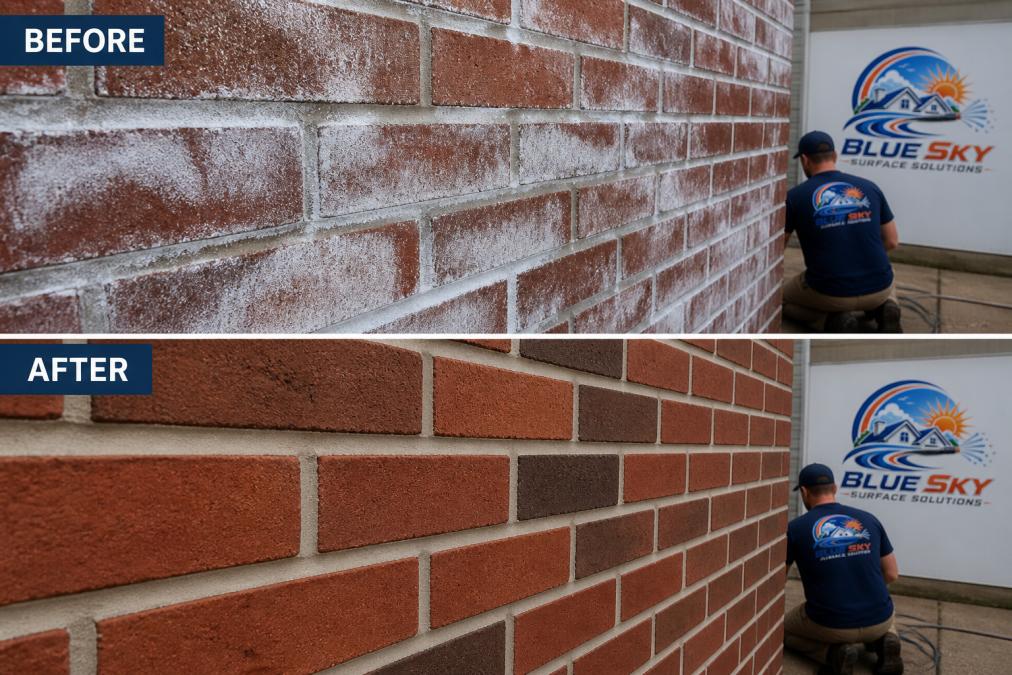
New masonry is particularly prone to efflorescence due to excess water and salts in mortar. Walls with poor drainage, damp foundations, or frequent wetting are high-risk. Freeze-thaw cycles accelerate the problem by forcing more water through the material.
Efflorescence appears on the surface as white powder. Subflorescence occurs when salts crystallize beneath the surface, causing spalling and structural damage. Subflorescence signals serious moisture problems requiring professional intervention.
Dry Removal Methods: When Brushing Works
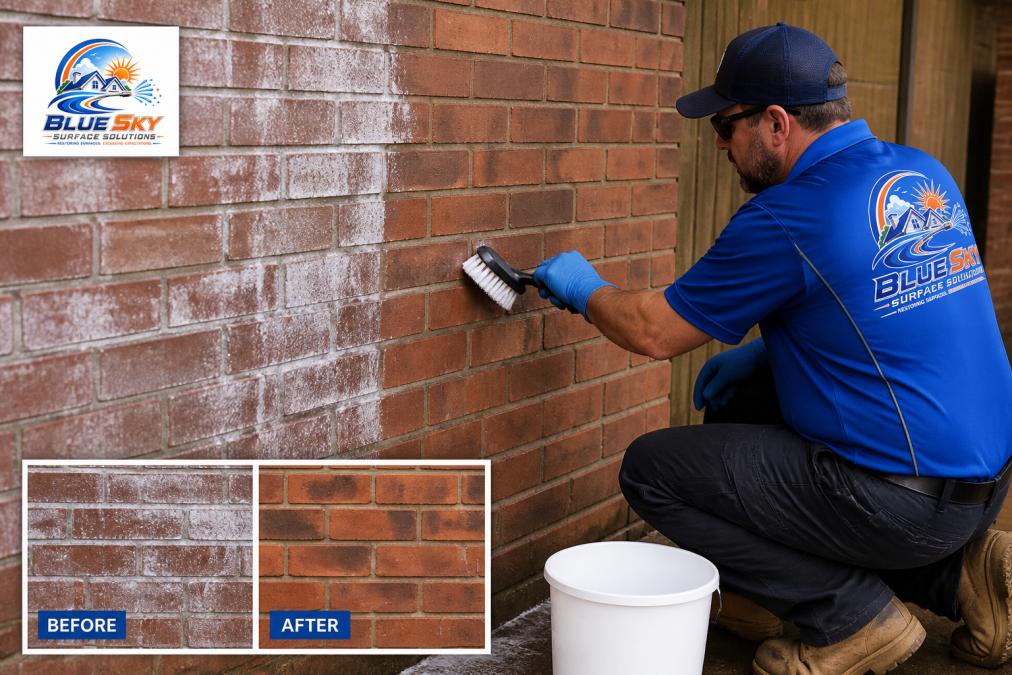
Dry removal using a brush is often attempted first, but understanding when it works, and when it fails, is critical to avoiding wasted time and substrate damage.
Fresh deposits may respond to gentle dry removal, but this window is narrow. Most homeowners don't notice efflorescence until weeks or months have passed, when crystals have hardened and bonded to the surface.
Different brick types respond differently to mechanical removal. Soft, older brick can be damaged by aggressive brushing. Lime mortar, common in older homes, is softer than Portland cement mortar and can be abraded away, compromising joint integrity and allowing future water infiltration.
Attempting dry removal on the wrong substrate can cause permanent damage far more expensive to repair than professional cleaning.
Even if brushing removes visible deposits, it addresses only the symptom. The moisture causing efflorescence continues moving through the wall, and new deposits form within weeks or months. This cycle indicates an active moisture problem requiring professional diagnosis and remediation.
Professional assessment identifies the moisture source, determines safe cleaning methods, and recommends long-term prevention, delivering a lasting solution rather than temporary cleanup.
Water-Based and Chemical Cleaning Approaches
When dry brushing isn't sufficient, water-based and chemical cleaning methods become necessary. However, the choice of method depends on substrate type, moisture source, and the severity of the salt deposits, distinctions that are critical to preventing damage.
Distinguishing efflorescence (white powder on surface) from subflorescence (salts crystallizing beneath surface, causing spalling) is essential. These conditions look similar but require different treatment. Professional inspection determines the appropriate response.
Water-based soft washing uses low-pressure water (under 500 PSI) with biodegradable detergents to break down salt deposits safely. It's gentler than pressure washing and preferred for older brick, lime mortar, and historic masonry.
Soft washing is effective for light to moderate efflorescence but requires proper equipment, trained application, and thorough rinsing.
Chemical cleaning with hydrochloric acid is highly effective but carries significant risks unsuitable for DIY application:
- Substrate damage: Acid etches softer brick, dissolves lime mortar, and damages protective patina.
- Chemical burns: Hydrochloric acid causes severe skin, eye, and lung damage.
- Residual acid: Improper neutralization causes delayed damage weeks after cleaning.
- Environmental impact: Acid runoff contaminates soil and groundwater without proper disposal.
Eco-friendly alternatives: For homeowners concerned about chemical impact, several alternatives exist. Enzymatic cleaners break down organic contaminants and some salt deposits without harsh chemicals. Citric acid (from citrus-based cleaners) is milder than hydrochloric acid and works on light to moderate deposits, though it's slower and less effective on heavy crystallization. Poultice treatments, clay-based pastes applied to the wall, draw salts out of the brick over time without liquid runoff, though this method is slow and requires multiple applications.
These alternatives are genuinely safer for the environment and for sensitive substrates, but they're also slower and less effective on stubborn deposits. The trade-off between speed, effectiveness, and environmental impact should be weighed based on the severity of the problem.
Why professional application matters: The difference between successful chemical cleaning and permanent substrate damage often comes down to proper dilution, application technique, dwell time, and neutralization. Professional masonry cleaners understand substrate-specific chemistry, which acid concentration is safe for lime mortar versus Portland cement, how long to allow the chemical to work before rinsing, and how to neutralize residual acid. They also have the equipment to rinse thoroughly without forcing water into cracks where it can cause freeze-thaw damage.
Attempting acid washing without this expertise frequently results in etched brick, damaged mortar joints, or residual acid that causes problems weeks later.
Professional Soft Washing Benefits for Masonry Cleaning Services
Professional soft washing stands apart from pressure washing because it prioritizes the integrity of the masonry while effectively removing efflorescence and other surface contaminants. The approach uses lower water pressure, typically under 500 PSI compared to 3,000+ PSI for pressure washing, combined with biodegradable cleaning solutions designed specifically for brick and mortar.
The benefits are substantial. Soft washing removes not just efflorescence but also algae, mildew, and weathered grime without the risk of blasting away mortar, damaging brick edges, or forcing water into cracks where it can cause freeze-thaw damage. For homeowners concerned about protecting their masonry investment, this method is the gold standard.
Blue Sky Surface Solutions uses professional soft washing techniques that target the salt deposits while preserving the structural integrity of your brick and mortar. Our team understands substrate-specific considerations, softer brick requires different pressure and chemical approaches than harder, denser brick varieties. We also address the moisture source, not just the visible deposits, which means your walls stay cleaner longer.
The process involves inspection, selection of appropriate cleaning agents, careful application, and thorough rinsing. Because we handle the technical aspects, proper chemical dilution, neutralizing agents, and equipment operation, you avoid the risks of DIY attempts that can go wrong quickly.
Safety Precautions and Substrate-Specific Considerations
Removing efflorescence from brick walls involves chemical hazards and the potential for substrate damage if the work isn't done correctly. Safety precautions aren't optional, they're essential.
Personal protective equipment (PPE) is non-negotiable when working with hydrochloric acid or other masonry cleaning chemicals. This includes chemical-resistant gloves, eye protection, respiratory protection if working in enclosed spaces, and protective clothing that covers skin. Acid splashes can cause burns. Fumes can damage lungs. Proper PPE prevents these injuries.
Substrate-specific safety means understanding that different brick types respond differently to cleaning methods. Soft, older brick requires gentler treatment than hard, modern brick. Lime mortar, common in older homes, is more vulnerable to acid damage than modern Portland cement mortar. Historic brick may have a protective lime wash or patina that aggressive cleaning removes permanently. Before any cleaning begins, the masonry type should be identified so the appropriate method is selected.
Ventilation is critical. Never mix different cleaning chemicals, combining acid with bleach, for example, creates toxic chlorine gas.
The environmental impact of chemical runoff also matters. Professional services handle chemical disposal responsibly, preventing groundwater contamination.
Long-Term Prevention and Moisture Management
Removing existing efflorescence is only half the solution. Preventing its return requires addressing the moisture that causes it in the first place.
Water repellents and sealers are the primary prevention tools. Silicone-based water repellents penetrate the brick and mortar, reducing water absorption without trapping moisture inside (which would cause other problems). Acrylic sealers create a protective barrier on the surface. These products don't stop all water intrusion, but they significantly reduce capillary action and moisture migration.
Proper drainage is equally important. Gutters and downspouts should direct water away from the foundation. Grading around the home should slope away from the walls. If the foundation sits in damp soil or near a water source, moisture barriers or French drains may be necessary. Without addressing drainage, no amount of surface cleaning will prevent efflorescence from returning.
Weather conditions also play a role. Homes in areas with frequent freeze-thaw cycles, heavy rainfall, or high humidity are naturally more prone to efflorescence. In these climates, preventative maintenance, regular inspection, timely repairs to cracks, and periodic resealing, becomes essential.
Long-term moisture management means thinking beyond the visible white deposits.
When to Call a Professional
While light efflorescence and surface deposits might seem like a homeowner project, several situations demand professional attention.
Frequently Asked Questions
What causes white salt deposits on brick walls?
White salt deposits form when water-soluble salts migrate through porous brick and mortar to the surface, where moisture evaporates and leaves mineral residue behind. This process, called capillary action, occurs when water moves upward through the masonry substrate. Sources include groundwater, rain penetration, and salts within the brick or mortar itself. Efflorescence is common on new construction and after heavy rain, but persistent deposits signal ongoing moisture problems that require attention.
Can efflorescence be removed permanently?
Efflorescence can be removed from the surface, but permanent elimination depends on controlling the underlying moisture. If water continues to move through the brick and mortar, salt deposits will return. Addressing the root cause, improving drainage, sealing cracks, or installing water repellents, prevents recurrence. Professional masonry cleaning services combined with moisture management strategies offer the best long-term results and protect your property's structural integrity.
Is efflorescence on brick a sign of structural damage?
Efflorescence itself is not structural damage, but it indicates moisture is moving through your masonry. If moisture penetration continues unchecked, it can lead to freeze-thaw damage, mortar deterioration, and eventual structural issues. Early detection and professional intervention prevent costly repairs. A trained eye can distinguish between harmless surface deposits and signs of deeper moisture problems that threaten your home's foundation and walls.
Why is professional intervention recommended for brick efflorescence?
Professional soft washing benefits include safe removal without damaging the brick substrate, proper identification of moisture sources, and application of appropriate sealers or water repellents. Professionals use the right chemical agents, protective equipment, and techniques for your specific brick type. They can also assess whether efflorescence signals moisture intrusion requiring structural solutions.