 how-to
What Are the Best Tools for Safe Gutter Leaf Removal?
Last Updated: October 25, 2026
Quick Summary
The best tools for safe gutter leaf removal are ground-based options like telescoping poles with scoops, leaf blower attachments, and gutter vacuums, which let you work from the ground and eliminate fall risk. For dry leaves on single-story homes, a telescoping pole is affordable and easy to control; for wet or compacted debris, a gutter vacuum handles the job better. If your gutters exceed 25 feet or debris is severe, professional service is the safest choice.
- Telescoping poles reach 15 to 25 feet and work best for dry leaves on lower gutters
- Gutter vacuums handle both dry and wet debris but cost more and suit frequent cleaning
- Wear eye protection with leaf blowers since debris travels fast and unpredictably
- Never work on a ladder alone; have a spotter and use a stabilizer bar on uneven ground
- Professional service is recommended for gutters above 25 feet or steep, complex roof layouts
Table of Contents
- Why Gutter Leaf Removal Matters for Your Home
- Gutter Cleaning Tools That Work Without a Ladder
- How to Remove Leaves from Gutters Safely
- Gutter Cleaning Tools for Ladder-Based Cleaning
- Gutter Cleaning Safety: Choosing the Right Approach
- Matching Tools to Your Gutter Cleaning Needs
- When to Call a Professional for Gutter Cleaning
- Frequently Asked Questions
Why Gutter Leaf Removal Matters for Your Home
Clogged gutters filled with leaves and debris can damage your foundation, roof, and landscaping.
Regular gutter leaf removal keeps water flowing properly and protects your investment, but climbing a ladder carries real risk, so understanding your safe options matters. Learn how often gutters need cleaning in Indiana to understand the importance of regular maintenance.
At Blue Sky Surface Solutions, we help homeowners maintain their gutters without putting themselves in danger.
Gutter Cleaning Tools That Work Without a Ladder
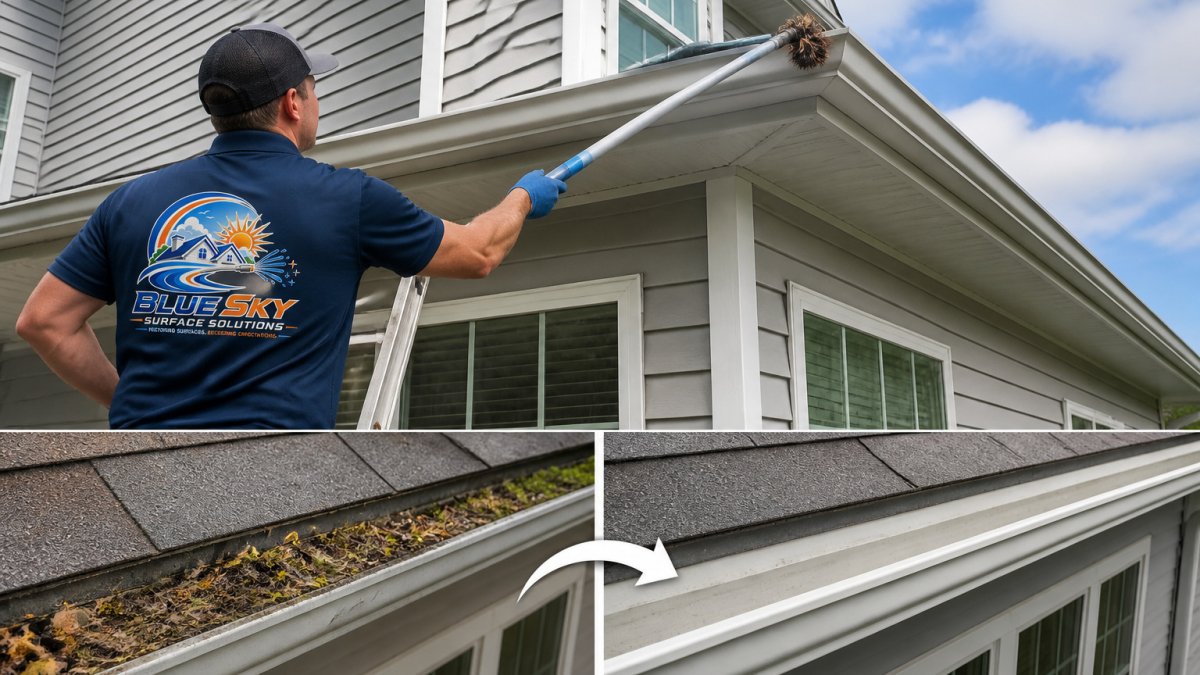
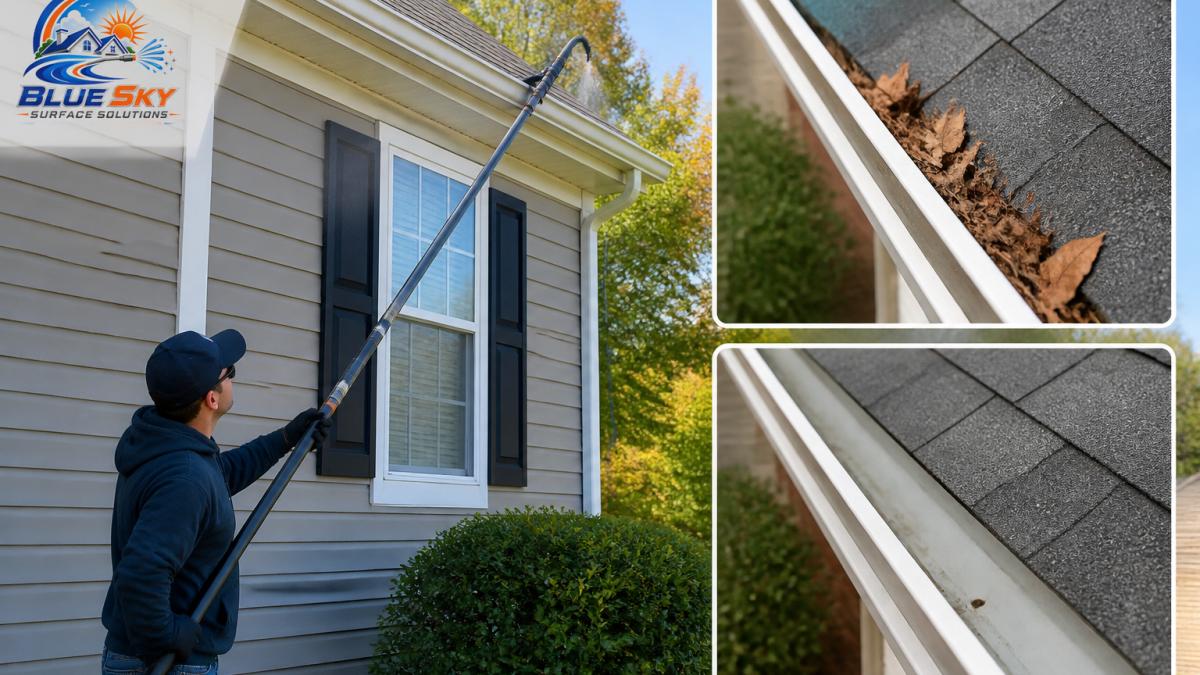
Ground-based gutter cleaning tools let you work safely from the ground, eliminating the ladder entirely, the biggest safety concern most homeowners face. Explore detailed safe methods for ladder-free gutter cleaning that complement the tools discussed.
Telescoping poles and extension attachments
A telescoping pole extends your reach from the ground without climbing. These poles typically reach 15 to 25 feet, covering most residential gutters, and stay lightweight for extended use.
Look for adjustable sections, a comfortable grip, and a locking mechanism that holds the extension firmly.
The main limitation is reach: if your gutters sit higher than your pole extends, you'll need a different approach. Controlling the attachment from that distance also takes practice.
Leaf blower attachments for gutters
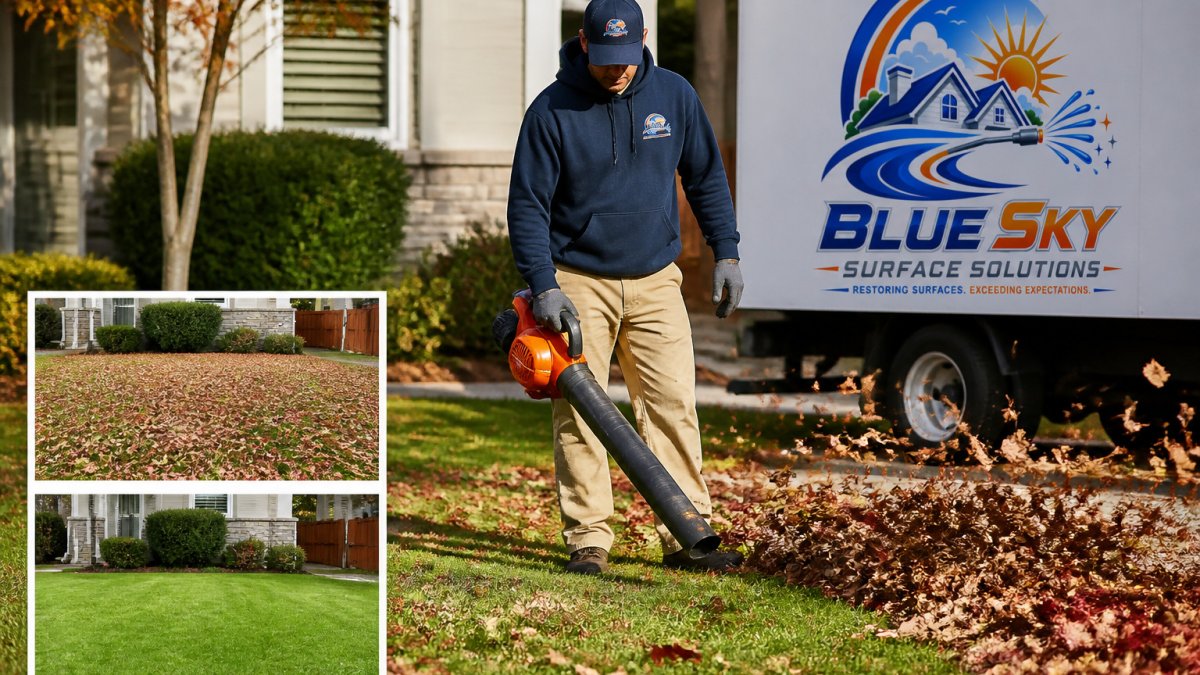
A leaf blower with a gutter cleaning attachment directs air upward so you can blow leaves out of gutters from the ground onto a tarp or into a collection area.
This works best for dry leaves and light debris; wet, compacted leaves don't respond well to air pressure, and the attachment makes the blower heavier and harder to control overhead.
The benefit is speed: for seasonal cleanup, a blower attachment clears gutters faster than scooping. The downside is noise and the mess of debris falling below.
Gutter vacuums and collection systems
A gutter vacuum sucks debris directly out of the gutter into an attached collection bin.
These tools handle dry and wet debris, run quieter than blowers, and contain the mess in the bin instead of dropping it to the ground.
The trade-off: weight and cost. Gutter vacuums are heavier than poles or blower attachments, and they're more expensive.
How to Remove Leaves from Gutters Safely
The method you choose depends on your debris type, gutter height, and physical ability. Here's how to handle the most common scenarios.
Clearing dry leaves and twigs
Dry leaves are easiest. Use a gutter scoop on a telescoping pole or a leaf blower attachment, starting at one end and working toward the downspout so debris falls through the opening.
Wear gloves and eye protection, since dry debris kicks up dust; add a dust mask if you're sensitive.
Work in sections rather than clearing the whole system at once. Take breaks, stay hydrated, and keep movements controlled, rushing leads to mistakes.
Handling wet, compacted debris
Wet leaves pack down and stick to the gutter bottom, so a scoop or brush won't budge them easily.
The safest approach: break the debris loose with a brush, then scoop it out. Take your time, forcing wet debris can strain your arms and back.
If the debris is severely compacted, consider professional help. Struggling with heavy, wet debris increases injury risk and takes much longer than it should.
Downspout verification and cleanup
After removing leaves, check the downspouts. Debris can block the opening or lodge inside the pipe.
Use a plumbing snake or high-pressure water to clear blockages, or a straightened wire coat hanger to probe clogs. Be gentle, downspouts dent easily.
Once water flows freely, your system is working properly. Rake or sweep the fallen debris into a pile or collection bin.
Gutter Cleaning Tools for Ladder-Based Cleaning
Some homeowners prefer ladder-based cleaning for direct access and control. If you go this route, a stable, correctly angled ladder paired with the right hand tools turns a risky job into a manageable one.
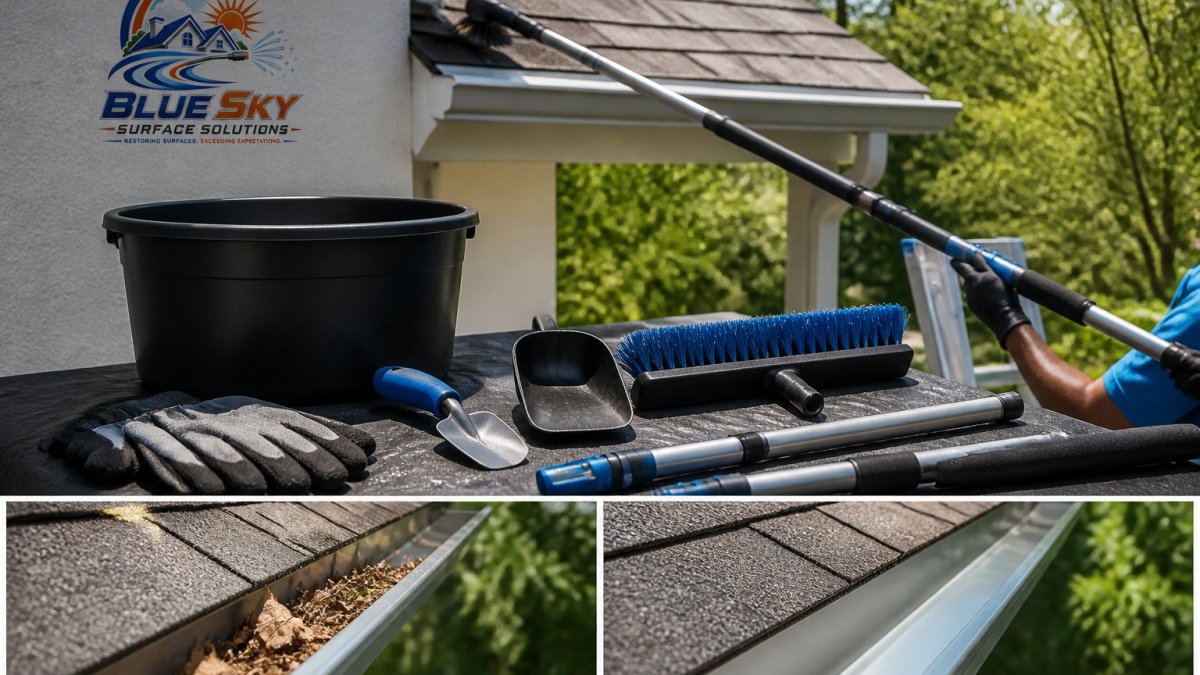
Brushes and scoops for debris removal
A gutter brush or scoop lets you remove debris by hand.
Brushes work well for light debris and dust; scoops are better for leaves and heavier material.
Keep one hand on the ladder at all times, so secure your bucket or bag with a hook or carabiner clipped to a rung.
The advantage: precision. You can see exactly what you're doing and remove debris selectively.
Ladder stability and safety equipment
If you use a ladder, invest in stability before attachments.
Set the ladder at the correct angle: the base should sit about one quarter of the working height away from the wall.
Wear a safety harness if your gutters are more than 10 feet high. It won't prevent a fall, but it limits how far you fall and reduces injury severity. Tie it to a secure anchor point, never to the gutter itself, the gutter is fastened with spikes or hangers not rated for a fall load, and pulling on it can loosen the run.
Have someone spot you. A second person can steady the ladder, hand you tools, and call for help if something goes wrong. Never clean gutters alone.
Gutter Cleaning Safety: Choosing the Right Approach
Safety should drive your decision, but "safer" is not one thing. The right method depends on gutter height, roof layout, debris type, and your physical ability. Use the framework below to match method to situation rather than guessing.
Ground-based vs. ladder cleaning: A safety comparison
Ground-based tools eliminate the biggest risk: falling from a ladder.
Ladder cleaning puts you at height with fall risk, even a short fall can cause serious injury.
From a pure safety standpoint, ground-based tools win. They're slower and require more technique, but the risk profile is much lower.
If you have mobility issues, balance problems, or fear of heights, ground-based tools are the right choice.
Tool reach limits and gutter height considerations
Your gutter height determines which tools work.
Measure your gutter height before buying tools.
Also consider roof pitch: a steep roof means gutters sit farther back, making ground-based reach harder, while a shallow pitch lets you work more easily from the ground.
Wind is another factor: on windy days a long pole becomes harder to control, so wait for calmer conditions or switch methods.
A practical decision guide by situation
Use this table to match the method to your setup, a starting point, not a substitute for judgment on the day.
| Gutter height | Roof layout | Debris type | Recommended approach |
|---|---|---|---|
| Up to about 15 feet | Simple, shallow pitch | Dry leaves and twigs | Telescoping pole with scoop or brush |
| Up to about 15 feet | Simple, shallow pitch | Light dry debris, seasonal | Leaf blower attachment with eye protection |
| 15 to 25 feet | Simple, accessible | Dry or mixed | Long pole at partial extension, or ladder with stabilizer and spotter |
| 15 to 25 feet | Steep or complex | Wet, compacted | Gutter vacuum from the ground, or professional service |
| Above 25 feet | Any | Any | Professional service |
| Any height | Any | Heavy, wet, or severely packed | Professional service |
Safe use of blowers and wet-cleaning tools
Blowers and wet-cleaning tools add their own hazards. Wear eye protection whenever you blow debris, since grit and small twigs travel fast and unpredictably.
For wet cleaning, keep electrical cords and connections out of standing water and use a GFCI-protected outlet. Never direct a hose or pressure stream at the gutter's fasteners or the fascia seam, and avoid forcing water behind the gutter, which can soak the structure.
Matching Tools to Your Gutter Cleaning Needs
The best tool depends on your situation. Use this framework to decide.
| Situation | Best Tool | Why |
|---|---|---|
| Dry leaves, single-story home, good balance | Telescoping pole with scoop | Safest, easy to control, affordable |
| Seasonal leaf cleanup, dry debris | Leaf blower attachment | Fast, minimal physical strain, contains mess |
| Wet or compacted debris | Gutter vacuum | Handles wet material, less physical demand |
| High gutters (20+ feet) | Professional service | Safest option for height and complexity |
| Frequent cleaning, two-story home | Gutter vacuum | Worth the investment for regular use |
| Physical limitations or mobility issues | Professional service | Eliminates risk entirely |
Start by assessing debris type: dry leaves suit a pole or blower, while wet, packed debris needs a vacuum or professional help.
Next, measure your gutter height and roof pitch. High gutters or steep roofs limit your ground-based options.
Finally, think about frequency. If you clean gutters once a year, a simple pole makes sense.
When to Call a Professional for Gutter Cleaning
Professional gutter cleaning removes the guesswork and the risk. Understand professional gutter cleaning costs and tools to make an informed hiring decision.
Consider professional help if your gutters are very high, your roof is steep, or the debris is severe. If mobility issues or health concerns make climbing or overhead work risky, professional service is the smart choice. Discover gutter guards as a long-term solution to reduce the frequency of leaf removal.
OSHA guidelines on ladder safety emphasize that falls from height are a leading cause of serious injury.
Blue Sky Surface Solutions handles gutter cleaning for homeowners throughout the area.
If you're unsure whether to tackle it yourself or hire help, a professional evaluation gives you the information you need to decide. Get a professional gutter cleaning estimate when deciding whether to hire help.
Gutter maintenance protects your home from water damage and extends the life of your roof and foundation.
Frequently Asked Questions
What is the safest tool for removing leaves from gutters?
Ground-based gutter cleaning tools eliminate fall risk entirely. Telescoping poles with brush or scoop attachments let you reach 13-foot gutters from the ground. If you must use a ladder, a sturdy step ladder with a stabilizer bar and a gutter scoop are safest. For complex rooflines or multi-story homes, professional gutter cleaning is the safest option, professionals have equipment and training that homeowners typically lack.
Can you clean gutters without climbing a ladder?
Yes. Telescoping poles, leaf blower attachments, and gutter vacuums all allow ground-based cleaning. Leaf blowers work well for dry leaves and twigs, while vacuum systems collect debris into a bag. Telescoping poles with brush or scoop attachments give you direct control over debris removal. The trade-off is that ground-based tools may require multiple passes on heavily compacted or wet debris, and reach is limited to about 13 feet.
How often should gutters be cleared of leaves?
Most homes need gutter cleaning twice yearly: once in late fall after leaves drop, and again in spring to remove winter debris. Homes surrounded by trees may need quarterly cleaning. Check your gutters after heavy storms as well. Regular clearing prevents water backup, protects your roof and foundation, and avoids costly damage.
When should you hire a professional gutter cleaner?
Consider professional cleaning if your home has a steep roof, multiple stories, complex rooflines, or heavy tree coverage. Professionals have ladders, harnesses, and insurance. If you're uncomfortable on a ladder, have mobility issues, or lack the right tools, hiring a professional eliminates risk and saves time.