 how-to
How Often to Clean Gutters in Indiana: A Seasonal Guide
Table of Contents
- How Often to Clean Gutters in Indiana
- How Many Times a Year to Clean Gutters
- Best Time of Year to Clean Gutters
- Gutter Cleaning Frequency With Trees
- Signs Your Gutters Need Cleaning
- Gutter Cleaning Checklist for Homeowners
- When to Call a Professional
- Conclusion
- Frequently Asked Questions
Last Updated: October 17, 2026
How Often to Clean Gutters in Indiana
Gutters protect your home from water damage. When they clog, rainwater backs up and spills over the edges. This can harm your roof, fascia, foundation, and landscaping. The question isn't whether to clean gutters, it's how often.
At Blue Sky Surface Solutions, we help homeowners across Hamilton County maintain their properties year-round. How often to clean gutters in Indiana depends on your specific situation: trees nearby, seasonal debris, and local weather all play a role.
Most homeowners need to clean gutters at least twice a year. But some properties need more frequent attention. Let's walk through the factors that determine your cleaning schedule and how to know when action is needed.
How Many Times a Year to Clean Gutters
For most Indiana homes, cleaning gutters twice annually is the baseline recommendation. Spring and fall are the ideal times. This schedule handles seasonal leaf drop and pollen buildup.
However, your actual frequency depends on several factors:
- Tree coverage near your home: If tall trees hang over your roof, plan for 3-4 cleanings per year
- Gutter guards installed: These reduce debris but still need occasional maintenance
- Local weather patterns: Heavy rain seasons may require extra attention
- Roof type and pitch: Steeper roofs shed debris faster; flat roofs trap more
The safest approach is to inspect your gutters every few months. If you see significant debris accumulation, it's time to clean. Don't wait for visible overflow or sagging gutters, that means damage is already happening.
Best Time of Year to Clean Gutters
Timing matters as much as frequency. Cleaning at the wrong moment means you clear debris that the next windstorm immediately replaces. The practical approach is to clean just after the heaviest debris load has fallen and just before the season that stresses your drainage system most.
Spring cleaning (late April through May) clears what winter left behind: twigs, grit from roof shingles, seed pods, and the first heavy pollen. Pollen from maples, oaks, and pines forms a fine paste when it mixes with rain, and that paste can seal the seams and downspout outlets that leaves alone would leave partly open. Clean before the first sustained spring rains so water has a clear path.
Fall cleaning (late September through October) is the other must-do window. Deciduous leaf drop peaks in this range across most of the state. Cleaning before the first hard freeze matters because standing water in a clogged gutter expands as it freezes, and repeated freeze-thaw cycles put stress on hangers, seams, and the roof edge.
Summer inspection (July) is a check, not always a full clean. If trees overhang your roof, a mid-summer pass catches seed pods and the first leaf drop before afternoon thunderstorms test your downspouts.
Winter caution: Avoid ladder work during snow or ice. If a clog threatens during winter, call a professional rather than climbing a frozen ladder.
Timing by Region
Leaf drop and pollen timing shift noticeably from the northern part of the state to the southern part, and a single statewide date misses that spread.
- Northern counties: Leaf drop tends to run earlier and the first freeze arrives sooner. Aim to finish fall cleaning by mid-October and treat late April as the spring target.
- Central counties: Fall cleaning in late October through early November is usually well timed, with spring cleaning in late April through mid-May.
- Southern counties: Leaf drop often extends into November, and spring arrives earlier. Fall cleaning in early-to-mid November and spring cleaning in mid-April are reasonable targets.
These are starting points, not fixed dates. Watch your own trees: when roughly three-quarters of the leaves have fallen, that is your signal to clean.
Gutter Cleaning Frequency With Trees
Trees are the biggest single factor in how often your gutters need attention, but tree count alone is a crude measure. Two homes with the same number of trees can need very different schedules depending on species, roof shape, and what you actually observe in the gutter.
Start With Tree Coverage
- Heavy coverage (multiple large trees overhanging the roof): Plan on four cleanings per year or more. Spring pollen, summer seed pods, fall leaves, and winter twigs all add up. During peak drop, monthly checks are reasonable.
- Moderate coverage (one or two medium trees near the roof): Three cleanings per year, adding a summer inspection to the spring and fall routine.
- Minimal coverage (no trees overhead): Twice yearly is usually enough. Pollen and wind-blown debris are manageable with spring and fall cleanings.
Then Adjust for Species and Debris Type
The kind of debris matters as much as the volume:
- Large-leaf deciduous trees (maple, oak, sycamore): Leaves mat down and trap moisture, so clogs form fast in fall.
- Pines and spruces: Needles drop year-round and knit into dense mats that block flow even in small amounts.
- Seed-pod trees (maple, ash): Pods collect at downspout outlets and are a common cause of summer overflow.
- Oaks: Late-dropping leaves can linger into early winter, so a single fall cleaning may miss the last of them.
A Simple Decision Guide
Rather than guessing from tree count, use what you observe:
- Look after the first big drop of the season. If the gutter is more than about a quarter full of debris, you are on the high-frequency end.
- Check the downspout outlets. If water backs up at the outlet after a moderate rain, add a cleaning.
- Note your roof shape. Valleys and flat or low-slope sections trap debris; steep roofs shed it faster.
- Account for gutter guards. Guards reduce large debris but let fines and needles through, so they change what you clean, not whether you inspect.
- Track your own dates. After one year of notes, your property tells you its real schedule better than any rule of thumb.
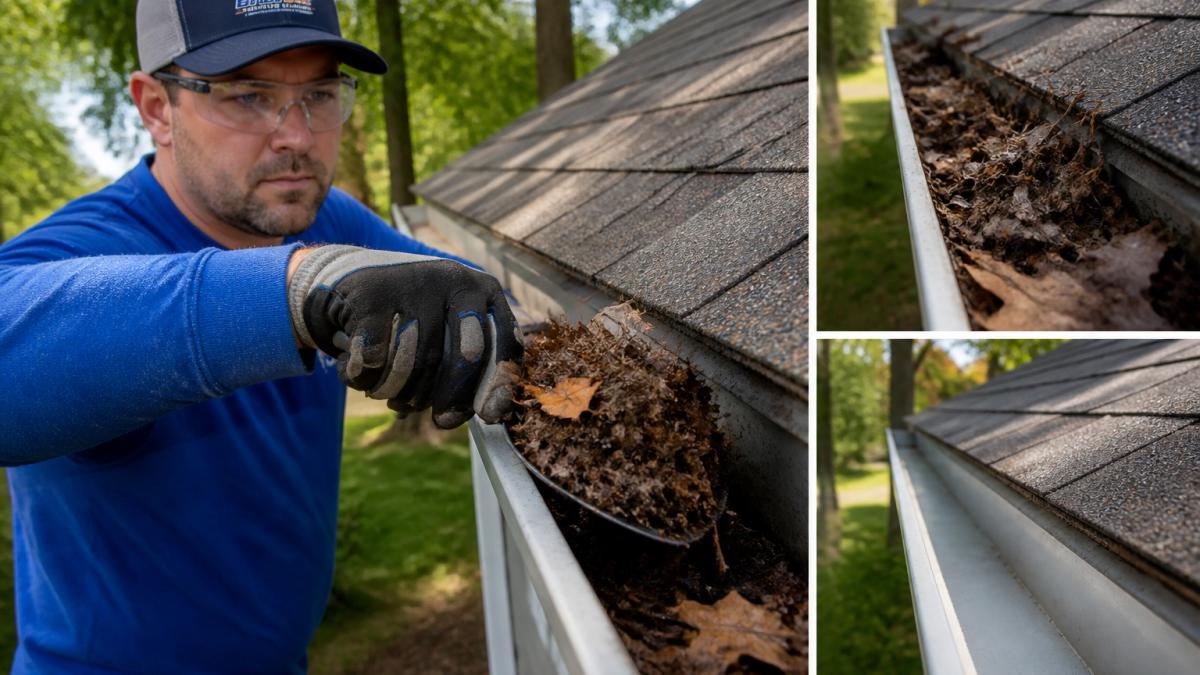
If your property has heavy coverage or you are unsure how to read the debris, a professional inspection can set your schedule for you. Blue Sky Surface Solutions helps homeowners throughout Hamilton County match cleaning frequency to their actual trees and roof.
Signs Your Gutters Need Cleaning
Don't wait for a set schedule if your gutters show these warning signs. Clean immediately when you notice:
- Visible debris overflow: Leaves, twigs, or dirt spilling over the gutter edge
- Water pooling in gutters: Standing water indicates a clog blocking drainage
- Sagging gutters: Heavy debris buildup pulls gutters down, damaging the fascia
- Water stains on fascia or siding: Overflow is running down your home's exterior
- Foundation cracks or wet basement: Water from clogged gutters can damage your foundation
- Roof leaks or water in attic: Backed-up water can seep under roofing materials
- Pest activity in gutters: Birds, insects, and rodents nest in debris-filled gutters
- Gutter separation from roofline: Weight of debris pulls gutters away from the roof
Regular inspection catches problems early. Walk around your home after heavy rain. Look for water flowing over the gutter edge instead of through downspouts. That's your signal to clean.
Gutter Cleaning Checklist for Homeowners
If you decide to clean gutters yourself, follow this checklist to do it safely and thoroughly.
Before you start:
- Check weather forecast, avoid cleaning during rain or high wind
- Wear work gloves to protect hands from sharp debris
- Use safety glasses to protect eyes from dirt and debris
- Set up a sturdy ladder on level ground, not on soft soil
- Have someone hold the ladder or use a ladder stabilizer
- Keep a bucket nearby to collect debris
During cleaning:
- Start at the downspout and work toward the other end
- Scoop out leaves, twigs, and packed dirt by hand or with a gutter scoop
- Place debris in a bucket to avoid mess below
- Check that downspouts are clear, water should flow freely
- Flush gutters with a garden hose to wash away remaining dirt
- Watch water flow through downspouts to confirm proper drainage
- Inspect gutters for damage: holes, rust, or separation from fascia
After cleaning:
- Remove the ladder safely
- Dispose of debris in yard waste or trash
- Document the date you cleaned for your records
- Note any damage you found for future repair
| Task | Time | Frequency |
|---|---|---|
| Visual inspection | 15 minutes | Every 2-3 months |
| Light debris removal | 1-2 hours | Twice yearly |
| Full cleaning and flushing | 2-4 hours | 2-4 times yearly |
| Professional cleaning | 1-2 hours | As needed |
When to Call a Professional
Professional gutter cleaning is worth considering if:
- Your roof is steep or high: Working at height creates fall hazards. Professionals have safety equipment and training.
- You have physical limitations: Climbing ladders and reaching overhead isn't safe for everyone.
- Your gutters are severely clogged: Packed debris requires extra time and effort. Professionals work faster.
- You have gutter guards: These require specialized cleaning techniques to avoid damage.
- You want thorness: Professionals inspect for damage you might miss and can recommend repairs.
Blue Sky Surface Solutions handles gutter cleaning for homeowners throughout Hamilton County. Our team cleans gutters safely, inspects for damage, and flushes downspouts to ensure proper water drainage. We work on homes of all sizes and can address problem areas you've been putting off.
Professional cleaning also gives you peace of mind.
Conclusion
Gutters need attention twice yearly for most Indiana homes, more often if trees overhang your roof. Spring and fall are your critical cleaning windows. Regular maintenance prevents water damage to your roof, fascia, foundation, and landscaping.
If DIY cleaning feels risky or you'd rather have professionals handle it, Blue Sky Surface Solutions is here to help. We offer reliable gutter cleaning throughout Hamilton County, with thorough inspections and expert advice on keeping your gutters in top shape. Contact us for a free quote and let's protect your home from water damage.
Frequently Asked Questions
How many times a year should gutters be cleaned?
Most homeowners should clean gutters twice a year: once in late spring after trees finish shedding pollen and seed pods, and again in late fall after leaves drop. However, properties with significant tree coverage nearby may need cleaning three to four times annually. Your specific frequency depends on local weather patterns, the number of trees on your property, and whether you have gutter guards installed.
What's the best time of year to clean gutters?
Spring cleaning typically occurs in May or June after pollen and debris settle. Fall cleaning happens in October or November before winter weather arrives. These seasonal windows align with when debris buildup peaks. If you have substantial tree coverage, consider adding a cleaning in mid-summer and again in early winter to prevent overflow and water damage to your foundation and fascia.
How often should gutters be cleaned if there are trees near the house?
Homes with nearby trees often need gutter cleaning three to four times per year. Leaf drop in fall is the primary concern, but trees also shed pollen, seed pods, and twigs throughout spring and summer. If you have multiple large trees directly over your roofline, inspect gutters monthly and clean whenever debris buildup blocks water flow. Gutter guards can reduce frequency but still require periodic maintenance.
What happens if gutters aren't cleaned regularly?
Clogged gutters prevent rainwater from draining properly, causing overflow that damages your foundation, fascia, and landscaping. Standing water in gutters attracts pests and promotes mold growth. Debris buildup adds weight to gutters, potentially causing them to sag or separate from the roofline. Over time, neglected gutters lead to costly water damage repairs. Regular seasonal maintenance protects your property investment and prevents these problems before they start.