 listicle
Benefits of Regular Roof Maintenance: 2026 Guide
Table of Contents
- Why Regular Roof Maintenance Matters for Every Home
- How Roof Maintenance Extends the Life of Your Roof
- The Role of Professional Gutter Cleaning in Roof Care
- Benefits of Soft Washing Your Roof
- Roof Inspection Frequency: How Often Is Enough?
- Preventing Water Damage and Expensive Repairs
- Boost Curb Appeal and Property Value
- Frequently Asked Questions
Last Updated: October 4, 2026
Why Regular Roof Maintenance Matters for Every Home
Roof maintenance is the practice of inspecting, cleaning, and caring for your roof's shingles, flashing, gutters, and ventilation on a set schedule. Done consistently, it protects the single most expensive structural system on your home, and homeowners who keep to a schedule spend far less over time than those who wait for a leak.
Your roof rarely fails all at once. It fails slowly, quietly, and in ways you cannot see from the driveway, by the time a stain appears on your ceiling, the damage has usually been building for months. Below, we break down the real benefits of regular roof maintenance and how to build a simple schedule.
How Roof Maintenance Extends the Life of Your Roof
Consistent roof maintenance extends roof lifespan by preventing the small failures that compound into structural damage. Most roofing materials are designed to shed water and resist sun exposure for decades; what shortens that timeline is neglect, debris that traps moisture, gutters that back up, and small breaches that go unrepaired.
Here is what a maintenance routine actually protects:
- Shingle deterioration slows when debris and moss are removed before they lift shingle edges
- Flashing stays sealed around chimneys, vents, and valleys, where leaks most often begin
- Roof deck stays dry, preserving the structural integrity beneath the surface
- Roof warranty terms are more likely to be honored when you can show a record of care
Treating the roof as a "set it and forget it" system is a mistake. It is an exterior surface exposed to weather every day, and it responds to attention.
Protecting Shingles and Roofing Materials
Different roofing materials age differently, and the maintenance that helps them differs too. Treating every roof the same way can shorten the life of the surface you are trying to protect.
Asphalt shingles are the most common roof and the most sensitive to aggressive cleaning. The mineral granules on top are the shingle's first line of defense against ultraviolet light; once they wash away, the asphalt underneath dries, cracks, and curls. That is why soft washing, low pressure plus a cleaning solution that kills organic growth, is the right method here, and why pressure washing is not. Algae and moss also hold moisture against the shingle, so removing them is a lifespan decision, not just a cosmetic one.
Metal roofs (standing seam and exposed-fastener panels) shed debris well but have their own weak points: the sealant washers under exposed fasteners and the caulking at panel seams and penetrations. Those sealants have a service life measured in years, not decades, so a maintenance visit that checks and refreshes them keeps a metal roof watertight. Metal also expands and contracts with temperature swings, working fasteners loose over time.
Tile roofs (clay and concrete) can last the longest of the common materials, but the tile is not the part that usually fails first, the underlayment beneath it sheds the water and ages out well before the tile does. Walking a tile roof incorrectly also cracks tiles, and once a tile is broken, water reaches the underlayment directly. Maintenance means inspecting for cracked or slipped tiles, keeping valleys and channels clear, and checking the underlayment rather than assuming the visible tile tells the whole story.
Wood shakes and shingles need the most hands-on care: debris removal from the gaps between shakes, attention to moss and lichen growth, and periodic treatment to slow moisture absorption. Wood also benefits from drying between rain events, which is why clearing debris from the surface matters more here than on any other material.
Asphalt Shingle Recycling
The practical takeaway: the schedule is similar across materials, but the tasks are not. A plan that ignores what your roof is made of will either miss the real failure point or cause damage while trying to prevent it. If you are not sure what you have up there or what it needs, a professional assessment answers that quickly.
The Role of Professional Gutter Cleaning in Roof Care
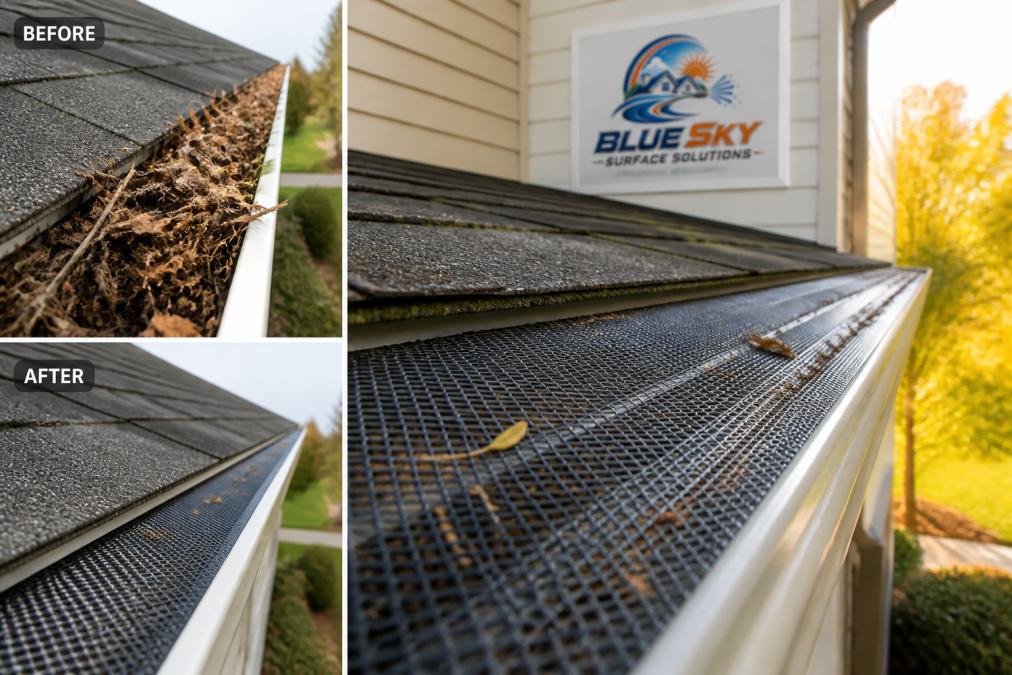
Professional gutter cleaning is the most overlooked part of roof care, and often the first thing to fail. Gutters that cannot drain push water back under your roof edge, into your fascia, and eventually into your walls.
When we clean gutters, we are not just removing leaves. We are restoring the roof's drainage system, which keeps water moving away from your home.
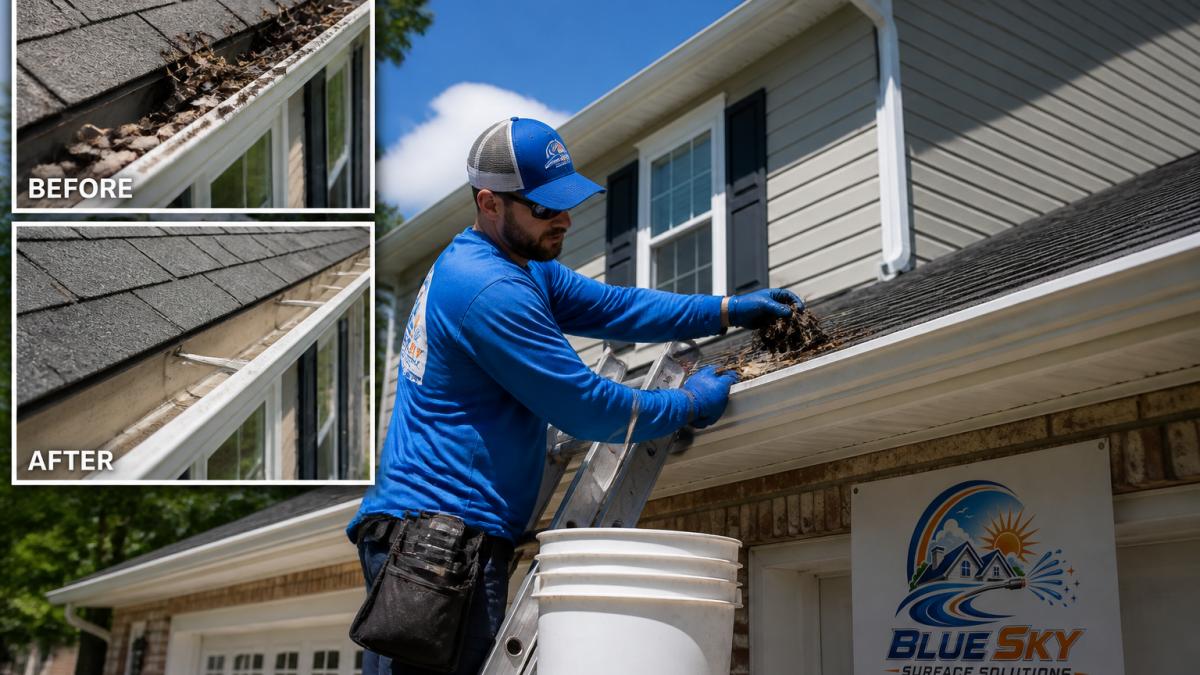
Clogged gutters cause a chain reaction:
- Water backs up and pools along the roof edge
- Pooled water seeps under shingles and into the roof deck
- Moisture intrusion reaches fascia boards, soffits, and interior walls
- Mold and mildew begin to grow in damp, hidden spaces
After fall leaf drop and again in spring, gutters should be cleared so they are ready for the next round of rain. Homeowners who handle this twice a year avoid the most common and most preventable form of roof damage.
Benefits of Soft Washing Your Roof
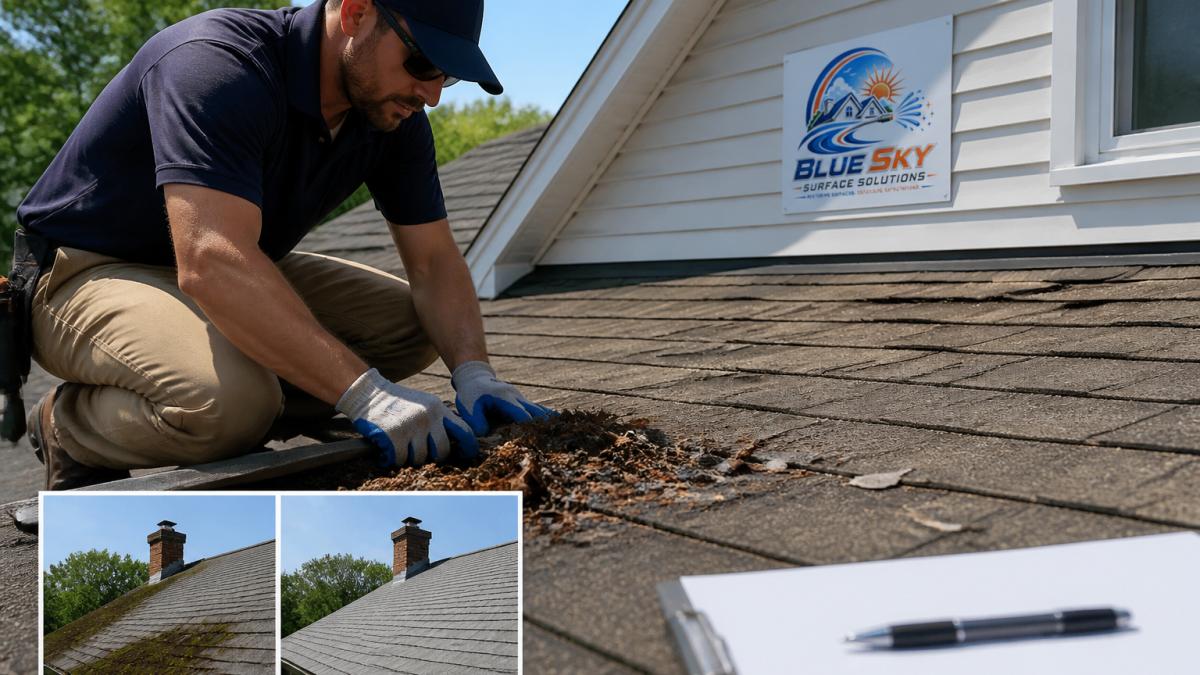
Soft washing is a low-pressure cleaning method that uses specialized cleaning solutions to remove algae, mildew, and organic staining from a roof without damaging the surface. For shingle roofs, it is the safest way to restore appearance while protecting the material. The dark streaks you see on many roofs are not dirt, they are living organisms that spread, hold moisture against the shingles, and accelerate deterioration.
The benefits of soft washing a roof come down to three things:
- It removes the growth at the source rather than just lightening the stain
- It protects the shingles because no high pressure is used
- It restores curb appeal immediately, which matters if you plan to sell
Roof Inspection Frequency: How Often Is Enough?
Roof inspection frequency should be twice a year for most homes, plus after any major storm. That schedule catches problems while they are minor and keeps a documented record of your roof's condition. The best times are spring and fall, when the weather is mild and the roof is clear of snow and heavy debris; add a check after high winds, hail, or a significant storm.
What a proper inspection looks for:
- Loose, cracked, or missing shingles
- Damaged or lifted flashing around penetrations
- Granule loss on asphalt shingles
- Signs of moisture intrusion in the attic or along the roof deck
- Gutter condition and drainage flow
A professional assessment goes further than a visual check from the ground, documenting what is found for planning and any future insurance conversation.
Preventing Water Damage and Expensive Repairs
Preventative maintenance is far cheaper than reactive repair, and water damage rarely stays where it starts. A small leak at a flashing point can soak insulation, stain ceilings, and feed mold long before you see a drip, by the time it is visible inside, you are often paying for both the roof repair and the interior damage it caused.
Regular roof maintenance interrupts that chain early. A loose shingle re-secured in spring is a minor task. The same shingle after a season of water intrusion is a repair with a much larger footprint.
The Insurance Angle Most Homeowners Learn Too Late
Your maintenance record can decide whether an insurance claim is paid, partially paid, or denied outright. Homeowners policies generally distinguish between sudden, accidental damage, a wind event, a fallen limb, a hail strike, and damage from wear, deterioration, or neglect, which is typically excluded. A roof showing years of deferred maintenance, clogged gutters, or unchecked organic growth gives the adjuster a reason to attribute the damage to neglect rather than the storm you are claiming.
A documented maintenance history does the opposite. It creates a paper trail showing the roof was cared for, supporting the position that the damage is genuinely sudden and storm-related. That record can be the difference between a covered claim and an out-of-pocket replacement.
What actually counts as documentation:
- Dated inspection reports from a professional, even when nothing was wrong
- Invoices and service records for gutter cleaning, soft washing, and any repairs
- Photographs taken at each inspection, especially before and after storm seasons
- A simple log of when you noticed something and when it was addressed
Timing matters too. Most policies require you to report damage promptly and take reasonable steps to prevent further damage after a storm; if a small leak is left unrepaired for months and the interior damage grows, that delay can reduce or void the payout on the interior portion of the claim. Insurers also increasingly look at roof age and condition when deciding whether to renew a policy or how to price it, and a clearly maintained roof is a better risk. The primary benefit is still that you avoid the damage in the first place, but when a storm does hit, the homeowner with records is in a fundamentally stronger position than the homeowner with none.
If you want that paper trail without managing it yourself, this is exactly what a professional maintenance plan produces, dated inspections, photos, and service records you can hand to an adjuster if you ever need to. Reach out and we will walk you through what a documented plan looks like for your roof.
Boost Curb Appeal and Property Value
A well-maintained roof affects how your home is perceived from the street, and perception shapes property value. Clean shingles, clear gutters, and tidy edges signal a home that has been cared for; streaked, mossy roofs signal the opposite, even when the roof is structurally fine. That signal affects how quickly a home sells and how buyers negotiate.
Regular roof maintenance also protects your long-term investment. A roof with a documented maintenance history is easier to stand behind, and it delays the day you face a full roof replacement.
If you are preparing to sell, exterior cleaning and roof care are among the most cost-effective improvements you can make. They do not change the structure of your home. They change how it reads to everyone who sees it.
Frequently Asked Questions
What are the primary benefits of regular roof maintenance?
Regular roof maintenance extends your roof's lifespan, prevents costly water damage, improves energy efficiency, and maintains your home's curb appeal. It also helps you catch small issues before they become expensive repairs. For homeowners, routine care is a cost-effective long-term investment that protects your property value and gives you peace of mind.
How often should you have your roof professionally inspected?
Most roofing professionals recommend a professional inspection once a year, ideally in spring or fall. If you live in an area with severe weather, you may need inspections more often. Regular roof inspection frequency helps detect shingle deterioration, flashing issues, and moisture intrusion early, before they lead to major damage.
Can regular maintenance prevent expensive interior water damage?
Yes. By keeping your roof and gutters clear and addressing minor problems quickly, you reduce the risk of leaks that can lead to water damage inside your home. Preventative maintenance, including professional gutter cleaning and timely roof repair, is far less expensive than repairing structural damage, mold, or mildew caused by unchecked moisture intrusion.
Why is professional gutter cleaning a critical part of roof maintenance?
Clogged gutters trap water, which can back up under shingles and cause rot, leaks, and foundation problems. Professional gutter cleaning removes debris safely and ensures proper drainage, protecting your roof deck and extending the life of your roofing system. It's one of the simplest, most cost-effective steps in any home maintenance plan.