 how-to
How to Remove Moss from Asphalt Shingles Safely
Table of Contents
- Tools and Safety Gear You Need Before You Start
- How to Remove Moss from Asphalt Shingles Safely: Manual Scraping vs. Chemical Treatment
- Is Pressure Washing Safe for Asphalt Shingles?
- Professional Soft Washing Roof Services: What to Expect
- How to Prevent Moss Growth on Roof Surfaces
- Roof Warranty and Shingle Integrity: What Homeowners Should Know
- Conclusion
- Frequently Asked Questions
Last Updated: October 2, 2026
Tools and Safety Gear You Need Before You Start
Moss on a roof is more than a cosmetic problem. It holds water against the shingles, and that trapped moisture slowly breaks down the surface below it.
Learning how to remove moss from asphalt shingles safely starts with the right gear, not the right chemical. At Blue Sky Surface Solutions, we see the same pattern on roofs across the area: homeowners grab a broom, climb up, and cause more harm than the moss ever did.
Before you touch the roof, gather these items:
- A sturdy extension ladder with stabilizer bars
- A fall-protection harness rated for roof work
- Rubber-soled shoes with good grip
- Soft-bristle brush or a plastic scraper
- Work gloves and eye protection
- A garden sprayer for any cleaning solution
- Rope and a bucket for lowering debris
Two things matter most here. First, a harness is not optional on a pitched roof. Second, never work on a wet or windy day. Both turn a simple job into a dangerous one.
How to Remove Moss from Asphalt Shingles Safely: Manual Scraping vs. Chemical Treatment
There are two safe ways to remove moss from asphalt shingles: gentle manual scraping and a chemical treatment. The right choice depends on how much moss you have, how steep the roof is, and which shingles you have.
Manual scraping suits small patches. Chemical treatment suits larger growth that has spread across several shingles. Before you pick, know your shingle type, because it changes how much pressure and product the surface can take.
Match the Method to Your Shingle Type
Standard 3-tab shingles are thinner and carry a lighter granule layer. Architectural (laminated) shingles are thicker and denser, with more granules and a heavier mat. Both can be cleaned safely, but the thinner 3-tab surface tolerates less abrasion and less dwell time before the granules loosen. On either type, if you can see the dark asphalt mat showing through, the granules are already gone and no cleaning method brings them back.
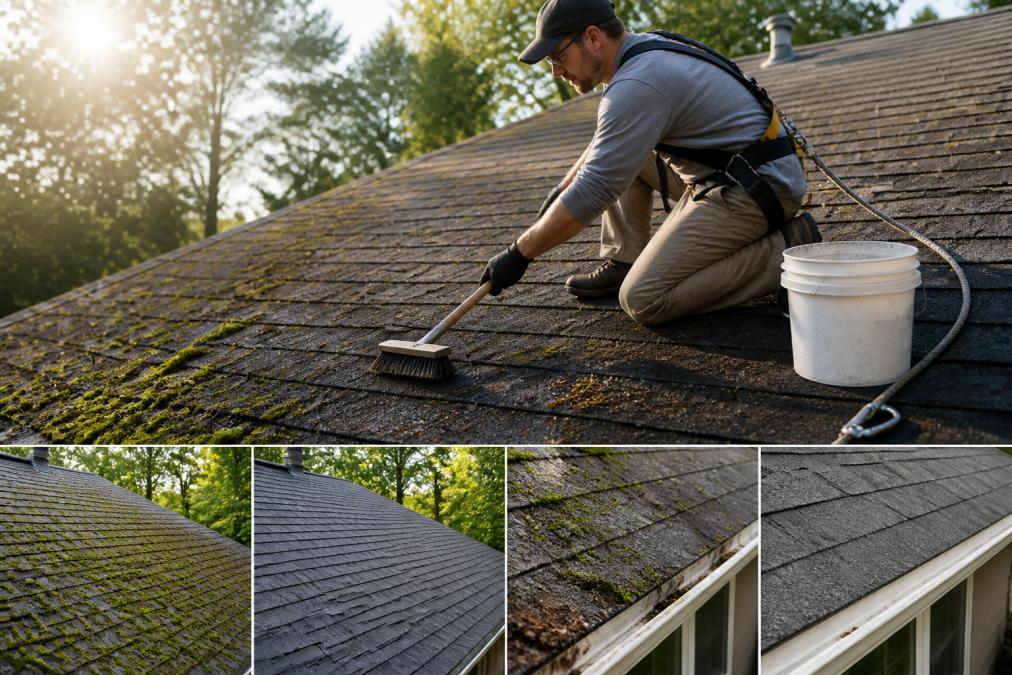
Manual Scraping: The Low-Risk Option
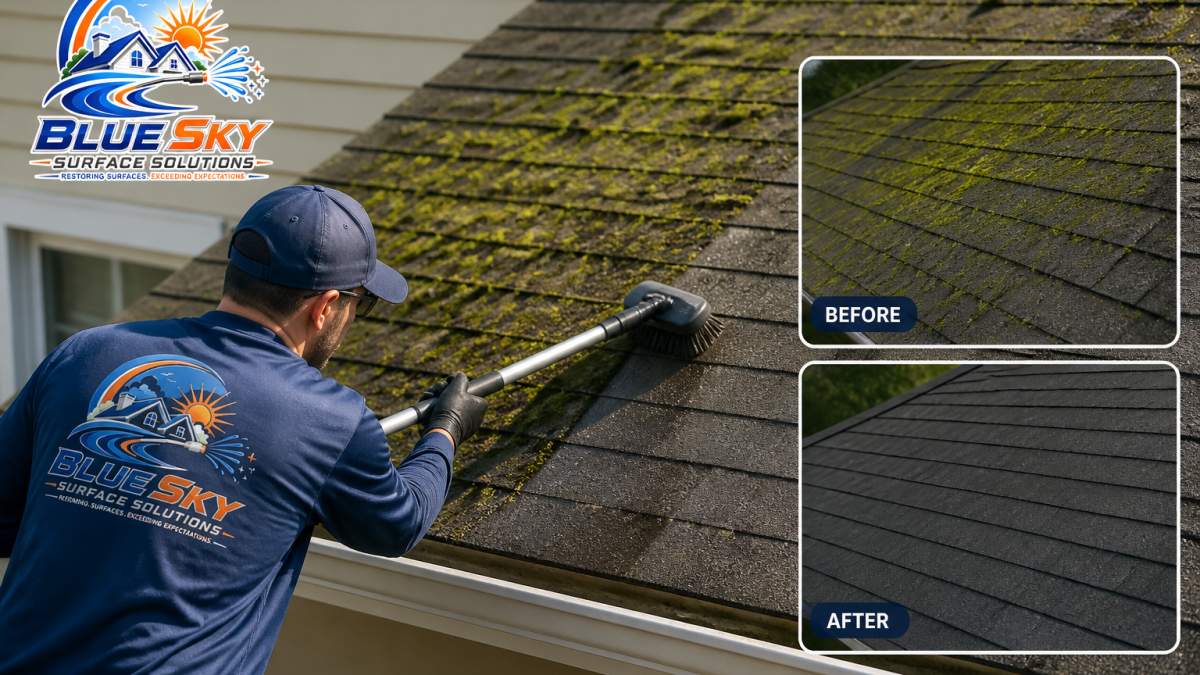
Manual scraping is the gentlest method for asphalt shingles. You lift the moss away by hand without harsh chemicals or high pressure.
Work from the top down and pull with the shingle grain, never against it. A soft-bristle brush lifts moss from the surface. A plastic scraper handles thicker clumps near the edges. Keep the scraper flat to the roof rather than digging the corner in, and let the moss come up in sheets instead of tearing at the granules.
The catch: scraping removes the moss, not the spores.
Chemical Treatment: When It Makes Sense
Chemical treatment makes sense when moss covers a wide area or keeps coming back. The goal is to kill the moss at the root so it stops regrowing.
- Sodium hypochlorite, the same family as household bleach. Fast-acting, but it can dull or stain shingles and is tough on plants and metal gutters.
- Potassium salts of fatty acids, sold as moss and algae killers. Slower, but gentler on the roof and surrounding landscaping.
- Zinc sulfate or copper sulfate, common in powders and concentrates. Effective, but copper can stain and both can harm aquatic life if runoff reaches a storm drain.
- Ready-to-use sprays, convenient for small patches, but you pay more per square foot of roof.
The Trade-Off in Plain Terms
Scraping is free, immediate, and safe for every shingle type, but it leaves spores and often needs repeating. Chemical treatment reaches into the shaded valleys scraping cannot and kills the root, but it costs money, takes time to work, and carries runoff and staining risk. Many homeowners combine them: scrape the heavy clumps, then treat the remaining surface so regrowth starts from a clean slate.
Is Pressure Washing Safe for Asphalt Shingles?
No. Pressure washing is not safe for asphalt shingles. The high-pressure stream strips away the protective granules that shield the shingle from sun and rain.
Professional Soft Washing Roof Services: What to Expect
Professional soft washing removes moss, algae, and dirt using low pressure and a cleaning solution. The process protects your shingles while still getting the surface clean.
Here is what a typical visit looks like:
- A technician inspects the roof and notes problem areas
- The team covers plants, gutters, and downspouts
- They apply a cleaning solution and let it dwell
- A gentle rinse washes everything away
- The crew checks the runoff and cleans the site
How to Prevent Moss Growth on Roof Surfaces
Prevention is cheaper and safer than removal. A few simple habits keep moss from taking hold in the first place.
To prevent moss growth on roof surfaces:
- Trim tree branches to let more sunlight reach the roof
- Keep gutters and downspouts clear so water drains fast
- Remove leaves and debris that trap moisture on the surface
- Add zinc strips or copper flashing near the ridge
- Schedule a roof inspection each year
Roof Warranty and Shingle Integrity: What Homeowners Should Know
Most asphalt shingle warranties exclude damage from pressure washing and from neglect. That detail catches homeowners off guard, and it is the single biggest reason a cleaning job turns into an out-of-pocket repair.
What the Warranty Covers, and What Voids It
A typical asphalt shingle warranty covers manufacturing defects, not the results of how the roof is treated. In practice, that means:
- Covered: defects in the shingles themselves, and normal weathering within the stated period.
- Not covered: granule loss from pressure washing, cracks from foot traffic, and damage from harsh chemicals left to sit too long.
- Often not covered: neglect, meaning moss and debris allowed to trap moisture for years.
How to Clean Without Voiding Coverage
Staying inside the warranty comes down to method, not effort:
- Skip pressure washing entirely. The high-pressure stream strips the protective granules that shield the shingle from sun and rain, and that loss is the classic denied-claim scenario.
- Use low pressure and let the solution do the work. Soft washing applies a cleaning solution at gentle pressure, so the surface is never blasted.
- Follow the product label. Over-strength mixes that stain or degrade shingles give a manufacturer a reason to deny a claim.
- Keep records. Save receipts, product names, and dates for any professional work. A paper trail helps if you ever file a claim.
- Do not walk the roof more than necessary. Foot traffic cracks shingles, especially in cold weather when they are brittle.
Shingle Integrity: Why the Method Matters
Shingle integrity works the same way as the warranty. Once granules wear away, the shingle cannot recover. The damage is permanent, and a bare shingle ages faster, curls at the edges, and loses its water resistance. Gentle removal and regular upkeep protect both your roof and your coverage. Harsh methods save time up front and cost far more later.
Here is how the main methods compare:
| Method | Risk to Shingles | Best For | Warranty Safe |
|---|---|---|---|
| Manual scraping | Low | Small patches | Yes |
| Chemical treatment | Low to medium | Larger growth | Usually, if label directions are followed |
| Soft washing | Low | Full roof cleaning | Yes |
| Pressure washing | High | Not recommended | No |
The Hidden Cost of Getting It Wrong
A denied warranty claim rarely shows up as a single line item. It shows up years later, when a roof that should have lasted another decade starts failing and the manufacturer will not help. That is the real argument for doing it right the first time, whether you handle a small patch yourself or bring in a crew for the whole roof.
Conclusion
Moss on asphalt shingles is a problem you can solve, but the method you choose decides whether your roof stays protected. Scrape small patches by hand, treat larger growth with care, and skip pressure washing entirely. Keep your gutters clear, trim back shade, and stay ahead of new growth with a yearly check.
Frequently Asked Questions
What will kill moss on asphalt shingles?
Commercial moss removers containing sodium hypochlorite or zinc sulfate kill moss effectively when applied and left to dwell. For severe moss, professional soft washing uses biodegradable cleaners and proper dwell time to kill moss without harming granules. Always test a small area first and rinse thoroughly. If moss returns quickly, address shade and moisture issues.
Can pressure washing damage asphalt shingles?
Yes, pressure washing can strip protective granules, crack shingles, and void warranties. The high-pressure water forces underneath shingle layers, causing moisture retention and accelerated deterioration. Instead, use a soft wash system with low pressure (under 500 PSI) and approved cleaning solutions. If you're unsure, hire a professional soft washing roof service to avoid costly damage. Your roof's shingle integrity depends on keeping those granules intact.
How often should you clean moss off your roof?
Inspect your roof twice a year, in spring and fall, and after major storms. Clean moss as soon as you notice small patches to prevent it from spreading. For homes with heavy shade exposure, schedule professional roof inspections annually. Regular preventative maintenance, like trimming trees and installing zinc strips, reduces how often you need to remove moss. If moss returns within months, improve ventilation and reduce moisture retention around the roof.
Does Dawn dish soap kill roof moss?
Dawn dish soap alone does not kill moss; it acts as a surfactant that helps cleaning solutions spread and penetrate. You can mix it with vinegar or bleach to improve coverage, but the soap itself won't eliminate moss spores. For reliable results, use a dedicated moss killer or hire a professional soft washing service. Always rinse plants and downspouts thoroughly after treatment to avoid runoff damage.