 listicle
Benefits of Professional Tree Health Assessment
Table of Contents
- What a Professional Tree Health Assessment Actually Covers
- Arborist Tree Inspection Services: What a Certified Arborist Checks
- Signs of Tree Stress That Warrant a Professional Evaluation
- The Legal and Insurance Case for a Professional Assessment
- DIY vs. Professional Thresholds: When to Call an Arborist
- Building a Tree Maintenance Schedule Around Your Assessment
- Species-Specific Risks and Post-Assessment Implementation
- Frequently Asked Questions
Last Updated: September 30, 2026
What a Professional Tree Health Assessment Actually Covers
A professional tree health assessment is a systematic evaluation of a tree's structure, biology, and site conditions, performed by a trained eye to determine whether the tree is safe, healthy, and worth keeping.
The Visual Tree Assessment (VTA) Method
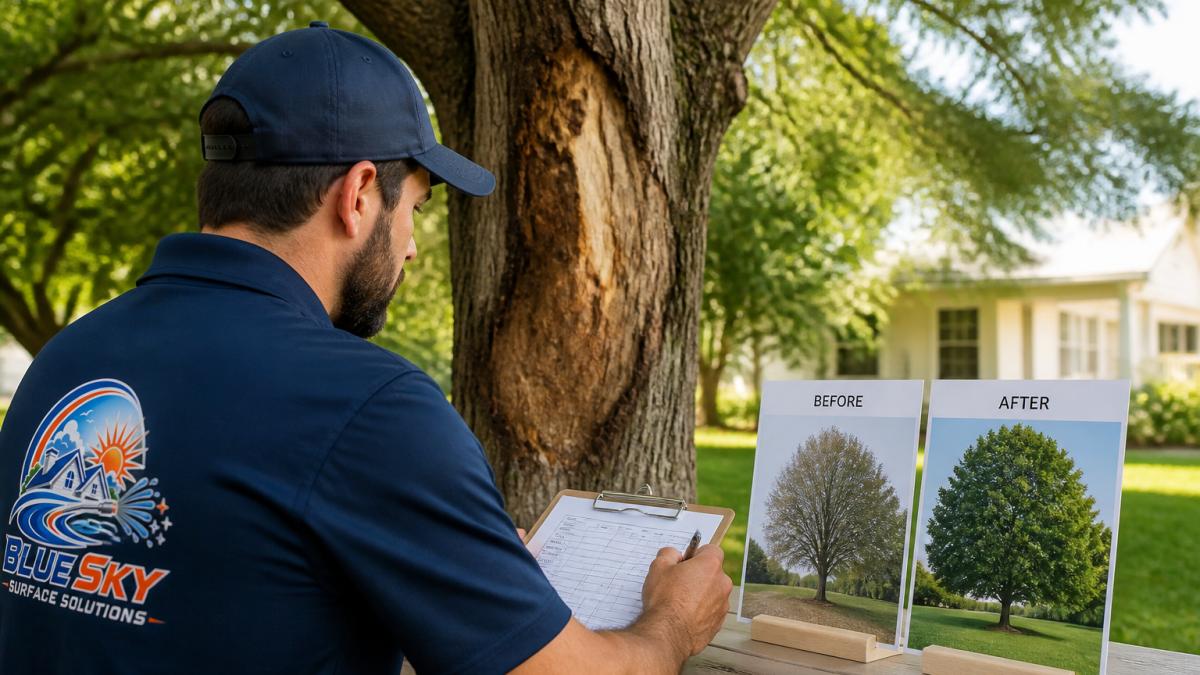
The Visual Tree Assessment is the standard starting point for most evaluations. An arborist examines the tree from the ground up, checking the trunk for cracks, seams, and bulges, examining branch attachment angles, and scanning the canopy for deadwood. A VTA relies on trained observation rather than drilling or digging, and it catches most problems before they become emergencies.
What the Arborist Report Documents
An arborist report is the written record of what was found and what should happen next. A good report covers the tree's species and condition, structural defects and their severity, pest or disease findings, recommended actions, and a risk rating for the tree's location. It creates a paper trail that protects you if a neighbor or insurer questions what you knew about a tree.
Arborist Tree Inspection Services: What a Certified Arborist Checks
A certified arborist looks at four things on every visit: the canopy, the trunk, the root zone, and the site itself.
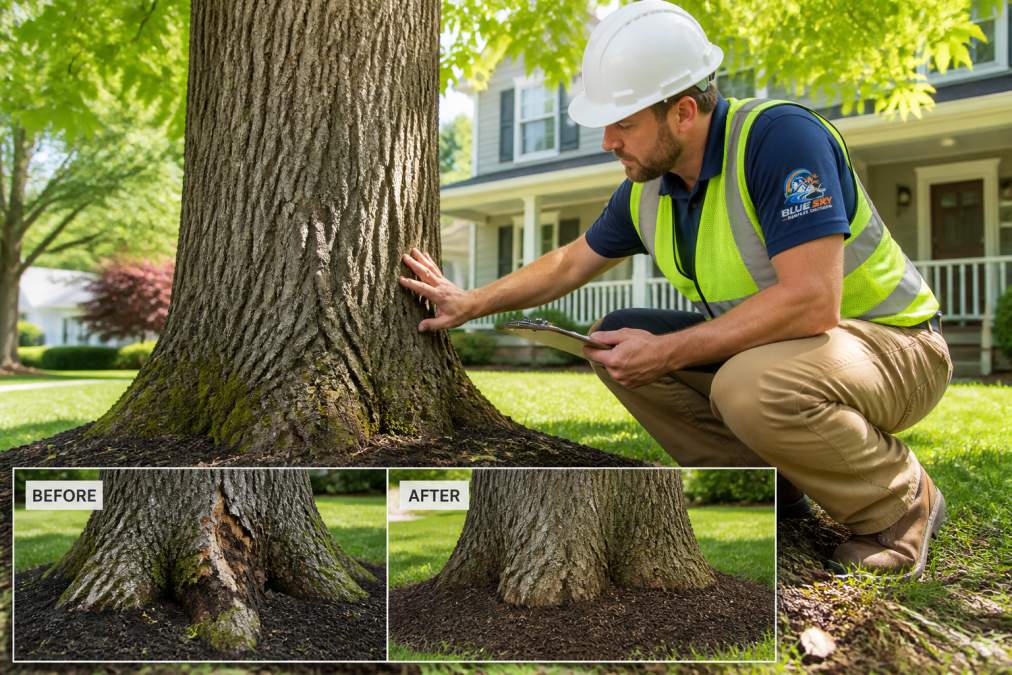
Canopy Health and Crown Dieback
Crown dieback is the progressive death of twigs and branches from the outside of the canopy inward. It's one of the clearest signals that a tree is under stress.
Root Zone Evaluation and Soil Compaction
Soil compaction is the quiet killer of suburban trees. When soil gets pressed down by foot traffic, vehicles, or construction, air and water can't reach the roots. Over time, the tree starves.
Signs of Tree Stress That Warrant a Professional Evaluation
The clearest signs of tree stress are dead branches in the upper canopy, thinning leaves, and mushrooms growing at the base of the trunk. Any of these means it's time to call someone.
Other signals worth watching:
- Bark peeling or cracking on the trunk
- Sudden lean that wasn't there last season
- Sawdust-like material around the base
- Leaves that turn early or drop out of season
- Cankers or sunken spots on branches
The Legal and Insurance Case for a Professional Assessment
Most homeowners think about tree liability only after a limb is through a fence, but the paperwork that decides who pays is created months or years earlier, during the assessment itself.
The Known-Hazard Standard
Property law in most states rests on a simple idea: a landowner is expected to act reasonably on what they know, or should know, about a tree on their property. A tree that has never been inspected is treated differently from one that has been inspected and flagged.
How Insurers Actually Use an Arborist Report
Homeowner policies typically treat known and unknown hazards differently. A sudden, unforeseeable failure is usually a covered loss; a failure a professional had already documented as a risk is a different conversation.
Property Lines, Shared Trees, and Neighbor Disputes
Shared trees are the most common source of neighbor-versus-neighbor tree disputes. In most jurisdictions, a homeowner is responsible for damage caused by a tree they knew, or should have known, was hazardous, regardless of which side of the line the trunk sits on.
A practical sequence for shared trees:
- Get the assessment in writing, with the tree's location relative to the property line noted
- Send the neighbor a dated copy if a defect is flagged
- Keep a record of the response, or the lack of one
- Schedule any agreed work rather than leaving it open-ended
What a Report Needs to Hold Up
Not every one-page summary carries the same weight. A report that will support an insurance claim or liability question usually includes:
- The assessor's credentials and, where applicable, certification number
- The date of inspection and the date of the report
- The tree's species, size, and location on the property
- The specific defect observed and its severity rating
- The recommended action and a suggested timeframe
- Photographs or diagrams keyed to the findings
The Cost of Getting This Wrong
Emergency removal after a failure is almost always more expensive than planned work, and it often arrives with a second bill, fence repair, roof repair, or a neighbor's claim. The assessment itself is a small line item compared with either outcome.
DIY vs. Professional Thresholds: When to Call an Arborist
Most tree-care advice splits into two camps: "call a pro for everything" or "you can handle it yourself." Neither is useful. The real question is where the line sits, and it's defined by three things, what could be hit if the tree fails, how big the work is, and whether the problem is visible from the ground.
The Three Questions That Set the Threshold
Before touching a tree, answer these in order:
- What is in the fall zone? A tree's height is roughly its fall radius. If a structure, a driveway, a power line, or a frequently used area sits inside that radius, the risk calculation changes entirely.
- How big is the work? Anything above shoulder height, anything requiring a ladder, and anything thicker than a couple of inches is past the point where a homeowner can work safely with hand tools.
- Is the problem visible? If you cannot explain what is wrong in plain language, you cannot decide whether it is serious.
If the answer to question one is "a structure" and question two is "more than a small limb," you are past the DIY threshold regardless of how the tree looks.
What a Homeowner Can Reasonably Do
There is a genuine DIY zone, smaller than most people assume:
- Removing dead, diseased, or broken twigs and small branches you can reach from the ground with loppers or a pruning saw
- Cutting back suckers growing from the base of the trunk
- Clearing small volunteer saplings before they establish
- Watering, mulching, and keeping the root zone clear of traffic and stored materials
- Photographing and logging changes over time
What Belongs to a Professional
These are the tasks where the risk of getting it wrong, to the tree, to property, or to the person holding the saw, outweighs any savings:
- Any work on a tree tall enough to reach a structure, a vehicle, or a power line
- Removing a limb larger than a few inches in diameter, which leaves a wound the tree must seal
- Anything requiring a ladder, a rope, or climbing
- Work near energized lines, which is a utility matter, not a homeowner matter
- Trees showing a sudden lean, a new crack, or a change in the canopy
- Any tree on a shared property line
- Storm-damaged trees under tension, where a limb can release unpredictably
A Practical Decision Table
| Situation | DIY Check | Call a Professional |
|---|---|---|
| Small ornamental tree, minor leaf drop | Yes | No |
| Twigs and small deadwood reachable from the ground | Yes | No |
| Large tree within falling distance of a home | No | Yes |
| Sudden lean or new crack in the trunk | No | Yes |
| Dead branch under 2 inches, reachable with loppers | Yes | No |
| Any limb above shoulder height or over a structure | No | Yes |
| Tree near power lines or a shared property line | No | Yes |
| Storm damage with limbs under tension | No | Yes |
If you are unsure which column you are in, you are in the right column. That is not a sales line, it is the honest answer, and the same answer a good arborist will give you over the phone.
Why the Threshold Sits Where It Does
Two mechanisms explain most of the risk.
First, wound size. A pruning cut removes living tissue, and the tree must compartmentalize the wound to keep decay organisms out. Small cuts close quickly; large cuts on mature trees can remain open for years. A homeowner with loppers rarely creates a wound the tree cannot handle; a homeowner with a chainsaw in a mature canopy often does.
When to Call Rather Than Guess
If you are still unsure, the assessment itself is the cheapest part of the decision. A professional evaluation answers the question directly: this tree is fine, this tree needs work, or this tree needs to come down. That is far better than making the call yourself and finding out afterward.
Building a Tree Maintenance Schedule Around Your Assessment
A tree maintenance schedule turns a one-time inspection into ongoing protection. The assessment tells you what's wrong. The schedule keeps it from coming back.
Between assessments, the basics matter:
- Water deeply during dry spells rather than lightly and often
- Avoid disturbing the root zone with new construction or paving
- Prune only what you can safely reach from the ground
- Keep an eye on changes and write them down
Species-Specific Risks and Post-Assessment Implementation
Post-assessment implementation usually involves three tracks:
- Immediate safety work, like removing a hazardous limb
- Health treatments, such as soil improvement or pest management
- Long-term monitoring, including follow-up visits on a set schedule
If your trees sit close to your home, your gutters and roof need attention too. Blue Sky Surface Solutions handles tree services, gutter cleaning, and exterior cleaning across the area, so the whole job gets done in one visit instead of three.
Frequently Asked Questions
What is included in a professional tree health assessment?
A professional tree health assessment typically includes a visual inspection of the canopy, trunk, and root zone, an evaluation of structural integrity, and a check for pest infestation or fungal pathogens. The arborist documents tree vitality, site conditions, and any structural defects in a written arborist report, along with recommended next steps such as pruning, soil treatment, or removal. Many assessments also flag hazard potential and note whether the tree poses a risk to structures or people.
How often should you have a professional tree health assessment?
Most healthy, mature trees benefit from an assessment every one to three years. Trees with known structural defects, storm damage, or pest history should be evaluated annually. A tree maintenance schedule built around your assessment keeps preventative maintenance on track and helps catch changes in tree vitality before they become expensive problems. If you notice new signs of tree stress between visits, schedule an evaluation sooner rather than waiting for the next cycle.
Can a tree health assessment prevent property damage?
Yes. A certified arborist can identify structural defects, root zone problems, and hazard potential that a homeowner would not see from the ground. Catching these issues early allows for hazard mitigation through pruning, cabling, or removal before a limb or trunk fails. For homeowners in Hamilton County, where summer storms and heavy snow loads are common, that early warning often means the difference between a routine pruning bill and a claim for a damaged roof or vehicle.
Is hiring an arborist worth it compared to doing it yourself?
For small, healthy trees, a homeowner can handle basic monitoring. But once a tree shows crown dieback, trunk decay, or lean, the stakes change. Arborist tree inspection services give you a documented, professional opinion that supports insurance claims and property liability decisions. Tree risk management also requires training in arboricultural standards that most homeowners do not have. When in doubt, a single assessment is far cheaper than emergency tree care after a failure.
Trees don't announce their problems. They show them quietly, over months, in ways that are easy to miss from a kitchen window. A professional assessment turns those quiet signals into a clear plan, and a clear plan is what keeps your property safe and your curb appeal intact. Blue Sky Surface Solutions offers tree services, house and gutter cleaning, and soft washing for homeowners who want dependable work and honest answers. Get a free quote and find out what your trees actually need.