 how-to
Signs of Foundation Damage From Overflowing Gutters
Table of Contents
- How Overflowing Gutters Damage Your Foundation
- Signs of Foundation Problems to Watch For
- Water Pooling Around Your Foundation
- How to Fix Overflowing Gutters in Heavy Rain
- Gutter Cleaning to Prevent Foundation Damage
- Distinguishing Gutter Damage From Other Foundation Issues
- Taking Action: Inspection and Next Steps
- Frequently Asked Questions
Last Updated: October 15, 2026
How Overflowing Gutters Damage Your Foundation
When gutters fail to drain, water pools around your foundation, saturates the soil, and presses against your home's base, creating signs of foundation damage from overflowing gutters such as cracks, settlement, and structural problems.
The path from a clogged gutter to foundation damage is direct: water that should flow away saturates the ground, builds hydrostatic pressure against foundation walls, and lets moisture creep into basements and crawl spaces.
Catching it early stops the damage before it becomes expensive.
The Path From Gutter Failure to Foundation Damage
Gutters exist to move rainwater away from your home. When they clog with leaves, twigs, and debris, water overflows directly beside your foundation instead of being channeled away.
That water soaks into the soil, which becomes unstable and settles unevenly. Your foundation moves with it: cracks form, walls bow inward, and structural integrity is compromised.
Heavy rainfall makes it worse, a single storm can dump inches of water into clogged gutters, creating a waterfall at your foundation line.
Why Rainwater Runoff Matters More Than You Think
Gutters aren't cosmetic, they're a critical part of your home's drainage system.
Proper runoff directs water away from your home's perimeter. When gutters work, water flows through downspouts and discharges far from the foundation; when they fail, that water becomes a liability.
Soil can only absorb so much moisture before it saturates, loses bearing capacity, and compresses unevenly. Your foundation settles, and cracks appear in walls, floors, and the foundation itself.
Signs of Foundation Problems to Watch For
Signs of foundation damage from overflowing gutters rarely announce themselves at once. The warning signs appear in a rough sequence, and where and when each shows up tells you how far the problem has progressed.
A Symptom-by-Symptom Checklist
Tier 1, Monitor (early warning signs)
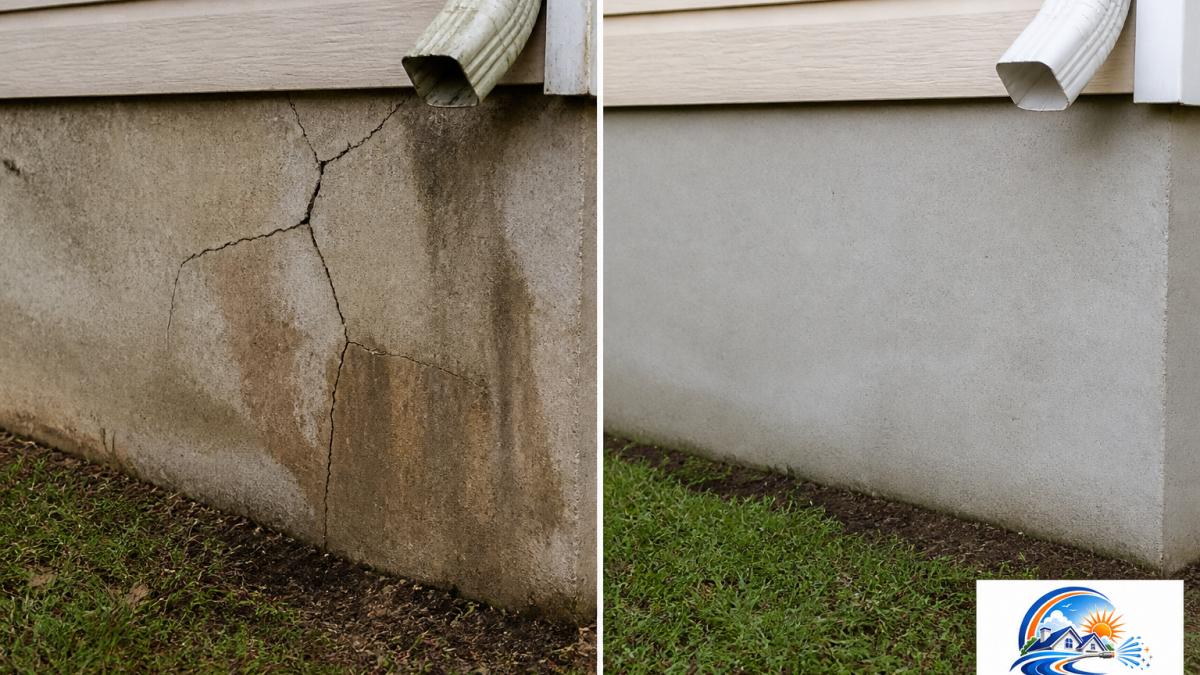
- Hairline cracks under 1/16 inch wide in a foundation wall or floor slab
- White, chalky mineral deposits (efflorescence) on a basement or crawl space wall
- Damp spots that dry out within a day or two after rain
Tier 2, Schedule service (active movement or intrusion)
- Cracks that have widened since you last measured them
- Cracks running diagonally at roughly 45 degrees, wider at one end
- Water actually seeping or trickling through a wall or floor joint during rain
Tier 3, Call now (urgent structural symptoms)
- Horizontal cracks in a block or poured basement wall
- A wall that is visibly bowed or curved inward when you sight along it
- Cracks wider than 1/4 inch, or any crack you can slip a coin into
Reading Location and Timing Like a Diagnostician
The pattern of damage is often more informative than the damage itself. Two questions narrow the cause: where is it, and when does it appear?
Location clues
- Damage concentrated on one side of the house, directly below or beside a downspout or a known overflow point, points to gutter-related runoff.
- Damage on the uphill side of the property, or spread evenly around the whole perimeter, is more often a grading or groundwater issue.
- Cracks near a plumbing wall, water heater, or supply line suggest an interior leak rather than roof runoff.
Timing clues
- Symptoms that appear within hours to a day of heavy rain and fade in dry weather point to surface runoff, including gutter overflow.
- Symptoms that persist or worsen in dry periods can indicate a plumbing leak or high water table.
- Damage that grows steadily across seasons, regardless of rainfall, suggests soil movement or long-term settlement.
Soil and site clues
- Expansive clay soils swell when wet and shrink when dry, amplifying movement from any water source.
- Sandy or gravelly soils drain fast and may show erosion and undermining rather than pressure cracks.
- A home on a slope can receive runoff from uphill neighbors, which can mimic gutter damage even when gutters are clean.
Measuring and Tracking What You Find
You don't need instruments to make a useful record. Photograph each crack with a ruler or coin for scale, note the date, and repeat monthly from the same angle and distance.
For interior moisture, tape a square of clear plastic to a damp wall for a day.
When several Tier 2 signs appear together, or any Tier 3 sign appears, the next step is a professional evaluation. Tier 1 usually means gutter maintenance and drainage corrections; Tier 3 often means structural work, which is why early identification matters so much.
Water Pooling Around Your Foundation
Standing water near your home's perimeter is a red flag. Pooling happens when drainage fails, and overflowing gutters contribute significantly.
Poor Grading and Surface Water Accumulation
The ground around your home should slope away from the foundation, directing surface water away from the base.
Overflowing gutters accelerate grading problems: constant flow from a clogged gutter erodes soil around your foundation, deepening low spots where water pools.
Look for areas where water sits for hours after rain, that lingering water is infiltrating the soil beneath your foundation.
Hydrostatic Pressure and Foundation Walls
Hydrostatic pressure is the force water exerts against a surface. When soil around your foundation saturates, it presses against foundation walls, cracking them, bowing them inward, or creating leaks.
The more water in the soil, the greater the pressure, and overflowing gutters dump additional water in, increasing the force your foundation walls must bear.
Signs of hydrostatic pressure damage include:
- Bowed or curved foundation walls
- Horizontal cracks in basement walls
- Water seeping through cracks or joints
How to Fix Overflowing Gutters in Heavy Rain
Stopping gutter overflow is the fastest way to stop foundation damage, but the fix is more than scooping leaves. The goal is to move water from the roof far enough from the foundation that it never returns, which takes three things working together: clear gutters, correct pitch, and discharge in the right place.
Clearing Debris and Restoring Proper Pitch
Gutters clog because debris accumulates faster than most homeowners expect. Leaves, twigs, shingle grit, and dirt block the channel until water spills over the front edge, often directly onto the soil beside the foundation.
A safe clearing sequence:
- Work from a stable ladder on level ground, or from the roof only if it is safe and dry. Never lean a ladder against a gutter that may be loose.
- Wear gloves and use a scoop or trowel to remove debris by hand. Bag it rather than flushing it into the downspout.
- Flush each run with a garden hose, starting at the end opposite the downspout, and watch where the water goes.
- Clear the downspout separately. A clogged downspout will back water up into a clean gutter and cause the same overflow.
- Check for sagging sections, loose hangers, and rust-through spots while you are up there.
Pitch matters as much as cleanliness. Gutters should slope toward the downspout at roughly 1/16 inch per foot of run. A level run, or one sloping the wrong way, holds water even when clean.
Extending Downspouts Away From Your Home
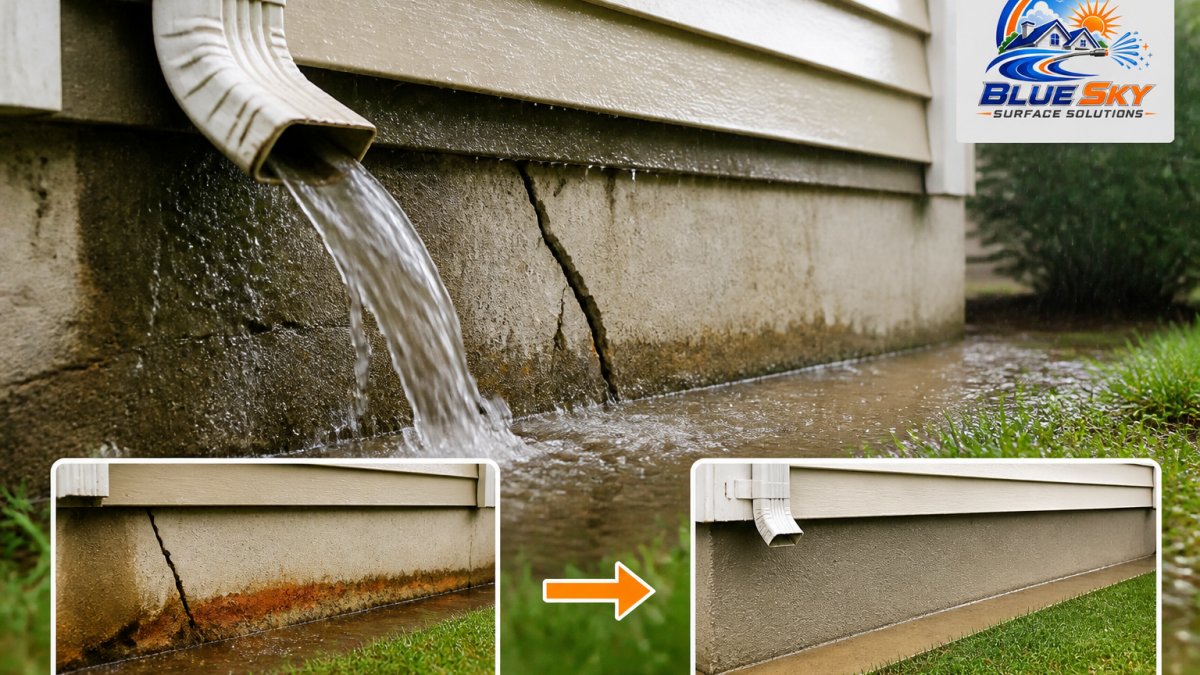
This is where most gutter systems fail. A downspout discharging right at the foundation relocates the problem, it dumps roof runoff into the same soil the gutter was supposed to protect.
Discharge distance. Aim to move water at least 4 to 6 feet from the foundation, and farther on slopes or in slow-draining clay soils.
Downspout extension options, from simplest to most involved:
- Flexible or rigid extensions, attach at the outlet and run the water out onto the lawn. Cheap, fast, and effective for most homes. Secure them so they do not separate in a storm.
- Splash blocks, a paved or concrete pad at the outlet that spreads water out and slows it. Best combined with a short extension, not used alone right at the wall.
- Buried drain lines, a perforated or solid pipe that carries water to a pop-up emitter or a daylight outlet downhill. The most effective option, and the most work to install.
Where the water should go. Discharge onto a slope that carries it away from the house, or into a drainage swale, dry well, or storm connection where allowed.
Fixing the Grading That Lets Water Pool
Even perfect gutters can't compensate for ground that slopes toward the house. The soil surface should fall away from the foundation at roughly 6 inches over the first 10 feet.
Signs your grading needs attention:
- Low spots or depressions within a few feet of the foundation
- Soil that has settled against the wall, leaving a trough
- Mulch beds that hold water like a sponge
Correcting grading usually means adding compacted soil to build up the slope, not just raking existing soil around. Keep the top of the soil at least 6 inches below any siding or exterior finish.
When to Bring In a Professional
Some gutter and drainage problems are straightforward weekend work; others aren't. The difference usually comes down to access, extent, and whether damage has already started.
Consider professional help when:
- Your roof is steep, tall, or hard to access safely
- Gutters are sagging, pulling away, or leaking at seams
- Downspouts need buried lines, pop-up emitters, or a connection to a drainage system
A professional assessment sorts out whether the remedy is gutter maintenance, drainage work, or a foundation evaluation, and in what order. Getting that sequence right avoids paying for the wrong fix first. If you're seeing any warning signs above, a prompt inspection is the cheapest way to learn how much work you actually need.
Gutter Cleaning to Prevent Foundation Damage
Regular gutter maintenance prevents the overflow that damages foundations.
Regular Maintenance Schedule and Debris Removal
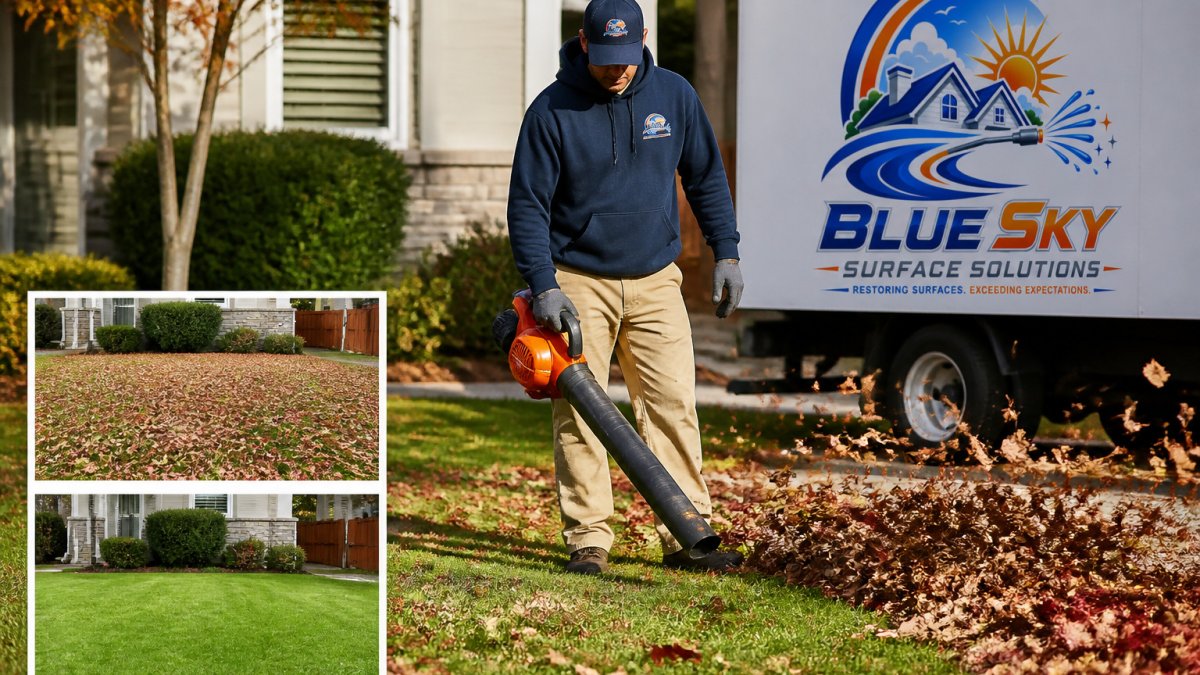
Most homes need gutter cleaning twice yearly, late fall after leaves drop, and again in spring. Homes with many trees may need more.
During cleaning, remove leaves and twigs, dirt and sediment, algae and moss growth, and any debris blocking water flow.
After clearing, flush your gutters with water to ensure complete drainage.
When Professional Cleaning Becomes Essential
DIY gutter cleaning works for some homeowners, but professionals have the equipment and experience to ensure thorough cleaning and inspection.
Professional cleaning makes sense when:
- Your home has many trees nearby
- You're uncomfortable working at heights
- Your gutters haven't been cleaned in years
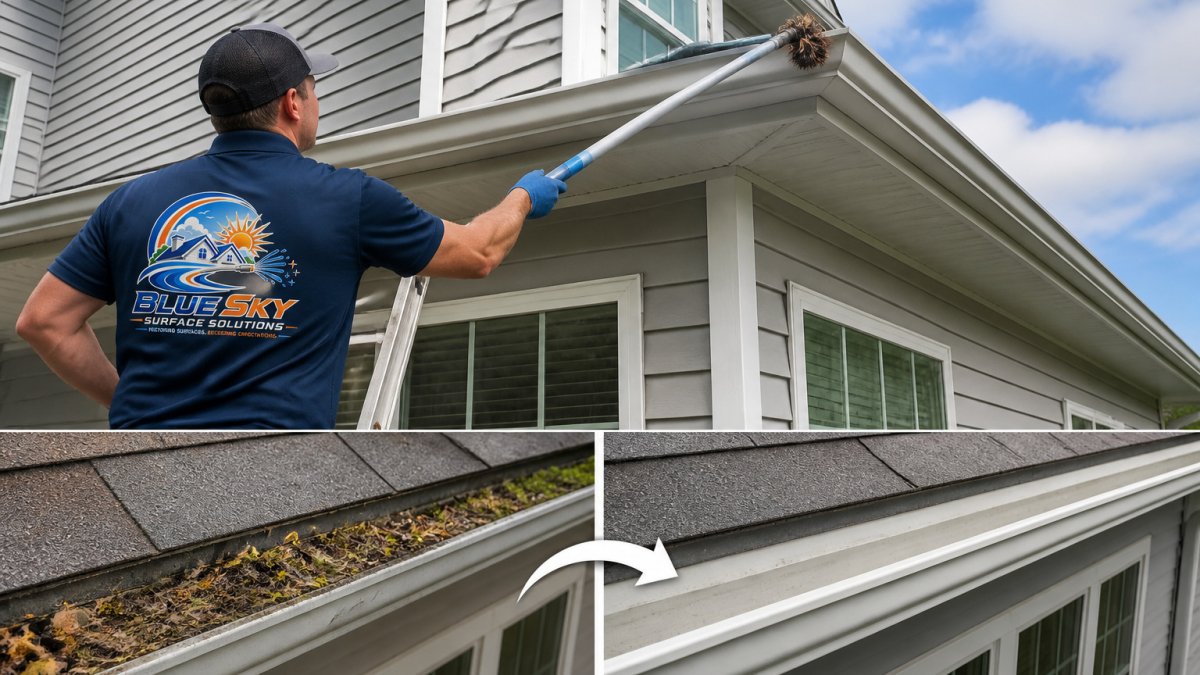
Blue Sky Surface Solutions provides professional gutter cleaning that removes all debris and inspects your gutters for damage. We ensure your gutters drain properly, a preventative approach that protects your foundation.
Distinguishing Gutter Damage From Other Foundation Issues
Not all foundation problems stem from gutter failure. Understanding the difference helps you address the real cause.
Foundation damage can result from poor soil conditions, inadequate foundation drainage, plumbing leaks, expansive soil that shifts with moisture changes, or structural settling over decades.
Gutter-related damage typically shows a clear pattern: water pooling near downspouts or overflow areas, and worse damage on sides with poor gutter maintenance.
Other foundation issues may affect your entire home or appear in areas unrelated to gutter drainage.
Taking Action: Inspection and Next Steps
If you notice signs of foundation damage, start with a professional inspection. An expert can identify whether gutters are the cause and recommend solutions.
Based on the inspection, you'll know whether gutter cleaning and repair will solve the problem or whether additional foundation work is needed.
Foundation damage from overflowing gutters is preventable. Regular gutter maintenance keeps water flowing away from your home and protects your foundation from costly damage.
Frequently Asked Questions
Can overflowing gutters actually cause foundation cracks?
Yes. When gutters overflow or are clogged, rainwater runoff flows directly along your foundation walls instead of being channeled away. This water saturates the soil, increasing hydrostatic pressure against the foundation and causing cracks, settlement, and structural movement. The damage accelerates during heavy rainfall and in areas with poor drainage around the home.
What are the first signs of foundation problems from water damage?
Look for horizontal or stair-step cracks in foundation walls, gaps between walls and door frames, and standing water or water pooling near the foundation. Inside, watch for basement flooding, crawl space moisture, musty odors, and mold growth. These indicate water intrusion and soil saturation caused by poor drainage from overflowing gutters or debris buildup.
How often should I clean my gutters to prevent foundation damage?
Most homeowners should clean gutters twice yearly: once in late spring after trees finish shedding and again in fall after leaves drop. If you have heavy tree coverage or live in an area with frequent storms, quarterly cleaning prevents debris buildup and gutter overflow. Professional gutter cleaning removes buildup that traps water and ensures proper water flow away from your home.
How do downspout extensions help protect the foundation?
Downspout extensions direct water away from your foundation, typically discharging it 4-6 feet from the home's perimeter. This reduces soil saturation and hydrostatic pressure against foundation walls. Without extensions, water pools near the base, leading to cracks, settlement, and water intrusion into basements or crawl spaces over time.