 blog
Cost of Professional Exterior House Cleaning: 2026 Guide
Table of Contents
- What Drives the Cost of Professional Exterior House Cleaning
- Soft Washing vs Pressure Washing Cost: Which Method Fits Your Siding
- How Siding Material Changes the Service Estimate
- Exterior House Cleaning Frequency: How Often to Schedule Service
- Benefits of Professional Gutter Cleaning and Add-On Services
- DIY vs Professional Exterior Cleaning: Real Cost Comparison
- Conclusion
- Frequently Asked Questions
Last Updated: September 20, 2026
What Drives the Cost of Professional Exterior House Cleaning
The cost of professional exterior house cleaning depends on four things: how big your home is, how dirty it is, how hard it is to reach, and how much labor the job takes. At Blue Sky Surface Solutions, we've cleaned enough Hamilton County homes to know no two quotes land in the same place, a single-story ranch with light buildup is a different job than a two-story with years of algae baked into the siding.
U.S. EPA guidance on safe exterior cleaning and runoff
Square Footage and Number of Stories
Square footage sets the baseline: more siding, more surface area, more time on the wand. A two-story home adds reach, ladder work, and often a second pass, so it costs more than a ranch of the same footprint.
Surface Buildup, Accessibility, and Labor Rates
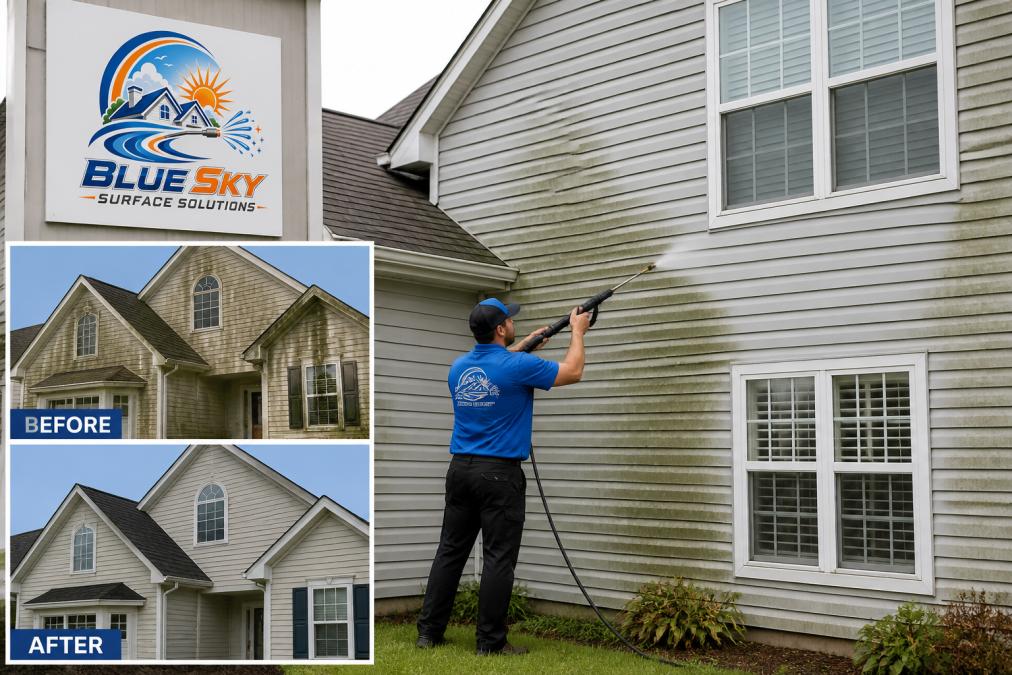
Surface buildup is the wild card. Light dust and pollen rinse off quickly, while years of mold and mildew removal, hard water stains, or algae growth take longer and may need detergent and dwell time. Accessibility matters too: tight side yards, steep rooflines, and landscaping blocking the wall base slow a crew down. Labor rates and crew size round out the estimate.
Soft Washing vs Pressure Washing Cost: Which Method Fits Your Siding
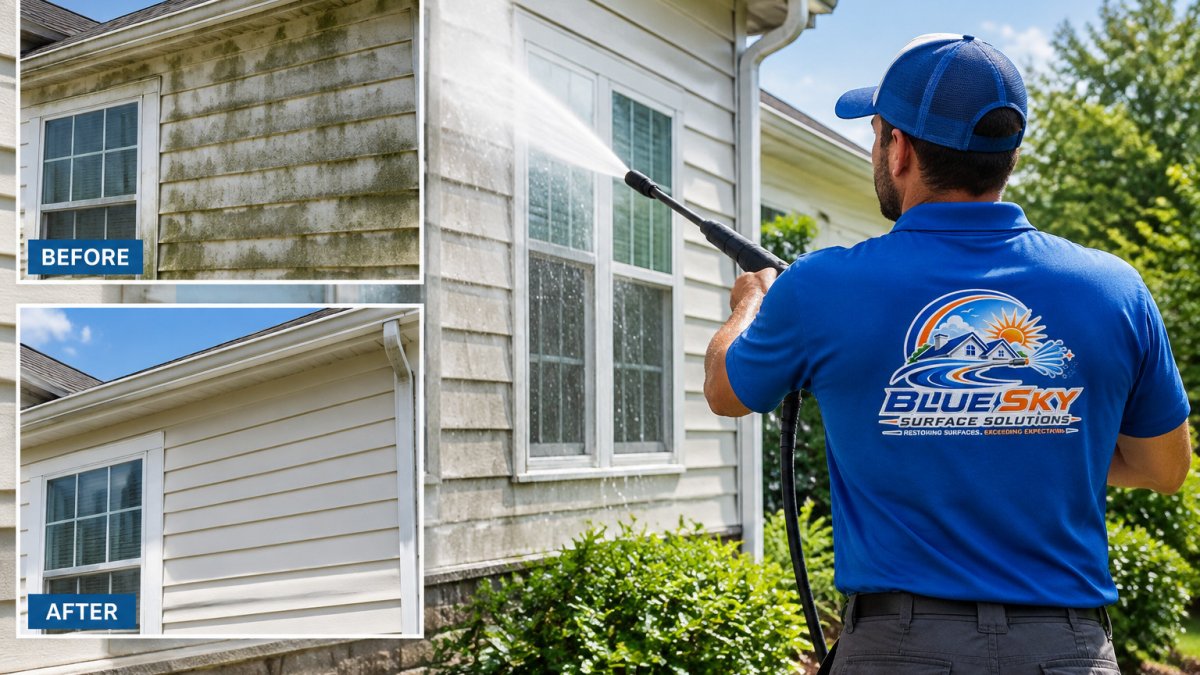
Soft washing almost always costs more than pressure washing, and that's the point. It uses low-pressure rinse and specialized cleaning solutions to lift dirt, algae, and mildew without forcing water into your siding. Power washing drives a high-pressure nozzle against the surface, fast, but damaging to the wrong material.
Here's the practical split:
- Pressure washing: best for concrete, brick, and hard, non-porous surfaces that can take force
- Soft washing: best for vinyl siding, stucco cleaning, painted wood, and anything aged or brittle
- The cost difference: soft washing takes more time, more cleaning solutions, and more care, so it prices higher
How Siding Material Changes the Service Estimate
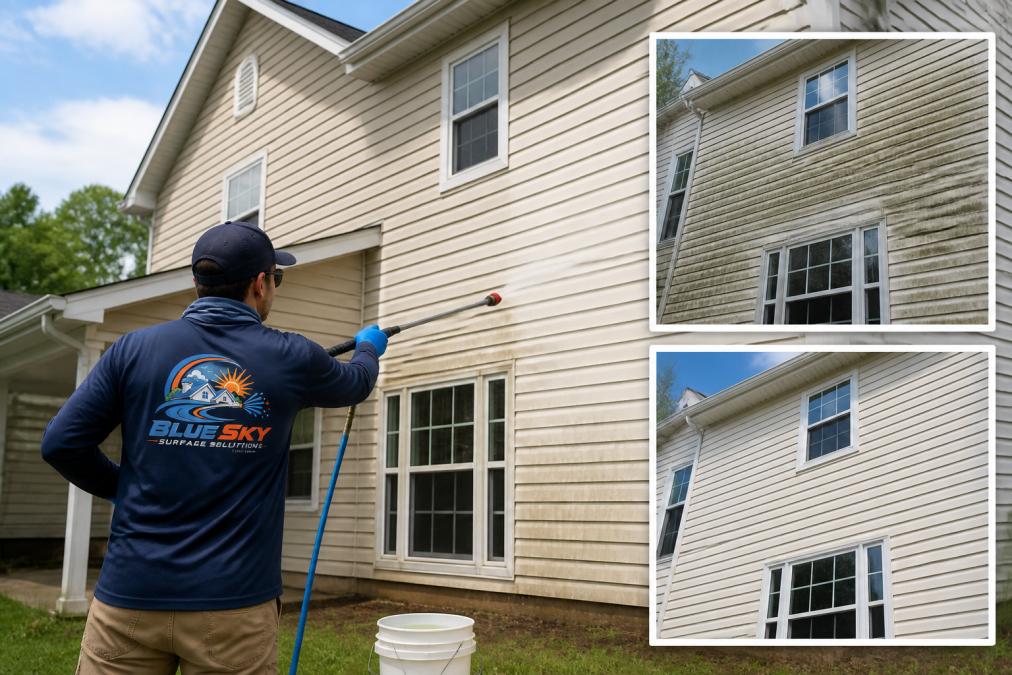
Siding material is the biggest factor most homeowners overlook. Vinyl siding is common and forgiving, so it sits at the lower end of the range. Stucco cleaning demands gentler handling and the right solutions, pushing the price up. Brick restoration is heavier work, and painted wood or older materials need a careful, low-pressure approach.
| Siding Material | Typical Method | Cost Level | Why |
|---|---|---|---|
| Vinyl | Soft wash | Lower | Forgiving, common, quick to clean |
| Stucco | Soft wash | Higher | Gentle handling, careful solutions |
| Brick | Pressure wash | Mid | Durable, handles more force |
| Painted wood | Soft wash | Higher | Risk of stripping, needs low pressure |
Exterior House Cleaning Frequency: How Often to Schedule Service
Most homes need exterior house cleaning once a year, with a second visit in humid or heavily shaded areas. But the more useful question isn't how often, it's what happens to your siding if you don't. The right schedule depends on your material, tree cover, and how fast buildup returns.
A baseline schedule by condition
- Once a year: the baseline for most homes with good sun exposure, minimal tree cover, and hard siding that sheds dirt well.
- Twice a year: shaded lots, lots under or near trees, homes that stay damp, and properties downwind of pollen-heavy landscaping.
- Quarterly spot cleaning: homes with visible algae pressure, north-facing walls that stay green, or HOAs with appearance standards.
- After storms or pollen season: a targeted rinse for hard water stains, green film, and debris that collects in gutters and along the base of the wall.
Homes surrounded by trees collect more debris and shade, feeding algae growth and mold and mildew removal demand. If you notice a green tint creeping up the north wall, that's your signal to schedule, not next spring.
Why frequency is a material-specific decision
Not every surface ages the same way, which changes how often it needs attention:
- Vinyl siding: forgiving and common. Annual soft washing usually keeps it looking new, and the material tolerates a slightly longer interval before buildup becomes visible.
- Stucco: porous and slower to dry. Trapped moisture and organic growth can work into the surface, so stucco generally benefits from a consistent annual soft wash rather than a wait-and-see approach.
- Brick: durable and handles more force, but mortar joints and efflorescence (the white mineral bloom that appears on masonry) respond best to regular, gentle attention rather than occasional heavy blasting.
- Painted wood: the finish is the vulnerable layer. Mildew and moisture break down paint film faster than they damage the wood itself, so annual cleaning is really paint preservation.
- Fiber cement and composite: generally low-maintenance, but still collect pollen, algae, and hard water spotting that dull the finish over time.
The long-term cost-of-ownership math
This is the part most cost guides skip, and it's where frequency pays for itself. Exterior cleaning isn't a recurring expense, it's a maintenance line item that defers much larger ones.
- Gutters: cleared gutters move water away from the fascia and foundation. Clogged gutters trap water against the roofline, which is where rot and pest problems start.
- Paint and stain: removing organic growth before it etches the finish extends the life of the coating.
- Caulk and seals: keeping joints clean and dry helps them do their job longer.
- Curb appeal and resale: a consistently maintained exterior reads as a well-cared-for home, which matters at appraisal and at sale.
Building a schedule that fits your home
The simplest approach is to anchor cleaning to something you already do, spring pollen season, fall gutter clearing, or the start of a season when you're already outside. Pair the wash with gutter cleaning and add-on surfaces so one visit covers the whole exterior.
Benefits of Professional Gutter Cleaning and Add-On Services
The benefits of professional gutter cleaning go beyond looks. Clogged gutters trap water against your roofline and fascia, and that standing water is where rot and pest problems start. Clearing them protects your investment.
- Gutter cleaning: clears debris so water drains away from the roof
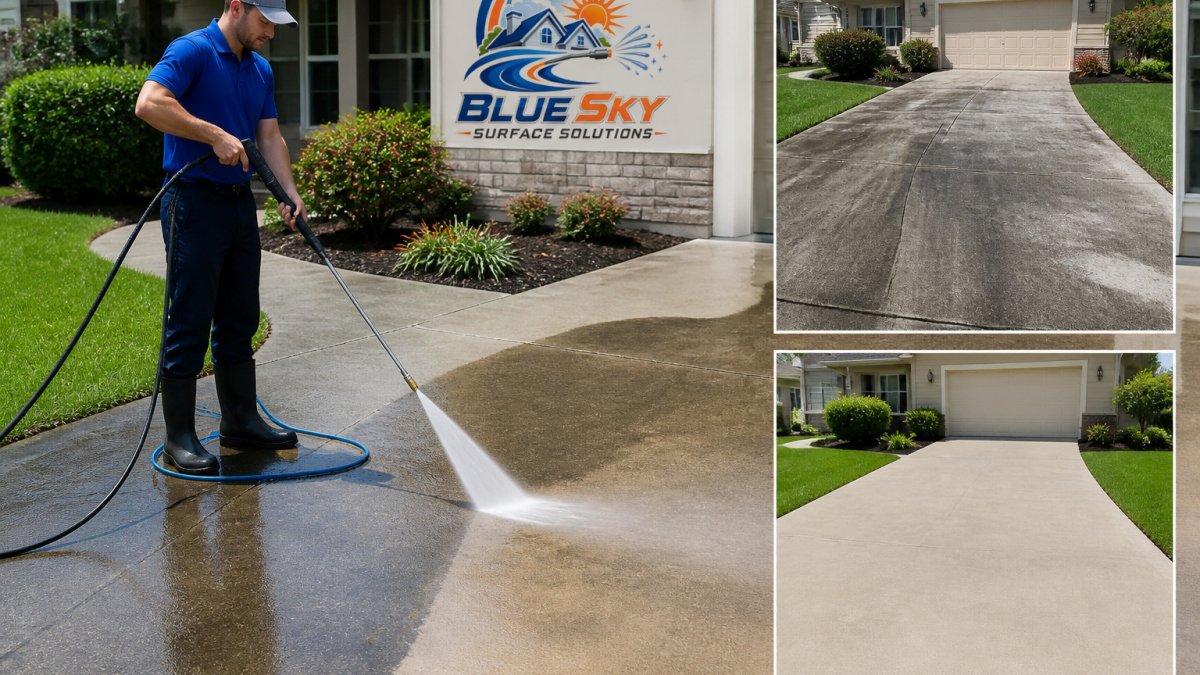
- Driveways and walkways: pressure washing for concrete surfaces
- Decks and patios: material-appropriate cleaning to protect the finish
- Tree trimming: removes limbs that drop debris and shade the roof
DIY vs Professional Exterior Cleaning: Real Cost Comparison
DIY looks cheaper on the receipt and more expensive everywhere else. The honest comparison isn't a pressure washer rental versus a service quote, it's total cost of ownership across equipment, chemicals, time, risk, and the damage a wrong method can do to your siding.
What DIY actually costs you
When homeowners run the numbers, the same line items show up:
- Equipment: a consumer-grade pressure washer rents by the day or sells for a few hundred dollars, but the nozzles, extension wands, and surface cleaners needed to do the job evenly are usually extra. A soft wash setup, the pump, the downstream injector, the correct tip sizes, is a separate purchase most homeowners never make.
- Cleaning solutions: the right mix for vinyl is not the right mix for stucco or painted wood. Buying the wrong product, or the right product in the wrong concentration, is how siding gets etched, streaked, or stripped.
- Water and power: a full exterior wash can run for hours. That shows up on the utility bill and, in drought-conscious areas, on how much you're allowed to use.
- Time: a single-story ranch with light buildup is a weekend. A two-story with algae on the north wall, gutters full of debris, and landscaping to work around is multiple weekends, or one very long one.
- Risk: this is the line item that never appears on the DIY receipt until it does. A high-pressure nozzle held too close strips paint, cracks vinyl, forces water behind panels, and etches stucco. Ladder work on a two-story adds a fall risk that no homeowner should casually accept.
What professional service actually includes
A professional exterior cleaning quote isn't just labor. It bundles the things that make the job safe and repeatable:
- Method matching: soft washing for vinyl, stucco, and painted wood; pressure washing for concrete, brick, and hard non-porous surfaces. The right method for the material is the single biggest determinant of whether the surface looks better or worse afterward.
- Commercial-grade equipment: higher flow, better control, and the ability to reach second stories and rooflines without a homeowner on a ladder.
- Correct chemistry: detergents formulated for the surface, applied at the right dwell time, then rinsed clean, not blasted off.
- Insurance and liability: a legitimate operator carries liability coverage. If a ladder tips into a window, a hose cracks a fixture, or a cleaning solution damages landscaping, that coverage is the difference between a phone call and a claim on your homeowner's policy.
- A documented process: itemized quotes, surface-by-surface pricing, and a crew that has cleaned the same material hundreds of times.
The insurance and liability angle most guides skip
This part of the DIY-versus-professional math rarely makes it into cost articles, and it matters most when something goes wrong. Hiring an uninsured "guy with a truck" looks like a bargain until a nozzle scars your siding or a ladder dents your gutter, then you're negotiating with someone who may have no coverage, no bond, and no incentive to make it right.
When DIY is genuinely reasonable
- Two or more stories, or any roofline work
- Vinyl, stucco, painted wood, or aged siding
- Visible algae, mold, or hard water staining
- Gutters that need clearing
- Landscaping, pets, or a koi pond near the runoff path
If you want a straight answer on which side of that line your home falls on, reach out for a free quote. We'll tell you honestly whether you need us or not, and if you do, we'll price it fairly.
Conclusion
Every home's exterior is different, and the right price depends on your square footage, siding material, buildup, and access. Guessing at a number online rarely matches what the job actually needs.
Frequently Asked Questions
How much should exterior house cleaning cost?
Pricing depends on square footage, siding material, number of stories, and how much surface buildup has accumulated. A ranch house with light dirt costs less to clean than a two-story home with heavy mold and mildew removal needs. Most companies provide a free service estimate based on an on-site or photo review. Contact Blue Sky Surface Solutions for a transparent quote tailored to your property.
How often should a house exterior be washed to prevent damage?
Most homes benefit from exterior cleaning once a year. Homes near trees, with north-facing walls, or in humid conditions may need service every six to nine months to prevent algae growth and mold from embedding in the siding. Regular exterior house cleaning frequency protects paint, caulk, and siding material, extending the life of your home's exterior and reducing long-term repair costs.
Is soft washing or pressure washing better for my siding?
Soft washing uses low pressure with specialized cleaning solutions to safely remove mold, mildew, and algae from vinyl, stucco, and painted surfaces. Pressure washing relies on high-pressure nozzles suited for concrete and brick. Using the wrong method on delicate siding can force water behind panels or strip paint. A professional can recommend the right approach for your material.
Are there additional fees for gutters, driveways, or decks?
Add-on services like gutter cleaning, driveway pressure washing, and deck cleaning are typically quoted separately from the main house wash. Bundling services often reduces the total cost compared to booking each one individually. Ask for a combined service quote that lists each item so you can compare value. Blue Sky Surface Solutions offers package pricing for multiple exterior services.