 how-to
How to Safely Clean House Siding: A Step-by-Step Guide
Table of Contents
- What You'll Need Before Starting
- Soft Washing vs Pressure Washing: Which Method Is Safe
- Best Cleaning Solutions for House Siding
- Step-by-Step Process to Safely Clean House Siding
- How Often Should You Clean House Siding
- Common Mistakes to Avoid When Cleaning Siding
- Post-Cleaning Maintenance and Protection
- Frequently Asked Questions
Last Updated: September 30, 2026
What You'll Need Before Starting
Before you safely clean house siding, gather the right tools and protective equipment. This preparation step prevents damage to your home and keeps you safe throughout the process.
Essential equipment includes:
- Garden hose with spray nozzle (standard household hose, 50-100 feet)
- Soft-bristled brush or long-handled scrub brush (natural bristles resist chemical degradation)
- Bucket for mixing cleaning solution (5-gallon minimum for larger homes)
- Safety glasses and work gloves (nitrile or rubber, rated for mild detergents)
- Sturdy ladder (if needed for upper sections, fiberglass preferred over aluminum for electrical safety)
- Tarps or drop cloths for landscaping protection (6-mil plastic sheeting)
- Mild detergent or specialized siding cleaner
- Extension poles with soft-brush attachments (reduces ladder use and fall risk)
Why equipment choice matters for safety: Many homeowners assume any pressure washer or high-powered spray nozzle will work, but equipment designed for concrete or driveways can force water behind siding panels at 2,000+ PSI. This creates hidden moisture pockets that lead to mold growth and structural damage inside wall cavities, problems that cost thousands to remediate and are invisible until damage is severe. A standard garden hose with a spray nozzle delivers 40-60 PSI, which is safe for all residential siding materials.
Ladder safety is often overlooked: Falls from ladders account for significant home injuries during exterior cleaning. Use a ladder stabilizer bar or have someone hold the base. Never lean sideways from a ladder; instead, reposition it. Fiberglass ladders are safer than aluminum if you're working near electrical lines or wet conditions.
Protective equipment prevents chemical exposure: Even mild detergents can irritate skin and eyes, especially during prolonged contact. Nitrile gloves are preferable to latex if you're sensitive, and safety glasses prevent splashing. Wear long sleeves and pants to minimize skin exposure, particularly when applying solutions to upper sections where splashback occurs.
The right tools make the difference between a successful cleaning and potential damage. A pressure washer can harm certain siding materials, so many homeowners prefer soft washing equipment for safer results.
Soft Washing vs Pressure Washing: Which Method Is Safe
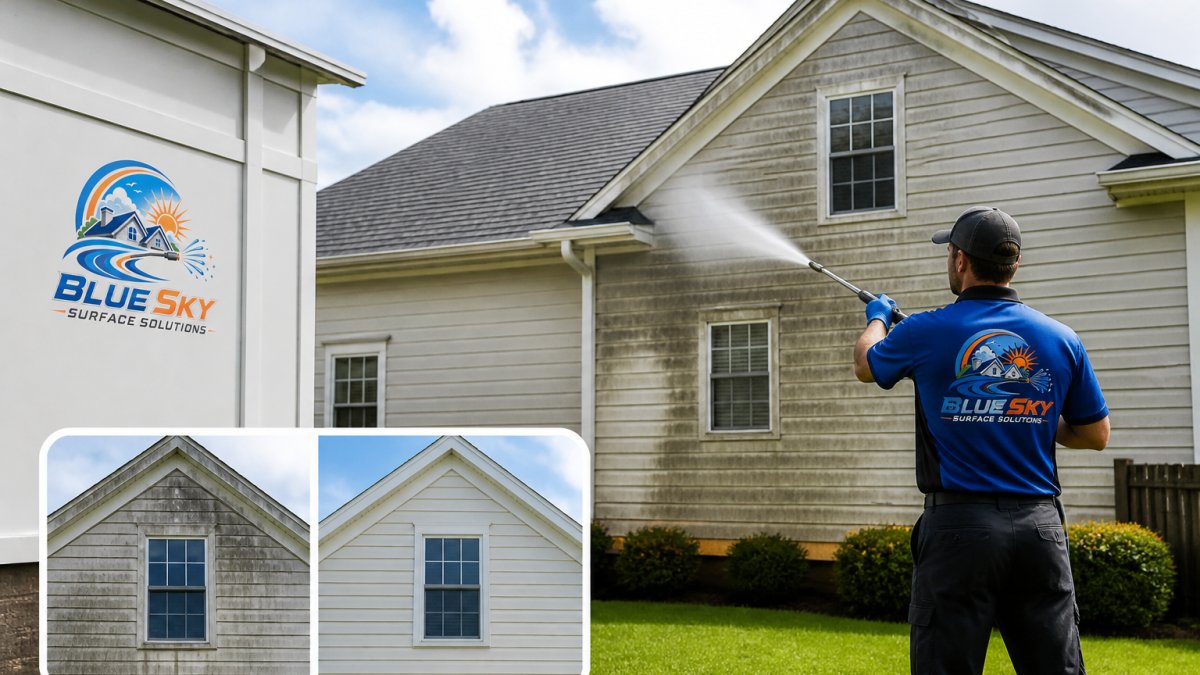
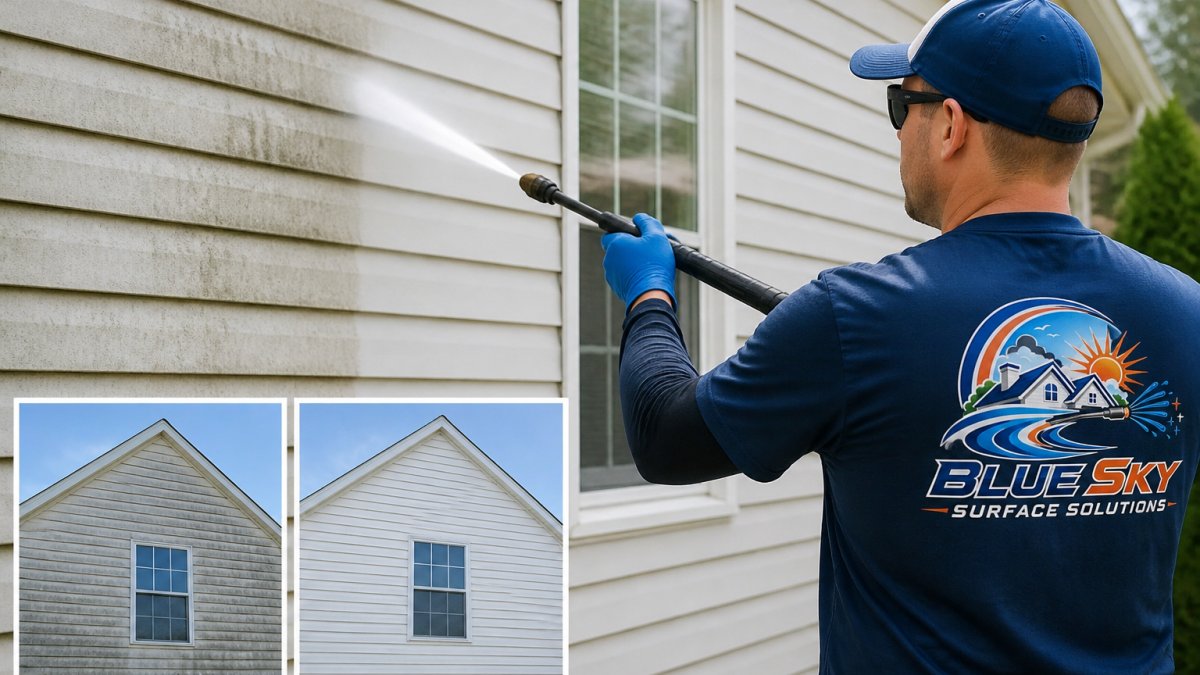
Soft washing uses low-pressure water and specialized cleaning solutions to remove dirt, algae, and mildew safely. Pressure washing applies high-force water jets that can strip paint, dent siding, or force water into gaps.
The key difference lies in water pressure. Soft washing operates at 500 PSI or less, while pressure washing exceeds 3,000 PSI. For most residential siding, soft washing is the safer choice.
When soft washing works best:
- Vinyl siding that dents easily
- Wood siding that absorbs water
- Brick or stone surfaces
- Homes with delicate landscaping nearby
- Removing algae and mildew buildup
Pressure washing can damage siding materials and create entry points for water intrusion. It's better suited for concrete driveways or hardened surfaces, not the exterior walls of your home.
Best Cleaning Solutions for House Siding
Non-Toxic and Non-Caustic Options
The safest cleaning solutions contain no harsh chemicals that harm plants, pets, or soil. Many homeowners start with simple, effective recipes using common household items.
Gentle cleaning formula:
- 1 part liquid dish soap
- 3 parts water
- Mix in a bucket and apply with a soft brush
This basic solution removes light dirt and grime without environmental impact. It's ideal for routine maintenance cleaning of your house siding.
For stubborn buildup, a slightly stronger mix works without caustic ingredients. Many professional cleaners use non-toxic surfactants that break down oils and organic matter safely.
Removing Algae and Mildew Safely
Algae and mildew thrive on damp siding, especially in shaded areas. These growths look unsightly and can damage surface integrity over time.
A non-toxic solution for algae and mildew removal combines water with a small amount of mild detergent. Apply it with a soft brush and let it sit for 10-15 minutes before rinsing thoroughly.
Why this matters: Mold spores can become airborne during aggressive cleaning. Soft application with gentle agitation prevents spore release into the air around your home.
Many homeowners find that regular soft washing prevents algae and mildew from returning quickly. Preventive cleaning keeps your house siding looking fresh longer than waiting for heavy buildup.
Step-by-Step Process to Safely Clean House Siding
Cleaning Vinyl Siding Without Damage
Vinyl siding dents and cracks easily under pressure. The step-by-step process protects your investment while achieving excellent results.
Step 1: Prepare the area [Time: 10 minutes]
- Lay tarps around landscaping and gardens
- Close windows and doors
- Move outdoor furniture away from work zones
Step 2: Mix your cleaning solution [Time: 5 minutes]
- Combine gentle dish soap with water in a bucket
- Stir thoroughly to blend ingredients
Step 3: Apply solution to siding [Time: 20-30 minutes]
- Use a soft brush or mop to apply solution
- Work from top to bottom in small sections
- Let solution sit for 10-15 minutes on stubborn spots
Step 4: Rinse thoroughly [Time: 15-20 minutes]
- Use a garden hose with gentle spray setting
- Rinse from top to bottom
- Ensure all soap residue is removed
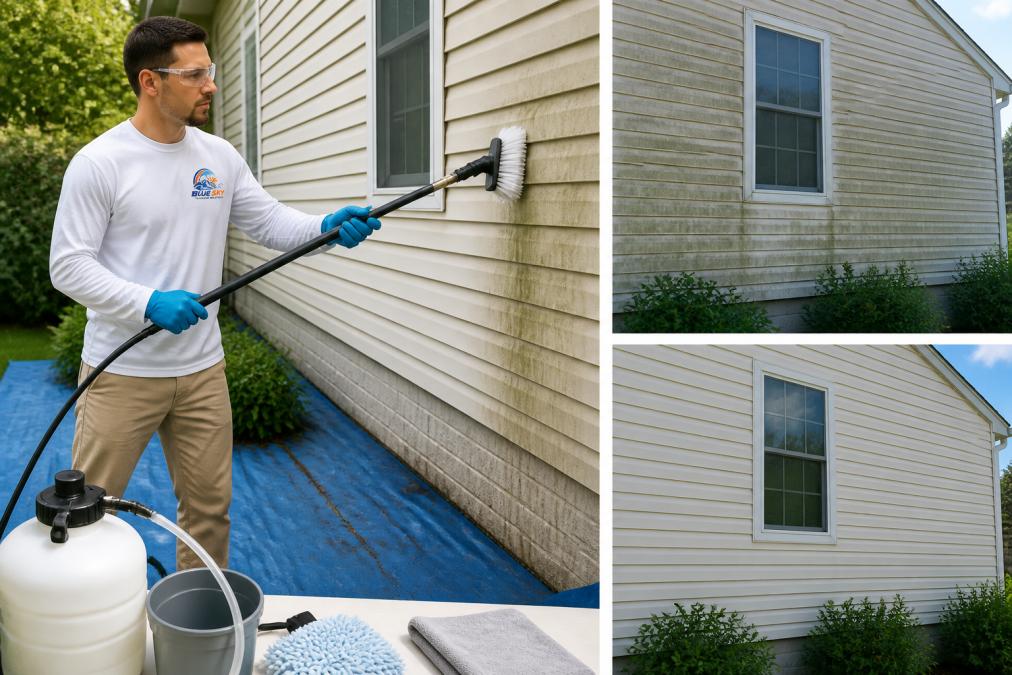
Step 5: Inspect and touch up [Time: 10 minutes]
- Check for missed spots or streaks
- Apply solution again to problem areas if needed
- Final rinse to ensure clean finish
This methodical approach prevents water intrusion and surface damage.
Cleaning Wood Siding Safely
Wood siding requires extra care because water absorption causes swelling and rot. The cleaning process must minimize moisture penetration while removing dirt and algae.
Key steps for wood siding:
- Test your solution on a hidden area first
- Apply with a soft brush using gentle circular motions
- Rinse quickly to minimize water absorption
- Allow wood to dry completely before applying sealant
Cleaning Brick Siding
Brick is durable but has porous surfaces where dirt, algae, and mineral deposits accumulate. The porous nature means water can penetrate, so careful rinsing prevents moisture problems.
Process for brick siding:
- Mix mild detergent with water
- Apply with a soft brush in circular motions
- Let solution sit for 15-20 minutes
- Rinse thoroughly from top to bottom
- Allow brick to dry completely
How Often Should You Clean House Siding
Most homeowners benefit from cleaning house siding once per year. Regular maintenance prevents heavy buildup and keeps your exterior looking fresh.
Cleaning frequency depends on:
- Local climate and humidity levels
- Tree coverage and shade patterns
- Proximity to water sources
- Siding material type
- Environmental factors like pollution or salt spray
Common Mistakes to Avoid When Cleaning Siding
Using pressure washing on sensitive materials causes dents, cracks, and water damage. Stick with soft washing for vinyl, wood, and painted surfaces.
Post-Cleaning Maintenance and Protection
After you safely clean house siding, proper maintenance extends the cleaning results and protects your investment. Most homeowners don't realize that algae and mildew regrow within 6-12 months without preventive measures. Understanding what causes regrowth and how to slow it down keeps your siding cleaner longer and reduces the frequency of deep cleaning.
Immediate post-cleaning steps (within 24 hours):
- Allow siding to dry completely (typically 12-24 hours depending on humidity and shade)
- Inspect for any damage revealed during cleaning, small cracks or gaps are entry points for water and mold spores
- Address any visible cracks or gaps with appropriate sealant (silicone caulk for vinyl, paintable caulk for wood)
- Consider applying protective sealant if appropriate for your material (wood siding benefits from clear water-repellent sealers applied every 2-3 years)
Prevention strategies that actually work:
Ongoing quarterly inspection routine:
- Walk around your home and photograph problem areas (shaded walls, areas near trees)
- Note any new algae or mildew spots and their location
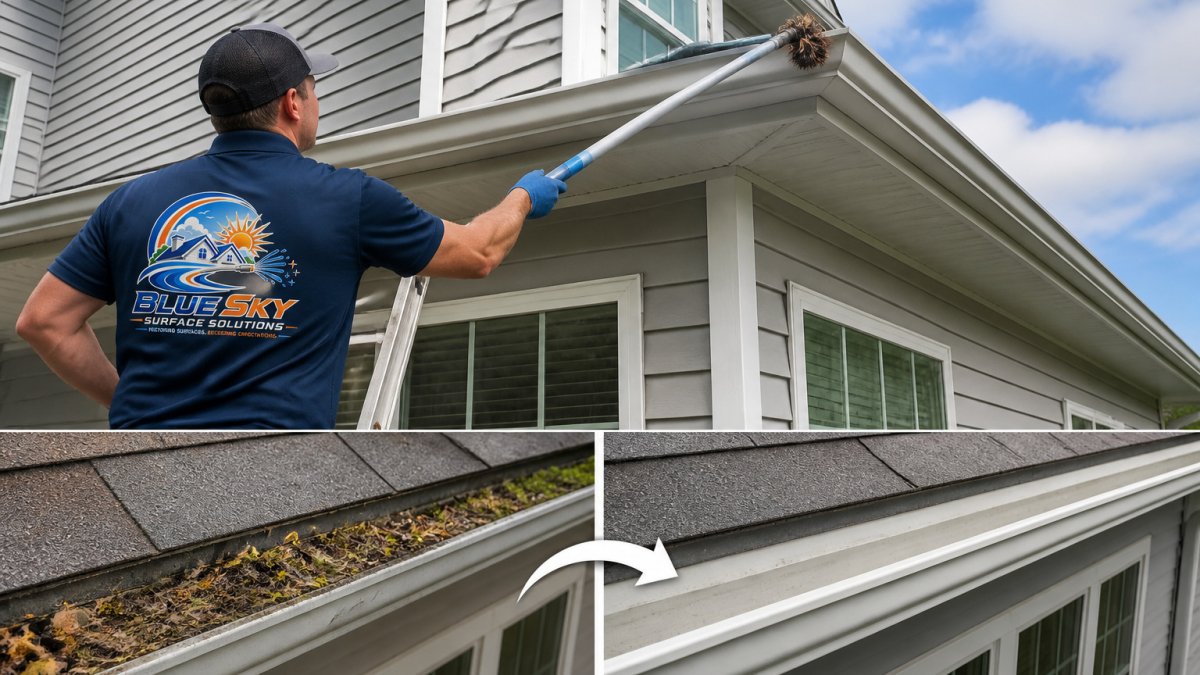
- Check gutters for debris and blockages
- Inspect caulking and sealant for cracks or separation
- Document seasonal patterns (e.g., "algae always returns on the north side by October")
Frequently Asked Questions
What is the best thing to clean house siding with?
The best cleaning solution depends on your siding material and the type of buildup. For most vinyl and brick siding, a mixture of water and non-toxic detergent works effectively. For stubborn algae and mildew, a mild bleach solution (one part bleach to three parts water) applied with soft washing removes growth safely without damaging the surface. Always test any solution on a hidden area first to ensure it won't cause discoloration or surface damage.
Is it safe to pressure wash vinyl siding?
High-pressure washing can damage vinyl siding by forcing water behind panels and causing water intrusion or cracking the material. If you use pressure washing on vinyl, keep the PSI setting below 1500 and maintain a distance of at least 12 inches from the surface. Soft washing is the safer choice for vinyl siding, as it uses lower water pressure combined with cleaning solutions to remove dirt, algae, and mildew without risk of surface damage.
How often should you clean house siding?
Most homeowners should clean their house siding annually or twice per year, depending on climate and environmental factors. Homes in humid areas with frequent rainfall may develop algae and mildew faster and benefit from cleaning every six months. Homes in drier climates typically need cleaning once per year. If you notice visible dirt, algae, or oxidation buildup, schedule cleaning regardless of the season to protect your siding's integrity and curb appeal.
Can you use Dawn dish soap to wash house siding?
Yes, liquid dish soap like Dawn can be used to clean house siding when diluted properly. Mix one part liquid dish soap with four parts water to create a gentle cleaning solution suitable for most siding materials. This non-toxic option effectively removes light dirt and surface buildup without the harshness of commercial chemicals. For heavy algae or mildew, a mild bleach solution is more effective, but dish soap works well for routine maintenance cleaning.