 blog
How to Verify Contractor Insurance Coverage
Table of Contents
- Why Verifying Contractor Insurance Coverage Matters Before Hiring
- Step-by-Step: How to Verify a Certificate of Insurance
- Understanding Contractor General Liability Insurance
- Confirming Contractor Workers' Compensation Insurance
- Key Questions to Ask a Contractor About Insurance
- What to Do When Contractor Insurance Coverage Cannot Be Verified
- Conclusion: Protecting Your Property Starts With Verification
- Frequently Asked Questions
Last Updated: October 13, 2026
Why Verifying Contractor Insurance Coverage Matters Before Hiring
Learning how to verify contractor insurance coverage is one of the smartest moves a homeowner can make before any exterior project begins.
Contractor insurance is the safety net that sits between a job site accident and your savings account. Without it, you carry the risk.
Here's the part most guides get wrong: they tell you to "ask for proof of insurance" and stop there.
Step-by-Step: How to Verify a Certificate of Insurance
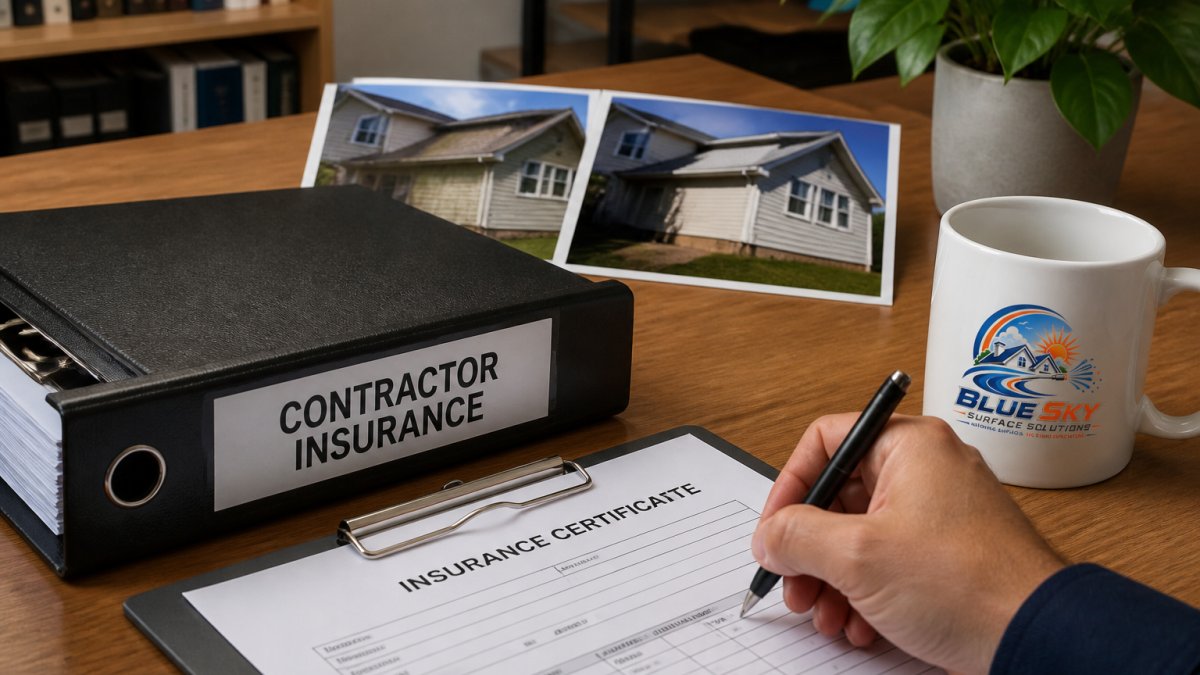
Verifying a certificate of insurance means checking that the document is real, current, and matches the contractor you hired. The key word is independently, you should never confirm a policy using only the contact information printed on a document the contractor handed you.
Requesting Proof of Insurance Before Work Begins
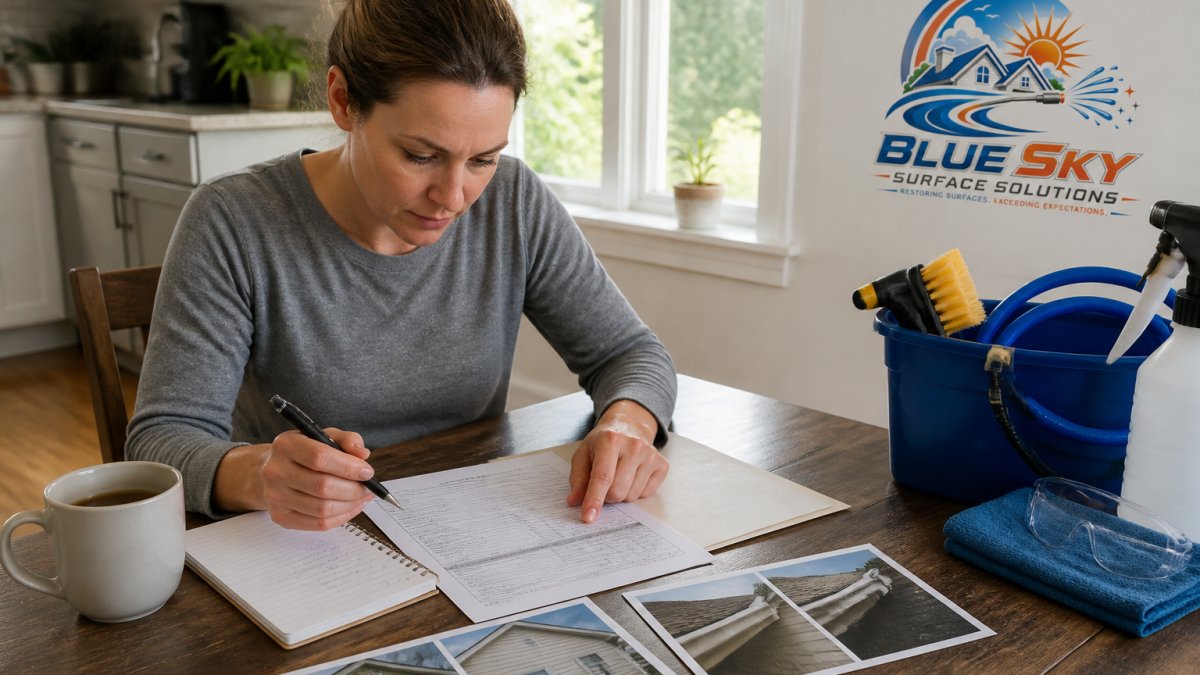
Ask for a certificate of insurance (COI) before you sign anything or pay a deposit. A legitimate contractor will send it the same day.
A COI is a one-page summary your contractor's insurance agent issues. It lists the policy numbers, coverage limits, and effective and expiration dates. It also names the insurance company, the named insured, and the certificate holder.
A few ground rules:
- Request it in writing so there's a record
- Ask for it before scheduling, not the morning of the job
- A contractor who stalls or gets defensive is a red flag
Matching the Legal Business Name and Policy Details
The name on the COI must match the contractor's legal business name, not just a trade name. If the company advertises as "Green Lawn Guys" but the policy is under "Smith Property Maintenance LLC," ask why. A mismatch can void coverage for your job.
Check these fields side by side:
- Legal business name on the COI vs. the name on your contract
- Policy number and insurance company name
- Coverage limits for general liability and workers' compensation
- Effective date and expiration date
- Named insured, is it the entity you're actually hiring, or an individual owner?
Verifying the Policy Directly With the Insurer
This is the step most guides skip. Calling the number printed on the COI only proves that whoever answers the phone will confirm what the paper says. To verify independently:
- Find the insurer's main claims or policy-services phone number yourself. Use the carrier's official website or a state department of insurance lookup, not the number on the COI.
- Call that number and give the policy number. Ask the representative to confirm: (a) the policy is active today, (b) the named insured matches the contractor's legal name, and (c) the general liability and workers' compensation limits.
- Ask whether the policy covers the type of work you're hiring for at your address. A policy can be active and still exclude the trade or the location.
- Ask for the certificate holder's name on file. If you requested to be added as an additional insured, this is where you confirm it actually happened, not just that the contractor said it would.
Checking the License Separately From the Insurance
A contractor license lookup and an insurance verification are two different checks. Your state licensing board (or the state's online contractor lookup tool) can tell you whether the business is licensed, whether the license is active, and whether there are complaints or disciplinary actions on file. It generally will not tell you whether the contractor's liability or workers' compensation policy is currently in force.
Treat them as separate gates:
- License check, confirms the contractor is permitted to do the work
- Insurance check, confirms there's a policy to pay a claim if something goes wrong
A contractor can pass one and fail the other. Do both.
Rechecking Coverage Before Renewals and Mid-Project
A COI expires. If your project runs past the policy's expiration date, or if the contractor renews mid-job, the certificate you have on file may no longer reflect active coverage. Ask for an updated COI at each renewal, and re-verify with the insurer the same way you did the first time. On longer projects, a monthly recheck is a reasonable habit.
Understanding Contractor General Liability Insurance
Contractor general liability insurance pays for third-party injuries and property damage caused by the contractor's work. If a crew member cracks your neighbor's window or damages your siding, this policy is what responds.
Typical general liability coverage includes:
- Bodily injury to someone other than employees
- Property damage to your home or a neighbor's property
- Completed operations coverage for damage discovered after the job ends
- Products and completed operations for materials the contractor supplied
Here's what most people miss: general liability does not cover the contractor's own employees who get hurt on your property. That's a separate policy, and it matters just as much.
Additional Insured Status and Endorsements
A COI does not make you an additional insured. It only lists you as a certificate holder, a person who gets notified if the policy is canceled.
Additional insured status is created by an endorsement on the policy itself, not by the certificate.
If you want that protection:
- Ask the contractor to have their agent add you as an additional insured for the duration of the project.
- Request the endorsement page, not just an updated COI. The endorsement is the document that actually creates the status.
- Call the insurer (using a number you sourced yourself) and confirm the endorsement is on file and names you correctly.
For most routine residential work, additional insured status is optional. For larger projects, work near property lines, or anything involving subcontractors, it's worth asking for.
Coverage Exclusions and Job-Specific Risks
An active policy is not the same as a policy that covers your job. General liability policies contain exclusions, and the exclusions are where most surprises live.
Common exclusions to ask about:
- Work performed by subcontractors, some policies exclude it unless the subcontractor is separately insured and named
- Certain trades or high-risk activities, roofing, tree work, and demolition are sometimes carved out or require a separate endorsement
- Damage to the contractor's own work, often excluded; you may need a separate provision or a different policy type
- Faulty workmanship, typically excluded from general liability, which covers damage caused by the work, not the cost to redo it
How to check whether the policy covers your job:
- Ask the contractor's agent directly: "Does this policy cover [specific trade] at a residential property in [your state]?"
- Ask whether any exclusions apply to the scope of work in your contract.
- If the contractor uses subcontractors, ask whether the policy covers their work or whether each sub carries their own coverage.
- Get the answers in writing, an email from the agent is fine.
If the agent hesitates or can't confirm coverage for your specific scope, treat that as a coverage gap, not a paperwork problem.
Why This Matters for Your Bottom Line
If a general liability claim lands and the policy excludes your job, the cost doesn't disappear, it moves. It can land on your homeowner's policy, on your savings, or on a lawsuit. Ten minutes confirming the endorsement and exclusions is the cheapest insurance you'll ever buy on a project.
Confirming Contractor Workers' Compensation Insurance
Contractor workers' compensation insurance covers medical bills and lost wages when an employee is injured on the job. In most states, businesses with employees are required to carry it.
Why does this matter to you? If a worker without coverage gets hurt on your property, the claim can land on your homeowner's policy, or on you personally.
To confirm workers' comp coverage:
- Look for the policy on the COI, listed separately from general liability
- Confirm the coverage limit and policy dates
- Call the insurer to verify the policy is active
One more thing: if the contractor uses subcontractors, ask for their certificates too.
Key Questions to Ask a Contractor About Insurance
The right questions to ask a contractor about insurance get you past the paperwork and into specifics. Ask these before hiring:
- "Can you email me a current certificate of insurance today?"
- "What is your general liability coverage limit?"
- "Do you carry workers' compensation insurance for your employees?"
- "Will you add me as an additional insured?"
- "Do you use subcontractors, and are they covered?"
- "Can I call your insurance agent to confirm the policy?"
A professional answers all six without hesitation. Vague answers, delays, or "my guy handles that" responses tell you plenty.
| What to Check | Where to Find It | Why It Matters |
|---|---|---|
| Legal business name | COI header | Mismatch can void coverage |
| Policy number | COI body | Needed to confirm with insurer |
| Coverage limit | COI body | Too low leaves you exposed |
| Effective date | COI body | Expired policy means no coverage |
| Expiration date | COI body | Coverage may lapse mid-project |
| Workers' comp status | COI or insurer call | Protects you from injury claims |
What to Do When Contractor Insurance Coverage Cannot Be Verified
When contractor insurance coverage cannot be verified, do not hire that contractor. No exceptions. A contractor who cannot produce a valid certificate, or whose insurer won't confirm an active policy, is asking you to carry the risk of the entire job.
Your options:
- Walk away. There are plenty of properly insured contractors.
- Ask for a new certificate if the old one expired. Give them one business day.
- Request a signed contract clause requiring proof of insurance before any work starts. This protects you if coverage lapses later.
You can also check the contractor's license status through your state's licensing board or online lookup. A license alone doesn't prove insurance, but an unlicensed contractor is a warning sign on its own.
Conclusion: Protecting Your Property Starts With Verification
Verifying contractor insurance coverage takes ten minutes and one phone call. Before you hire anyone for tree work, pressure washing, or gutter cleaning, ask for the certificate, match the business name, and call the insurer to confirm the policy is live.
At Blue Sky Surface Solutions, we carry proper coverage and provide our certificate before work begins. We handle house and gutter cleaning, soft washing, and expert tree services across Hamilton County, and we're happy to answer every insurance question you have.
Frequently Asked Questions
How do I check if a contractor is insured?
Ask the contractor for a certificate of insurance (COI) before any work begins. Review the legal business name, policy number, coverage limits, and effective and expiration dates. Then call the insurance agent or company listed on the COI to confirm the policy is active. This independent verification step catches expired policies or certificates that don't match the contractor you're hiring.
What should I check on a contractor's certificate of insurance?
Look for four things: the legal business name matching the contractor you hired, active policy effective and expiration dates, general liability coverage limits, and workers' compensation coverage. Also check that the policy number and insurance company are clearly listed. If any detail is missing or doesn't match, ask the contractor for clarification before signing anything.
Does a certificate of insurance guarantee a contractor is covered?
No. A COI is a snapshot of coverage at the time it was issued. A contractor could cancel the policy the next day, or the certificate could list coverage that excludes the specific work you're hiring for. Always call the insurance company directly to confirm the policy is still active and ask about any exclusions that apply to your project type.
Should I verify a contractor's insurance before work begins?
Yes, always verify before any work starts. If an uninsured worker is injured on your property, you could be held liable for medical bills and lost wages. If they cause property damage, you may have to pay out of pocket. Verifying contractor insurance coverage takes about 10 minutes and protects you from potentially thousands of dollars in unexpected costs.