 how-to
Preventing Mold Growth on House Exterior: A 2026 Guide
Table of Contents
- Why Mold and Mildew Grow on Your Home's Exterior
- Identifying Mold vs. Mildew vs. Algae on Siding
- The Role of Professional Gutter Cleaning in Mold Prevention
- Soft Washing vs. Pressure Washing: Choosing the Right Method
- DIY vs. Professional Mold Treatment: A Cost-Benefit Analysis
- Your Seasonal Exterior Home Maintenance Schedule
- Preventing Mold Growth on House Exterior: Long-Term Strategies
- Frequently Asked Questions
Last Updated: September 17, 2026
Why Mold and Mildew Grow on Your Home's Exterior
Preventing mold growth on house exterior surfaces starts with what feeds it: moisture, organic debris, and shade. Your siding, gutters, and trim give mold, mildew, and algae exactly the conditions they need.
The organisms that discolor your home are not all the same. Mold is a fungus that feeds on organic material and needs sustained moisture. Mildew is a surface-level fungus that shows up as powdery spots and spreads quickly in humidity. Algae is different entirely, the black streaks on thousands of Midwest asphalt shingles are usually a cyanobacteria called gloeocapsa magma. Lichen is a partnership between fungi and algae that clings tightly and resists rinsing.
That distinction matters because each one responds to different treatments. Spraying a fungicide on algae does very little. Scraping lichen off asphalt shingles can pull the roof granules with it.
At Blue Sky Surface Solutions, we see the same pattern on almost every home we inspect: debris collects in gutters, water overflows down the fascia, and within a season or two the north-facing siding is streaked with growth. Fix the moisture source and the mold follows.
Identifying Mold vs. Mildew vs. Algae on Siding
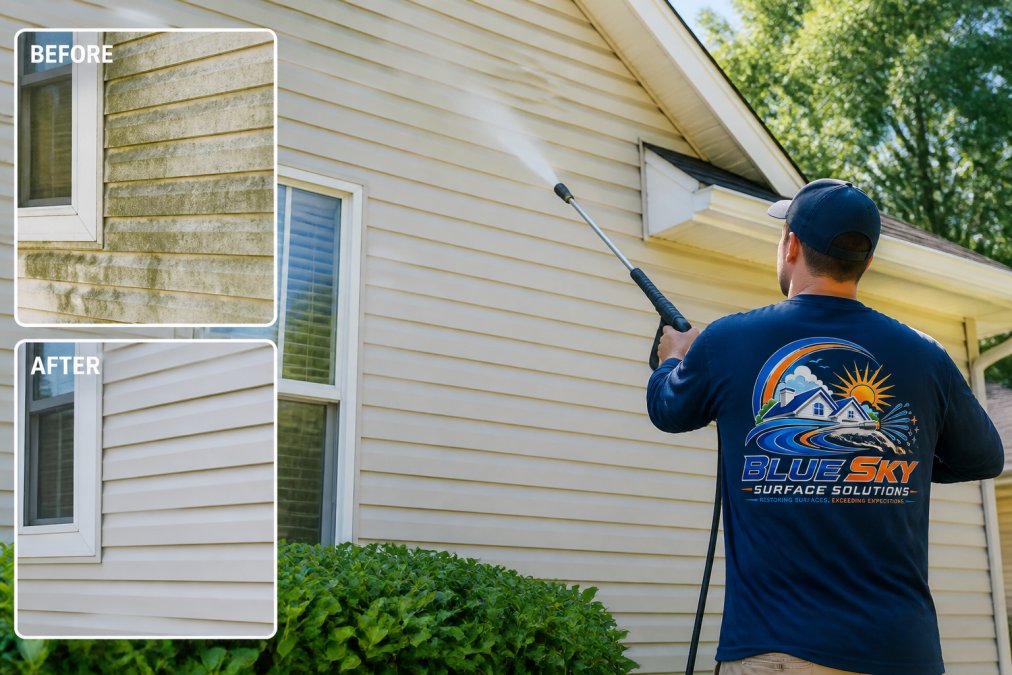
Mold and mildew look similar, but texture and location tell them apart. Mildew appears as flat, powdery patches. Mold is thicker, often fuzzy or slimy, and grows in irregular clusters near caulk lines, window frames, and shaded walls.
Algae leaves dark green or black streaks running vertically down siding and shingles, following the path water takes. Lichen shows up as raised, crusty patches in gray, green, or yellow, usually on surfaces that stay damp.
A quick test: run a gloved finger across the spot. Powder that wipes away is likely mildew, a slimy smear points to mold, and growth that will not budge without scraping is probably lichen or embedded algae.
The Role of Professional Gutter Cleaning in Mold Prevention
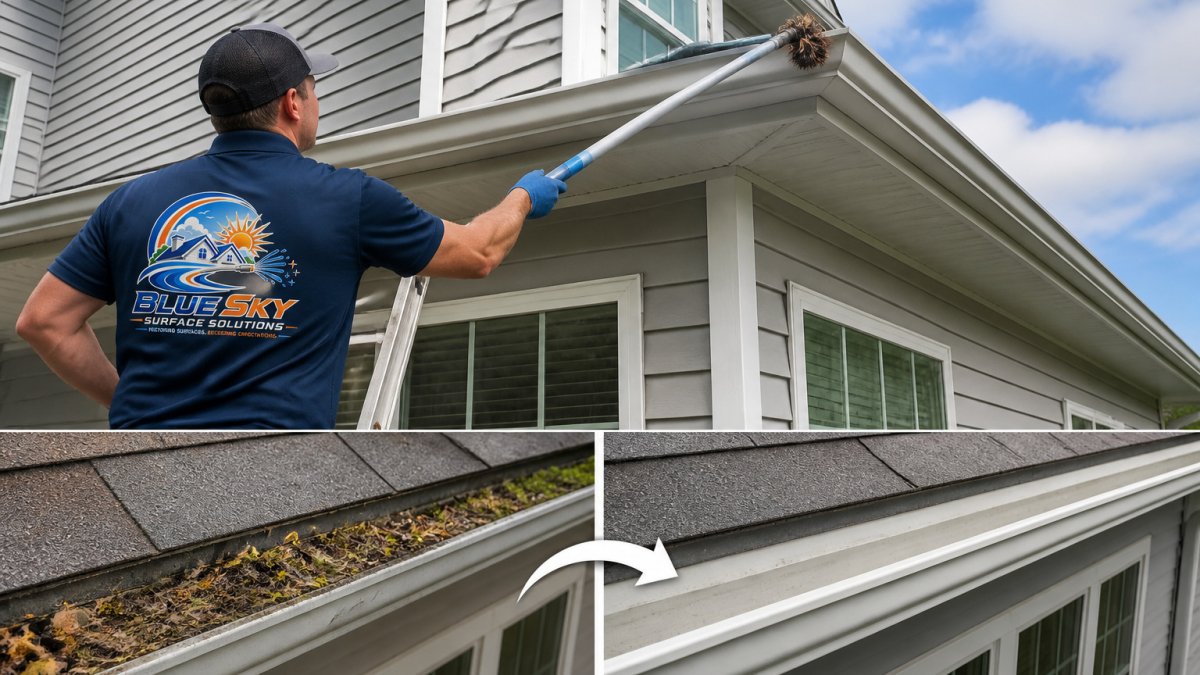
Clogged gutters are the single most common cause of exterior mold we find. When gutters back up, water spills over the edge and runs down the fascia, soffit, and siding instead of draining away. That constant moisture film is all mold needs.
Professional gutter cleaning removes the debris that causes overflow and lets a technician check for loose hangers, sagging sections, and poor drainage slope. Homes surrounded by mature trees need it more often, since leaf drop and seed pods fill gutters fast.
A clean gutter system also keeps water away from the foundation, protecting basement walls and landscaping along with your siding.
Soft Washing vs. Pressure Washing: Choosing the Right Method
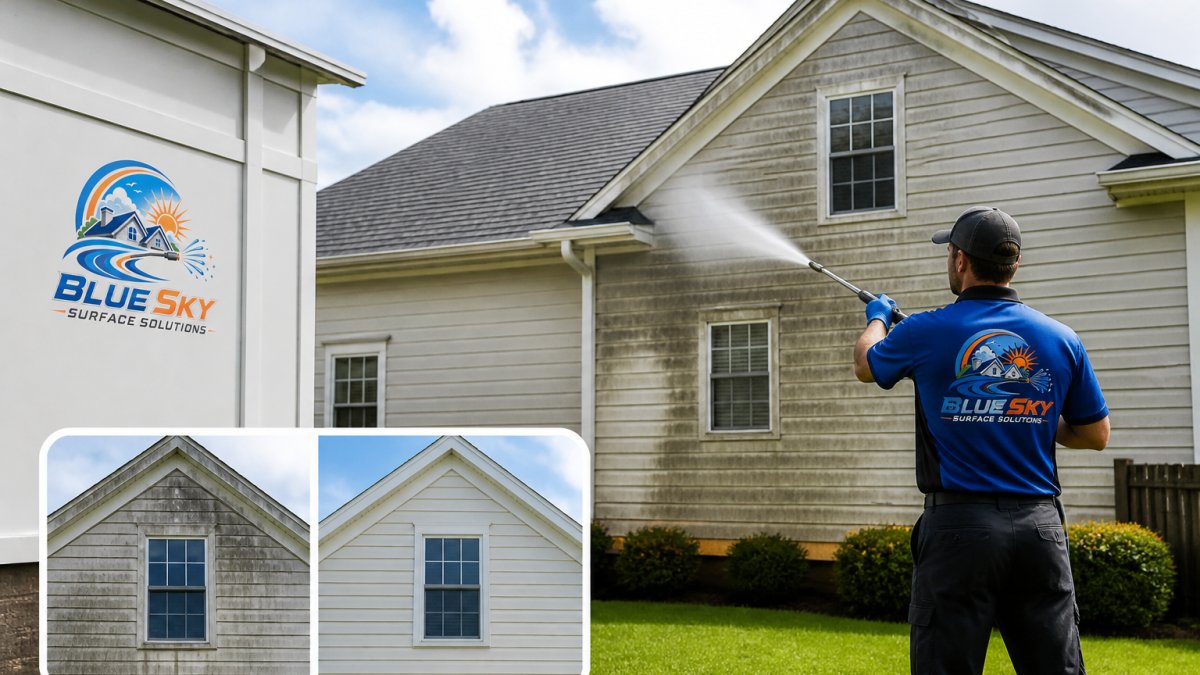
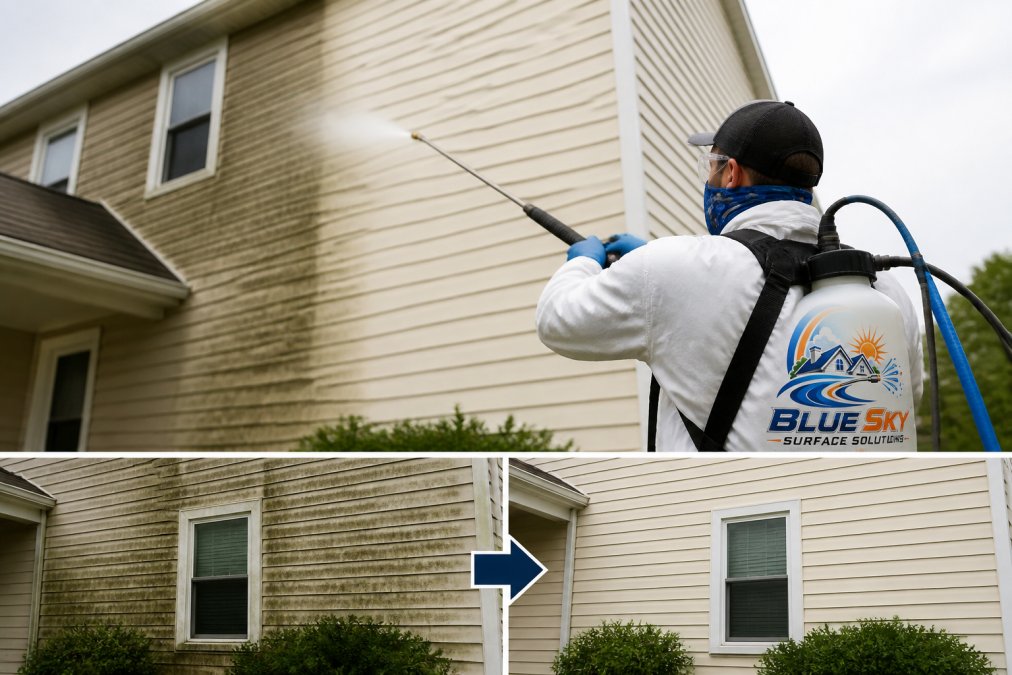
Soft washing is the better choice for mold removal on most exterior surfaces because it relies on cleaning solution rather than force. Pressure washing blasts water at high PSI, driving moisture into seams and stripping paint, caulk, and roof granules. Soft washing applies a low-pressure spray, lets it dwell, then rinses gently.
| Surface | Best Method | Why |
|---|---|---|
| Vinyl and fiber cement siding | Soft washing | Low pressure protects seams and finish |
| Painted wood trim | Soft washing | High pressure strips paint |
| Asphalt shingles | Soft washing | Preserves roof granules |
| Concrete driveways | Pressure washing | Durable surface handles high PSI |
| Brick patios | Pressure washing | Withstands force without damage |
DIY vs. Professional Mold Treatment: A Cost-Benefit Analysis
Most guides tell you to "weigh the pros and cons" and stop there. A real cost-benefit analysis means looking at what you actually spend in time, equipment, risk, and results, the cheapest option on paper is rarely the cheapest in practice.
The costs DIY guides leave out.
- Runoff damage. Sodium hypochlorite kills grass, shrubs, and bedding plants on contact. Without pre-wetting and post-rinsing landscape beds, a DIY wash can cost more in replacement plantings than a professional service would have.
- Surface damage. Too strong a mix etches paint, dulls vinyl, and strips the protective granules off asphalt shingles. Those granules are what shield the shingle from UV degradation, and once they are gone, the shingle ages years faster. Repairing or replacing damaged siding or shingles dwarfs any DIY savings.
- Storm drain rules. Many municipalities restrict what can enter storm drains, and wash water carrying cleaning chemicals is often regulated. A homeowner who lets runoff flow to the street can face a citation; a professional crew knows how to contain and dilute runoff before it leaves the property.
- Repeat treatments. DIY surface cleaning often kills the growth you can see but leaves the root structure behind. Regrowth within a season is common, which means the job gets done twice.
How to think about the trade-off.
| Situation | Sensible Approach |
|---|---|
| Single-story wall, light powdery mildew, no landscaping below | Careful DIY is reasonable |
| Two-story home, any roof work, or heavy algae streaking | Professional service |
| Painted wood, stucco, or asphalt shingles | Professional service |
| Widespread growth returning every season | Professional service plus a maintenance plan |
| Home under heavy tree canopy or with north-facing walls | Professional service |
Your Seasonal Exterior Home Maintenance Schedule
The weather conditions that matter most.
- Temperature. Mild conditions, roughly the range where you would be comfortable in a light jacket, let cleaning solutions dwell without evaporating or stalling.
- Sun exposure. Overcast days or working a wall in shade keeps the solution active longer. Cleaning a sun-blasted wall at midday is the most common DIY mistake.
- Humidity. Moderate humidity slows evaporation and helps the solution cling. Very dry air pulls moisture out of the mix before it can work.
- Wind. Breezy days dry the surface too fast and carry spray onto landscaping and neighboring property.
- Rain forecast. You want a dry window long enough for the solution to dwell and rinse, not a wash-off an hour after application.
The seasonal rhythm that works.
| Season | Task | Frequency | Why This Window |
|---|---|---|---|
| Early Spring | Inspect siding, trim, and roof for winter damage and early growth | Once | Catch problems before the growth season accelerates |
| Spring | Clean gutters after pollen and seed drop | Once | Pollen and seed pods are the heaviest debris load of the year |
| Late Spring | Full exterior soft wash | Once | Mild temps and active-but-not-embedded growth clean up best |
| Summer | Spot-treat north and shaded walls | As needed | Warm, humid stretches accelerate growth on shaded surfaces |
| Early Fall | Second soft wash if needed | As needed | Mild temps return; growth is still treatable before winter |
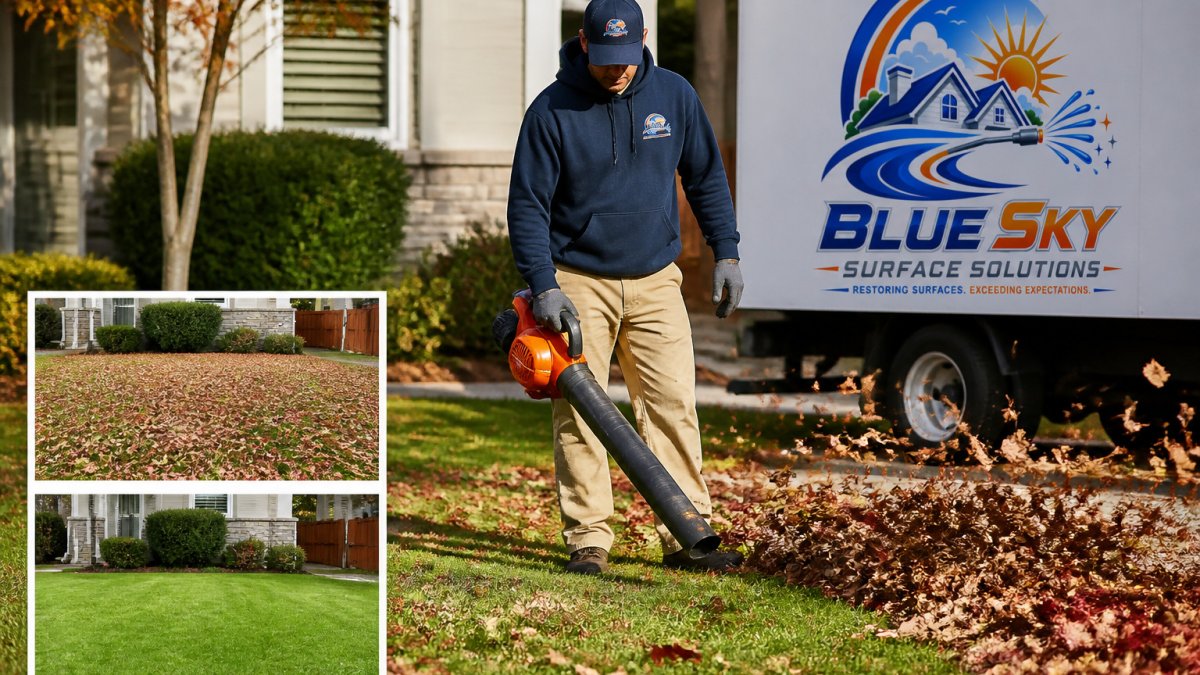
| Fall | Clear gutters after leaf drop | Once or twice | Leaf load is heaviest; overflow causes fascia and siding damage |
| Fall | Trim branches back from siding and roof | Once | Restores sunlight and airflow before the damp season |
| Winter | Check for ice dams and moisture intrusion | Once | Freeze-thaw cycles open seams and drive water into walls |
If you would rather not track weather windows and growth cycles yourself, a professional exterior cleaning service can build the schedule around your home and handle the work safely, and we will give you a straight quote for what your home actually needs.
Preventing Mold Growth on House Exterior: Long-Term Strategies
Preventing mold growth on house exterior surfaces over the long term comes down to controlling moisture, reducing shade, and staying ahead of organic buildup. No single treatment lasts forever, but a few consistent habits make a real difference.
- Keep gutters and downspouts clear so water never sits against the siding
- Extend downspouts well away from the foundation
- Trim trees and shrubs back so walls get sunlight and airflow
- Repair caulk and paint promptly to close entry points for moisture
- Address any plumbing or irrigation leaks that wet the exterior
- Schedule a professional soft wash before growth becomes deeply embedded
EPA guidance on mold and moisture control
CDC information on mold and health
USDA Forest Service research on tree shade and moisture
Frequently Asked Questions
What causes mold and mildew to grow on house siding?
Mold and mildew need three things to grow: moisture, organic food sources, and warmth. On your home's exterior, the food source is often dirt, pollen, and dead organic matter that accumulate on siding. Moisture comes from rain, humidity, and poorly maintained gutters that overflow. North-facing walls and shaded areas stay damp longer, making them prime spots for mold growth.
How often should I have my home's exterior professionally cleaned to prevent mold?
Most homes benefit from a professional exterior cleaning once a year. If your home is surrounded by trees or in a shaded area, twice a year may be necessary. Regular cleaning removes the organic buildup that mold feeds on. Pairing this with professional gutter cleaning keeps water flowing away from your siding and foundation, which is critical for preventing mold growth on house exterior surfaces.
Does professional gutter cleaning really help prevent mold on siding?
Yes. When gutters clog, rainwater overflows and runs down your siding, soaking the walls and creating the damp environment mold needs. Clean gutters channel water away from your home. Scheduling professional gutter cleaning before spring and fall rains is one of the simplest ways to protect your exterior.
Can tree trimming reduce mold growth on my house?
Absolutely. Trees that overhang your roof and siding block sunlight and trap moisture, creating ideal conditions for mold. Trimming branches back at least 6 feet from the house improves airflow and lets surfaces dry faster after rain. This also reduces debris buildup in gutters, lowering the risk of water damage and mold.