 how-to
Professional Soft Wash Services Near Me: How to Choose
Table of Contents
- What Professional Soft Wash Services Near Me Actually Include
- Step 1: Know When Your Property Needs Soft Washing
- Step 2: Soft Wash vs Pressure Wash: Which Method Fits Your Surface?
- Step 3: Is Soft Washing Safe for Roof Shingles?
- Step 4: Understand the Cost of House Soft Washing Before You Book
- Step 5: How to Vet a Local Soft Wash Provider
- Step 6: Build a Preventative Maintenance Schedule
- Frequently Asked Questions
Last Updated: September 13, 2026
What Professional Soft Wash Services Near Me Actually Include
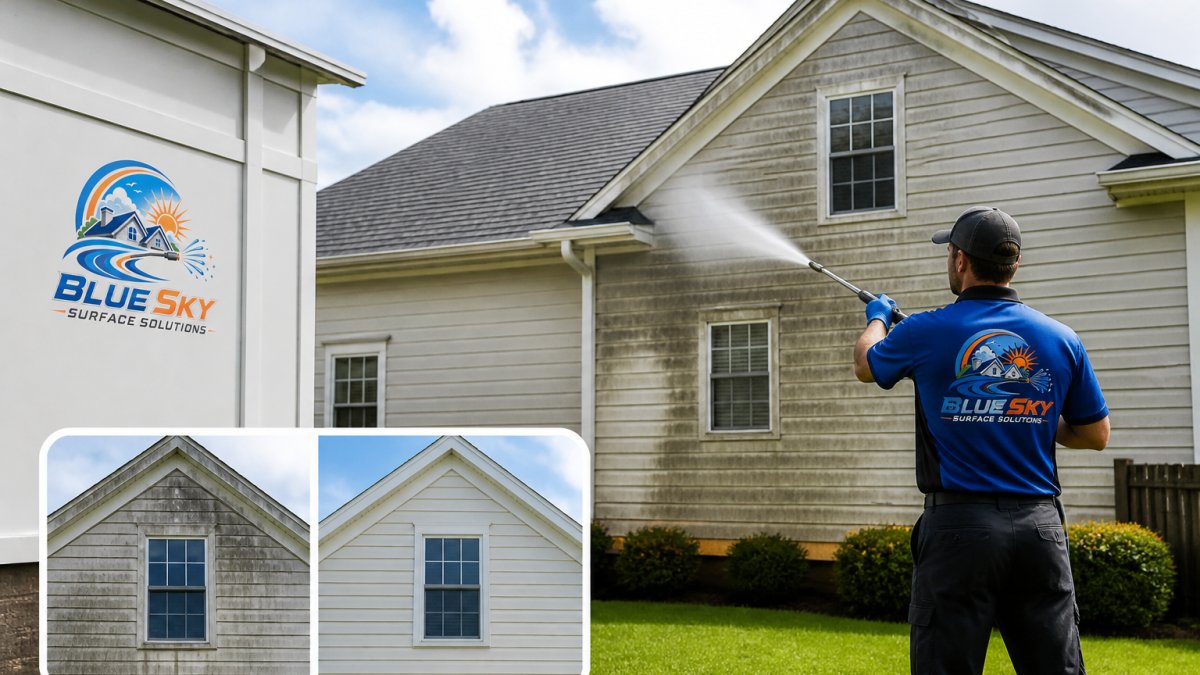
Professional soft wash services near me use low-pressure application and specialized cleaning solutions to remove algae, mold, mildew, and grime from exterior surfaces without the damaging force of a pressure washer. This approach treats the root cause of organic growth rather than blasting it away.
At Blue Sky Surface Solutions, we understand how the wrong cleaning method can strip years off a roof's life or etch permanent marks into siding. That's why soft washing has become the preferred method for delicate exterior surfaces across the industry.
When you search for soft wash services, you're looking for more than someone with a sprayer. You're looking for a provider who understands surface chemistry, knows which cleaning solutions work for which materials, and can deliver results without causing property damage.
EPA guidance on safe exterior cleaning practices emphasizes the importance of proper runoff management and cleaning agent selection, two areas where professional providers differ significantly from DIY approaches.
The process typically includes:
- Pre-treatment with biodegradable cleaning solutions to break down organic growth
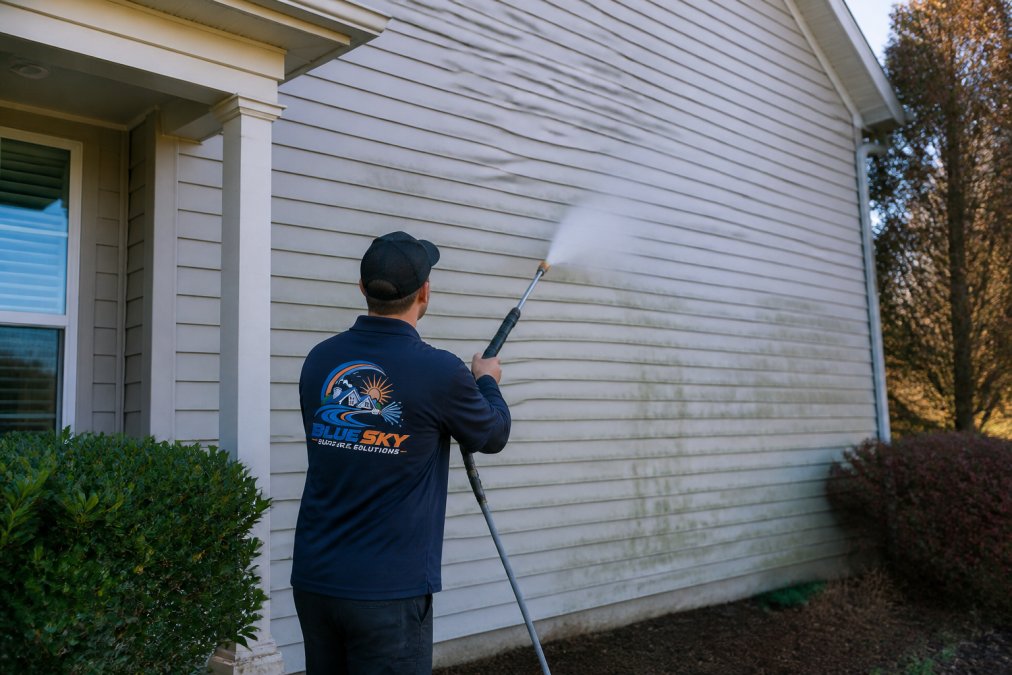
- Low-pressure application (similar to a garden hose, not a pressure washer)
- Adequate dwell time to let the solution do the work
- Thorough rinse to remove dead organisms and residual cleaner
- Optional post-treatment for heavy algae or mildew remediation
The 6 steps below will help you choose the right provider and understand exactly what you're paying for.
Step 1: Know When Your Property Needs Soft Washing
Your property needs soft washing when you notice discoloration, organic growth, or surface deterioration that regular rinsing won't fix. Catching these signs early prevents permanent damage and saves money on restoration.
Signs of Algae, Mold, and Mildew Buildup
The most obvious sign is green or black streaking on roofs, siding, or walkways. Algae typically appears as green film on north-facing surfaces. Mold and mildew show up as black or dark brown patches, often with a musty appearance. These organisms feed on moisture and organic material in your exterior surfaces, and they spread faster than most homeowners realize.
Other indicators include:
- White chalky residue on brick or stucco
- Dark stains on asphalt shingle cleaning surfaces
- Persistent dirt and grime buildup that returns quickly after rain
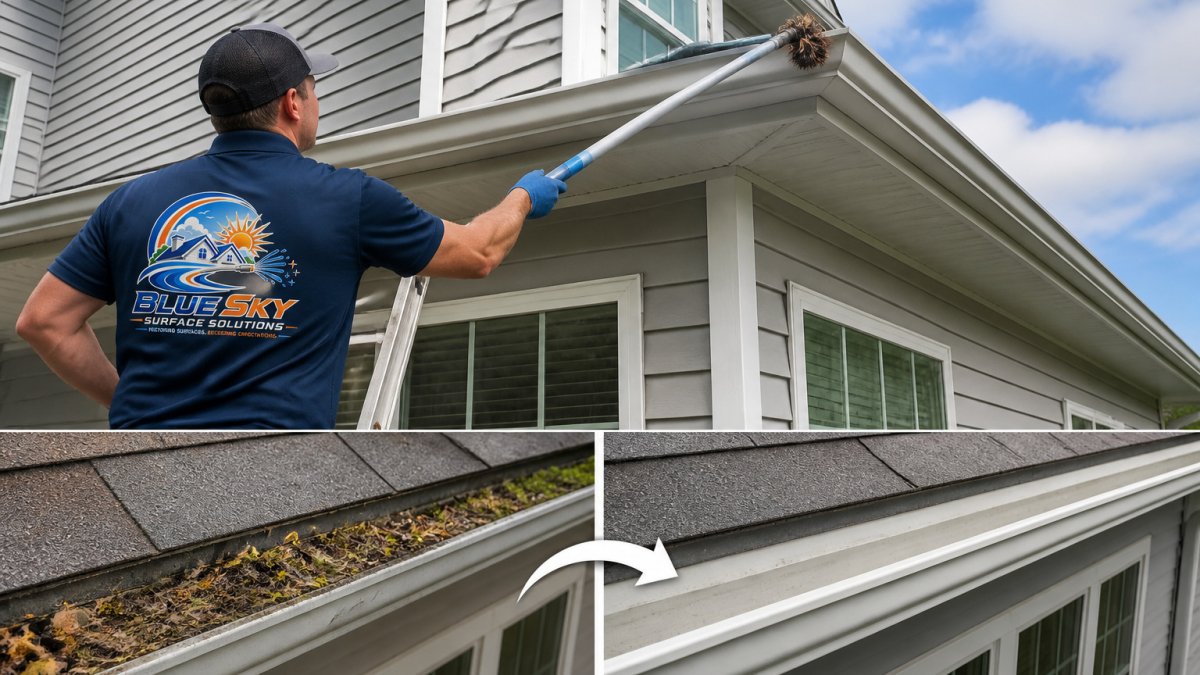
- Visible green growth on gutters or downspouts
Surfaces That Benefit Most from Low-Pressure Cleaning
Not every surface needs the same treatment. Soft washing works best on:
- Asphalt shingle roofs (where pressure washing causes granule loss)
- Vinyl and wood siding (where high pressure forces water behind panels)
- Painted surfaces (where pressure strips paint)
- Stucco and EIFS (where pressure causes cracking)
- Gutters and downspouts (where debris and algae accumulate)
Concrete driveways and brick can often handle higher pressure, but even these surfaces benefit from soft washing when organic growth is the primary issue.
Step 2: Soft Wash vs Pressure Wash: Which Method Fits Your Surface?
Soft wash and pressure wash use fundamentally different approaches. Soft washing relies on cleaning solutions and low pressure to kill and remove organic growth. Pressure washing uses high-pressure water to physically blast away dirt and debris.
The choice depends entirely on your surface material. Here's how they compare:
| Surface Type | Recommended Method | Why |
|---|---|---|
| Asphalt shingle roof | Soft wash only | Pressure strips protective granules |
| Vinyl siding | Soft wash preferred | Pressure forces water behind panels |
| Concrete driveway | Pressure wash or soft wash | Depends on stain type |
| Wood deck | Soft wash only | Pressure etches and splinters wood |
| Brick and stone | Either, with caution | Pressure can damage mortar joints |
| Painted surfaces | Soft wash only | Pressure removes paint |
The soft wash vs pressure wash debate isn't about which is stronger. It's about matching the method to the material. Using a pressure washer on a roof is one of the most common and expensive mistakes homeowners make.
Step 3: Is Soft Washing Safe for Roof Shingles?
Soft washing is safe for roof shingles when performed correctly. The low-pressure application won't dislodge granules or void manufacturer warranties the way pressure washing can.
Asphalt shingles are designed to shed water, not withstand direct high-pressure streams. When you pressure wash a roof, you're removing the protective granule layer that gives shingles their UV resistance and fire rating. Once those granules are gone, the shingle degrades quickly.
Soft washing solves this problem. The cleaning solution kills algae and mildew at the root, then a gentle rinse carries the dead organisms away. The shingles stay intact, and your roof longevity improves because you're removing the organisms that feed on the shingle surface.
Asphalt Roofing Manufacturers Association maintenance guidance recommends periodic cleaning to extend roof life, and specifically cautions against high-pressure methods on shingle roofs.
Step 4: Understand the Cost of House Soft Washing Before You Book
The cost of house soft washing depends on several factors: square footage, number of stories, surface condition, and the types of surfaces being cleaned. Most providers offer a free estimate after assessing your property.
Pricing typically reflects the complexity of the job rather than a flat rate. A single-story ranch with light algae growth costs less to clean than a two-story home with heavy mildew on multiple surfaces. Roof cleaning adds to the total because it requires specialized equipment and extra safety precautions.
How Providers Actually Price the Work
Most exterior cleaning companies use one of three pricing models, and knowing which one you are being quoted helps you compare apples to apples:
- Flat rate by surface type. The provider quotes a set price for a roof, a set price for siding, and so on. Simple to compare, but it can overcharge small or lightly soiled properties.
- Per square foot of surface area. Common for siding and roofs. The rate varies with pitch, height, and how much organic growth is present.
- Hourly plus materials. Less common for residential work but used on large or heavily soiled commercial jobs.
A common pattern is that the quote is driven less by total square footage than by access and severity. A steep two-story roof with heavy black streaking takes longer, uses more solution, and requires more safety setup than a walkable single-story roof of the same size.
Factors That Move the Number
- Total square footage of exterior surfaces
- Height and accessibility (two-story vs. single-story, roof pitch, obstacles like trees and power lines)
- Severity of organic growth (light film vs. years of accumulated algae and mildew)
- Number of surfaces included (roof, siding, gutters, driveway, deck)
- Whether gutter debris removal, window rinsing, or post-treatment is bundled in
- Water access and whether the provider needs to bring a tank
Reading the Quote
Request quotes from at least two providers and ask what is included. Some quotes cover only the visible surfaces. Others include gutter cleaning, window rinsing, and post-treatment. The lowest quote is not always the best value, a cheap quote that skips the rinse or the post-treatment often means the growth returns within a season.
For current pricing on soft wash services, visit Blue Sky Surface Solutions for a free estimate tailored to your property.
Step 5: How to Vet a Local Soft Wash Provider
Vetting a soft wash provider means checking insurance, licensing, cleaning solution safety, and their track record with surfaces like yours. But the most useful question you can ask is one most homeowners never think to ask: should this job be done by a professional at all?
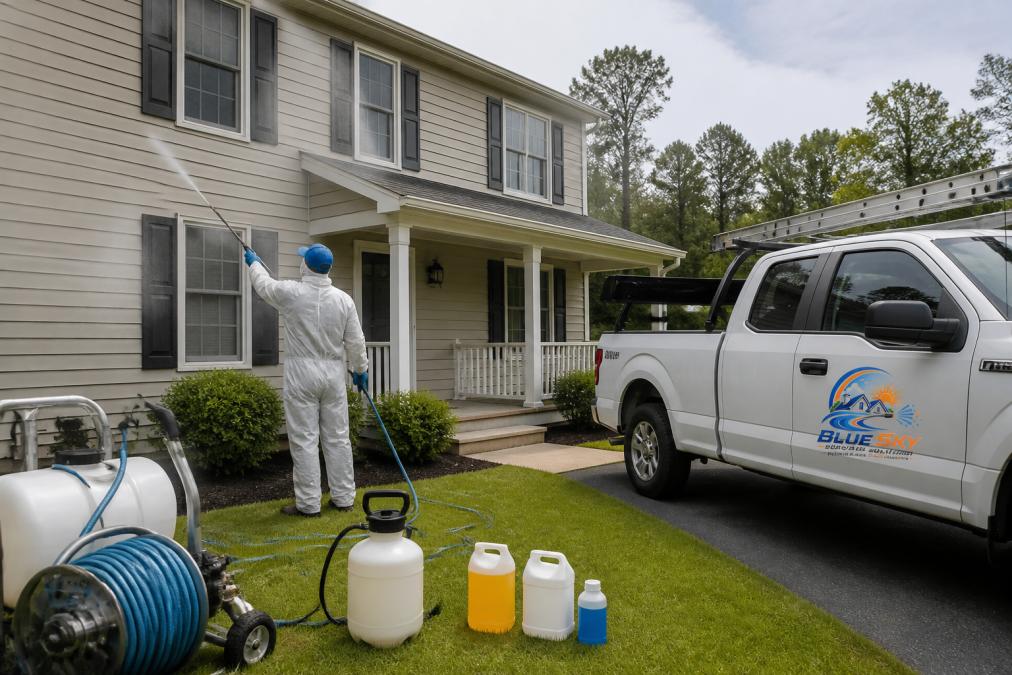
DIY vs. Professional: An Honest Risk Assessment
Not every cleaning job requires a pro, and a provider who tells you otherwise is selling, not advising. Here is a straight assessment of when you can handle it yourself and when hiring out is the safer financial decision.
Reasonable DIY territory:
- Single-story, walkable surfaces like a concrete driveway or a ground-level patio
- Light dirt or pollen film with no visible organic growth
- A garden hose, a soft-bristle brush, and a mild detergent
- Surfaces you can reach safely from the ground
Hire a professional:
- Any roof work, regardless of height, falls are the leading cause of serious injury in exterior cleaning, and roof pitch makes even a single-story roof dangerous
- Two-story or taller siding, where ladder work and reach become the real risk
- Heavy black or green streaking that indicates established algae or mildew colonies, which need the right cleaning agent at the right dwell time to actually die rather than just lighten
- Stucco, EIFS, painted wood, and older or fragile surfaces where the wrong product or pressure causes permanent damage
- Any surface near delicate landscaping, koi ponds, or well water
Insurance, Licensing, and Safety Documentation
Ask for proof of general liability insurance and workers' compensation coverage before anyone touches your property. A fully insured technician protects you from liability if someone gets injured on your property or if cleaning solutions damage something they should not.
Licensing requirements vary by state and locality. Some areas require exterior cleaning contractors to hold specific licenses. Ask whether the provider meets all local requirements and whether they can show documentation.
Safety documentation matters too. Professional providers should have written procedures for handling cleaning solutions, protecting landscaping during application, and managing runoff. If a provider cannot explain their safety process, that is a red flag.
Environmental Impact and Biodegradable Cleaning Solutions
The cleaning solutions a provider uses affect your landscaping, pets, and local waterways. Biodegradable cleaning solutions break down safely and reduce environmental impact compared to harsh chemicals.
Ask what products the provider uses and whether they are safe for plants and pets after the recommended dry time. A responsible provider will explain their approach to protecting your landscaping during exterior surface sanitization.
The EPA's Safer Choice program identifies cleaning products that meet environmental and safety standards, which gives you a benchmark for evaluating what your provider uses.
Questions to Ask Before You Book
- What cleaning solution will you use on each surface, and why?
- What pressure will you apply, and how do you control it?
- How do you protect my plants, pets, and runoff?
- Is the quote itemized, and what is not included?
- Can you provide references for jobs on the same surface type as mine?
A provider who answers these clearly and without pressure is the one worth hiring. One who dodges the DIY question or cannot explain their chemistry is not.
Step 6: Build a Preventative Maintenance Schedule
Preventative maintenance keeps your exterior clean year-round and reduces the frequency of deep cleaning. A simple schedule based on your local climate and surface types prevents organic growth from taking hold.
For most properties, this schedule works well:
| Season | Task | Frequency |
|---|---|---|
| Spring | Full exterior soft wash (siding, roof, gutters) | Annually |
| Summer | Gutter debris removal and inspection | Every 3 months |
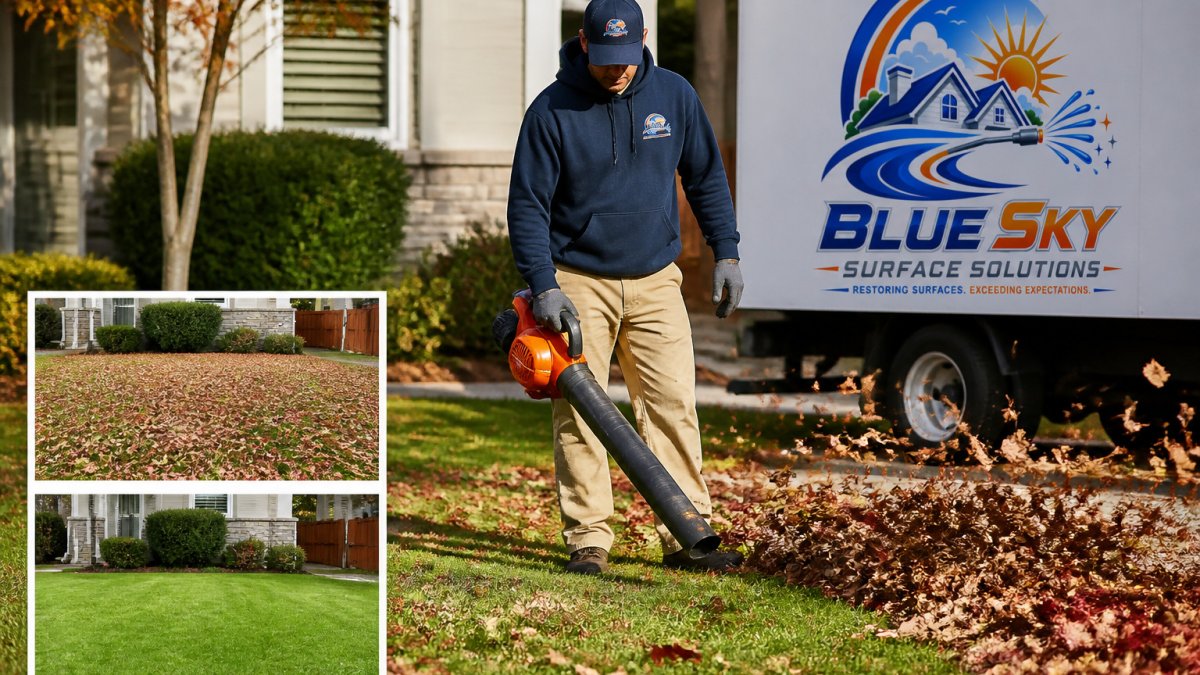
| Fall | Pre-winter exterior cleaning and gutter clearing | Annually |
| Winter | Visual inspection for algae or mildew spots | Monthly |
Homes with heavy tree coverage or north-facing surfaces may need more frequent cleaning. Properties near water or in humid climates also see faster organic growth.
The goal is to catch problems early. A light annual cleaning costs far less than restoring a roof or siding that's been neglected for years. Exterior property maintenance isn't just about curb appeal. It's about protecting your investment from the organisms that slowly break down building materials.
Frequently Asked Questions
What is the difference between soft washing and pressure washing?
Soft washing uses low-pressure water combined with biodegradable cleaning solutions to kill algae, mold, and mildew at the source. Pressure washing relies on high-pressure water alone to blast dirt away. Soft washing is safer for delicate surfaces like asphalt shingles, vinyl siding, and painted wood, while pressure washing suits concrete driveways and brick. For most exterior house washing, soft washing is the preferred method because it cleans without causing surface damage.
Is soft washing safe for roof shingles?
Yes, soft washing is the recommended method for asphalt shingle roofs. The low-pressure application, typically under 100 PSI, avoids the granule loss and voided warranties that high-pressure washing can cause. Professional soft wash services apply a biodegradable solution that kills algae and moss without scraping or damaging shingles. Always confirm the provider follows shingle manufacturer guidelines and uses no more pressure than a garden hose delivers.
How often should you have your home exterior soft washed?
Most homes benefit from soft washing every 12 to 24 months. Homes in humid climates, near trees, or with north-facing walls that stay shaded may need annual cleaning. Roofs with heavy algae streaks often need treatment every 18 months. Scheduling preventative maintenance before buildup becomes visible protects siding, extends roof longevity, and keeps curb appeal high year-round. A local provider can recommend a schedule based on your property's exposure.
What chemicals are used in professional soft wash services?
Most providers use a diluted sodium hypochlorite solution mixed with water and a surfactant. The surfactant helps the solution cling to vertical surfaces so it can break down algae and mildew. Many companies also offer eco-friendly detergents and biodegradable cleaning solutions. Licensed and certified technicians adjust the concentration based on the surface, from gentle mixes for painted siding to stronger solutions for concrete. Ask your provider for a safety data sheet before work begins.
Maintaining a clean exterior shouldn't require guesswork about which method is safe for your surfaces. Blue Sky Surface Solutions specializes in soft washing, house and gutter cleaning, and tree services for homeowners who want professional results without the risk of property damage. Our team uses low-pressure cleaning methods and biodegradable cleaning solutions to restore your exterior safely. Get started with Blue Sky Surface Solutions and protect your property's curb appeal year-round.