 how-to
How to Clean Siding Without Damage: Safe Steps for 2026
Table of Contents
- Preparation and Safety: What You Need Before You Start
- Best Cleaning Solution for Vinyl Siding: Safe Mixtures That Work
- Soft Washing vs Pressure Washing: Which Method Protects Your Siding?
- How to Remove Mildew from Siding Without Scrubbing Damage
- Step-by-Step: How to Clean Siding Without Damage
- Common Mistakes That Damage Siding (and How to Avoid Them)
- Material-Specific Safety and Environmental Impact of Cleaners
- Conclusion: Protecting Your Home's Exterior Year-Round
- Frequently Asked Questions
Last Updated: September 14, 2026
Preparation and Safety: What You Need Before You Start
Cleaning your siding sounds simple until you watch a neighbor strip the finish off a panel with a pressure washer set too high. Knowing how to clean siding without damage starts long before you touch a hose. At Blue Sky Surface Solutions, we've seen what happens when prep gets skipped, and it's almost always cheaper to prepare than to repair.
Essential Tools and Protective Gear
Gather everything before you climb a ladder. A soft-bristle brush, a pole-mounted brush for upper stories, a garden hose with an adjustable nozzle, and a pump sprayer cover most jobs. For protective gear, wear safety glasses, chemical-resistant gloves, and non-slip shoes. If you'll be on a ladder, keep it on level ground and never overreach.
- Soft-bristle brush and pole-mounted brush
- Garden hose with adjustable nozzle settings
- Pump sprayer for cleaning solution
- Safety glasses, gloves, non-slip footwear
- Ladder rated for your working height
Best Cleaning Solution for Vinyl Siding: Safe Mixtures That Work
The best cleaning solution for vinyl siding is a mild mixture of dish soap and water, applied with a soft brush and rinsed thoroughly. Stronger isn't better here. Harsh chemicals strip the siding finish and void manufacturer warranties faster than dirt ever will.
DIY Recipes Using Dish Soap and Vinegar
Mix a quarter cup of mild dish soap into a gallon of water for everyday grime. For mildew, add one cup of white vinegar to the same gallon. Apply with a pump sprayer, let it dwell for a few minutes, then scrub gently with a soft-bristle brush. Rinse from the top down so dirty water doesn't streak clean panels below.
EPA Safer Choice cleaning product guidance
Soft Washing vs Pressure Washing: Which Method Protects Your Siding?
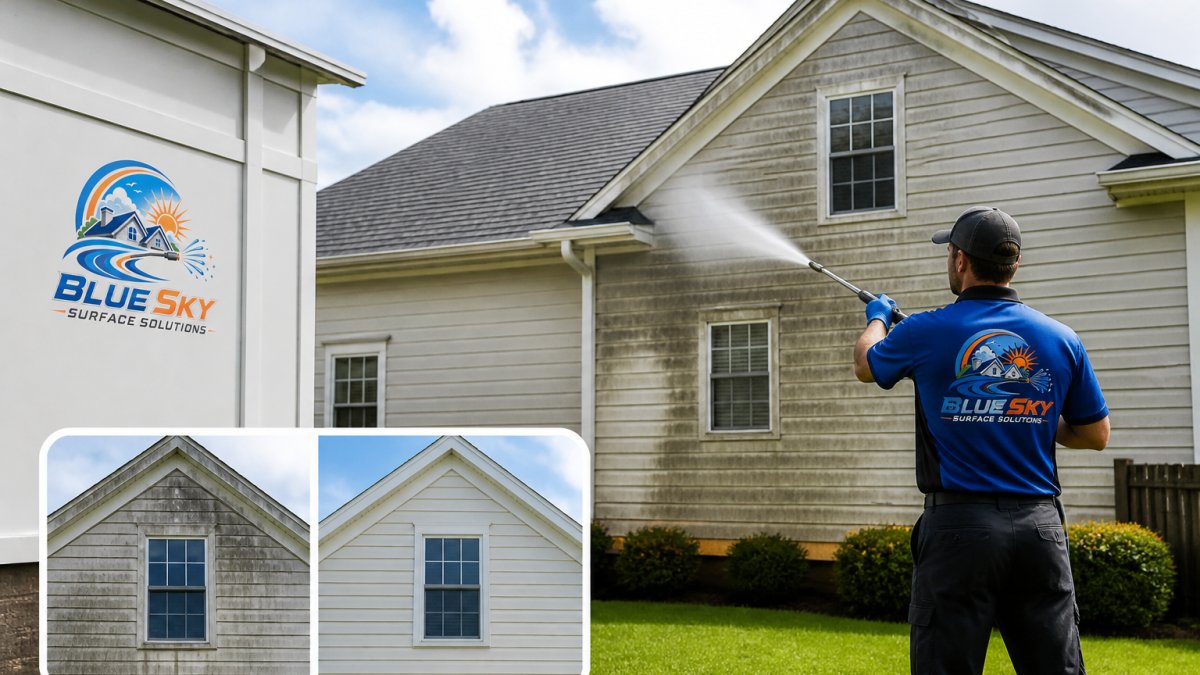
Soft washing uses low pressure and cleaning solution to lift dirt, while pressure washing relies on force that can crack panels and drive water behind them. For most siding, soft washing wins. The exception is bare concrete, where higher pressure is appropriate.
| Method | Pressure Level | Best For | Risk |
|---|---|---|---|
| Soft washing | Low, garden-hose level | Vinyl, painted wood, stucco | Minimal |
| Pressure washing | High, adjustable PSI | Concrete, brick, stone | Panel cracking, water intrusion |
The real difference comes down to surface integrity. Vinyl and painted wood simply weren't built to take a direct high-pressure stream.
How to Remove Mildew from Siding Without Scrubbing Damage
Removing mildew from siding without damage means killing the growth first, then rinsing it away. Scrubbing live mildew spores just spreads them. Apply your vinegar-and-soap solution, let it dwell for ten to fifteen minutes, then rinse with a garden hose on a gentle setting.
CDC guidance on mold and moisture control
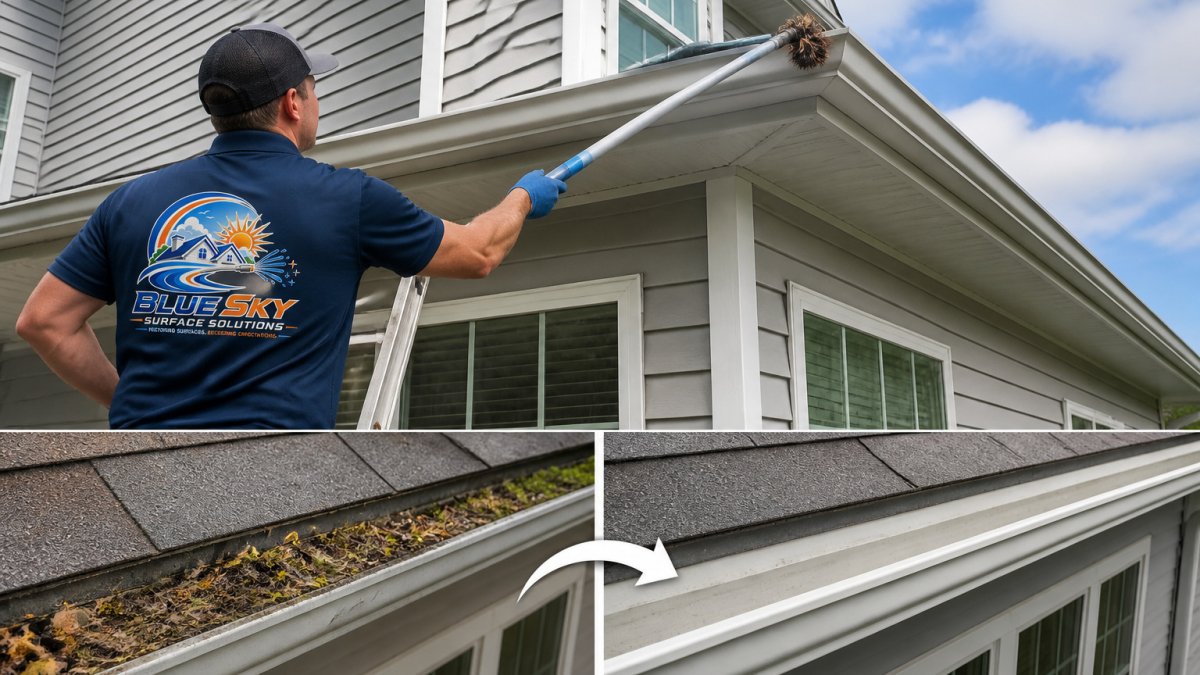
If the mildew returns within weeks, the problem is moisture, not cleaning technique. Check for clogged gutters or poor drainage before you clean again.
Step-by-Step: How to Clean Siding Without Damage
Here's the process we use on every home: work top-down, section by section, so runoff never stains what you've already cleaned.
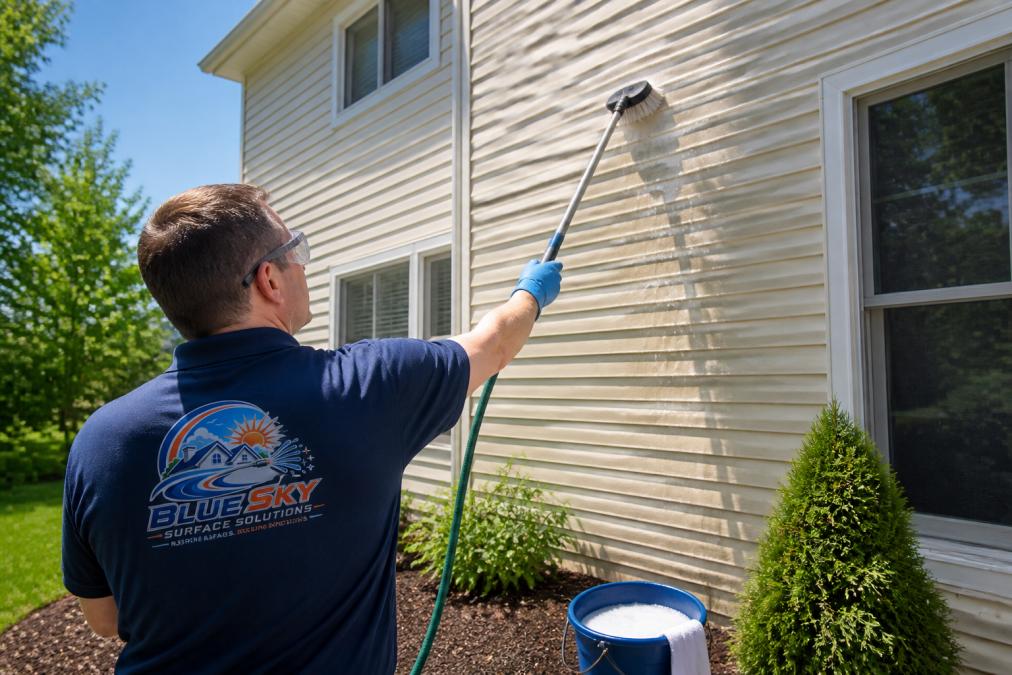
- Inspect first. Walk the perimeter and note cracks, loose panels, or oxidation before you start.
- Protect landscaping. Cover plants and outdoor fixtures with plastic sheeting.
- Apply solution bottom-up. Start at the lowest point of each section and work upward to avoid streaking.
- Let it dwell. Give the cleaning solution five to ten minutes to break down grime.
- Scrub gently. Use light pressure with a soft-bristle brush; never bear down hard.
- Rinse top-down. Work from the top of each section downward to carry dirt away cleanly.
Rinsing Techniques to Avoid Streaking and Water Damage
Rinse with a garden hose on a medium setting, moving in a steady top-down motion. Keep the nozzle angled slightly downward so water doesn't push behind panel seams. A slow, even rinse cycle prevents the streaks that show up once siding dries.
Common Mistakes That Damage Siding (and How to Avoid Them)
The biggest mistake is treating every surface the same. Vinyl, wood, stucco, and fiber cement each react differently to pressure and chemicals. What most guides miss is that damage often shows up weeks later, not immediately. Here are the specific errors that cause the most trouble, plus how to handle stubborn stains without making things worse.
Using Too Much Pressure
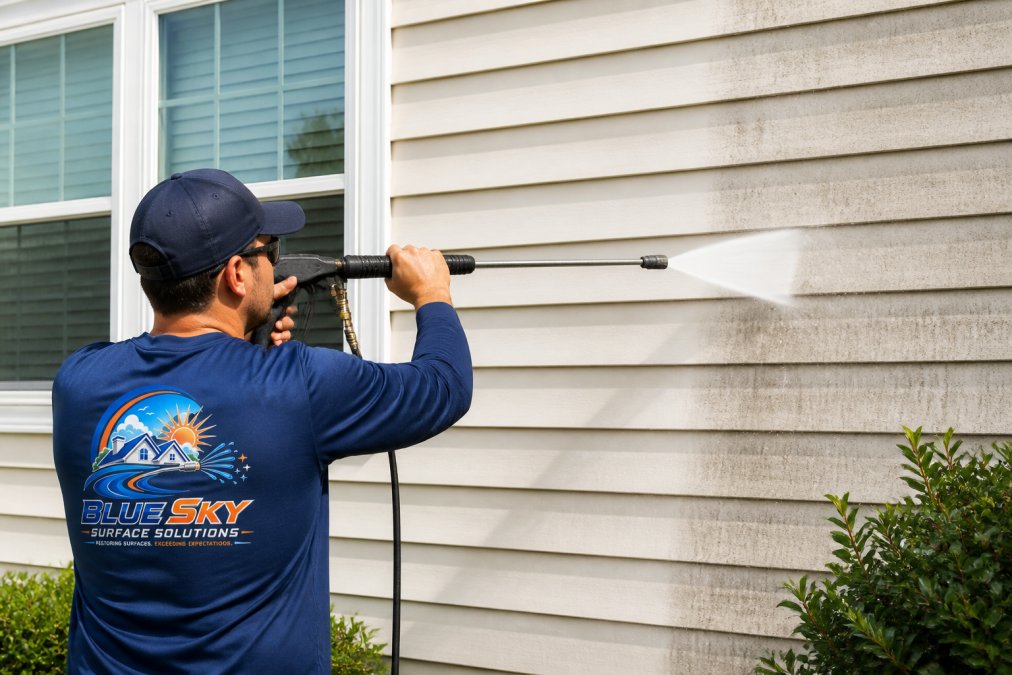
A pressure washer set too high can crack vinyl panels, drive water behind seams, and strip paint from wood. Even on materials that can handle some pressure, like concrete, a direct stream on siding is risky. Stick to a garden hose or a soft-wash setup for siding, and reserve pressure washing for bare concrete surfaces.
Scrubbing with Abrasive Tools
Abrasive pads, wire brushes, and stiff-bristle brushes can scratch vinyl, dull fiber cement, and remove paint from wood. Always use a soft-bristle brush or a microfiber cloth. If a stain will not come off with gentle scrubbing, the solution is usually a longer dwell time or a different cleaner, not more force.
Cleaning in Direct Sunlight
Direct sunlight dries cleaning solution before it has time to work, which leads to streaks and uneven results. Work in the shade or on an overcast day, and clean one section at a time so the solution stays wet long enough to lift dirt.
Letting Solution Dry on the Surface
If cleaning solution dries on siding, it can leave a film or stain. Rinse thoroughly and keep the surface wet until you are ready to rinse. This is especially important on metal and fiber cement, which can spot if solution dries.
Ignoring the Rinse Direction
Rinsing from the bottom up pushes dirty water into clean areas and causes streaks. Always rinse from the top down, and keep the nozzle angled slightly downward so water does not get behind panel seams.
Troubleshooting Stubborn Stains Without Harsh Chemicals
Some stains need special handling to avoid damaging the finish.
- Rust stains: Rust often comes from nails, gutters, or metal fixtures. Do not scrub with an abrasive pad, which can spread the stain. Use a dedicated rust remover formulated for siding, or a paste of baking soda and water for light rust, and rinse thoroughly. If rust keeps returning, the source is likely a metal component that needs to be addressed.
- Oxidation: Oxidation appears as a chalky film on older vinyl or painted surfaces. It is not dirt, so scrubbing harder will not help and can damage the finish. Use a cleaner designed for oxidation, or accept that some fading is permanent. Avoid pressure washing, which can drive oxidation into the surface.
- Sap: Tree sap is sticky and can attract dirt. Harden the sap with ice or a cold pack, then gently scrape it off with a plastic scraper. For remaining residue, use a small amount of rubbing alcohol on a cloth, then rinse immediately. Test on a hidden area first because alcohol can dull some finishes.
- Mildew that keeps returning: If mildew comes back within weeks, the problem is moisture, not cleaning technique. Check for clogged gutters, poor drainage, or leaks before you clean again. Killing the mildew without fixing the moisture source guarantees it will return.
Skipping the Pre-Wash Inspection
Before you clean, walk the perimeter and note cracks, loose panels, or water-damaged areas. Cleaning can make these problems worse. A loose panel can take on water, and a cracked panel can break under even gentle pressure. Fix these issues first, or call a professional if you are unsure.
Material-Specific Safety and Environmental Impact of Cleaners
Different siding materials demand different care, and using the wrong method on the wrong surface is the fastest way to cause damage that shows up weeks later. Here is what to know before you choose a cleaner or a pressure setting.
Vinyl Siding
Vinyl tolerates mild dish soap, a soft-bristle brush, and a garden hose on low pressure. Avoid abrasive pads, solvent-based cleaners, and any pressure washer setting above a gentle fan spray. High pressure can crack panels, force water behind the seams, and strip the finish. Oxidation on older vinyl shows as a chalky white film; scrubbing harder makes it worse, so use a dedicated vinyl oxidation remover or accept that some fading is permanent.
Painted Wood Siding
Painted wood is the most fragile common siding. Use a pH-neutral cleaner and the gentlest possible touch. Never use a pressure washer on painted wood, even on a low setting, because water can penetrate cracks and lift paint. Test any cleaner on an inconspicuous area first, and avoid scrubbing near the edges of peeling paint. If the paint is already flaking, cleaning may accelerate the loss, so address paint failure before washing.
Fiber Cement Siding
Fiber cement can handle slightly more scrubbing than painted wood, but it still should not receive a direct high-pressure stream. Use a soft-bristle brush and a mild cleaner. Avoid acidic cleaners, which can etch the surface over time. Rinse thoroughly because fiber cement is porous and can hold residue that leads to streaking.
Stucco
Stucco is porous and can absorb water if the pressure is too high. Use low pressure and a mild cleaner, and keep the nozzle moving so water does not pool in one spot. Never use a wire brush or abrasive pad, which can scratch the finish and create a place for moisture to enter.
Metal Siding (Aluminum and Steel)
Metal siding, including aluminum and steel, can dent under pressure and scratch easily. Use a soft cloth or brush and a mild cleaner. Avoid abrasive cleaners and any tool that can leave scratches. Rinse quickly because some metal finishes can spot if cleaning solution dries on the surface.
Environmental Impact of Cleaners
Whatever you use, runoff matters. Cleaning solution flows into soil, gardens, and storm drains, so choose biodegradable, phosphate-free options where possible. The EPA's Safer Choice program identifies cleaning products that meet safer chemical standards, and choosing those reduces the risk to pets, plants, and local waterways. If you have a garden or pets near the siding, rinse the area with plain water after cleaning to dilute any residue. Never dump leftover cleaning solution down a storm drain.
EPA Safer Choice cleaning product guidance
EPA stormwater runoff guidance
Conclusion: Protecting Your Home's Exterior Year-Round
Cleaning siding without damage comes down to preparation, the right solution, and patience. We take pride in caring for your home as if it were our own. If the job feels too tall, too risky, or simply too time-consuming, Blue Sky Surface Solutions offers professional house and gutter cleaning, specialized soft washing, and expert tree services across the area. Our team safely removes dirt, algae, and mildew to restore your curb appeal and protect your investment. Get started with Blue Sky Surface Solutions and keep your exterior looking its best year-round.
Frequently Asked Questions
What is the safest way to clean house siding?
The safest method is soft washing: apply a cleaning solution of dish soap, vinegar, and water with a pump sprayer, let it dwell for 5-10 minutes, then rinse with a garden hose using low pressure. Avoid high-pressure washing, which can force water behind siding and cause mold. Always work top-down and use a soft-bristle brush for stubborn spots. This approach protects your siding's finish and keeps your home looking great.
Can pressure washing damage siding?
Yes. Pressure washing at high PSI can crack vinyl, strip paint, and force water into wall cavities, leading to mold and structural damage. Soft washing, which uses low pressure and cleaning solutions, is safer for all siding types. If you're unsure, hire a professional who follows safe practices.
What cleaning solution is safe for vinyl siding?
A mixture of 1/4 cup dish soap, 1 cup white vinegar, and 1 gallon of water is safe and effective for vinyl siding. For mildew, add 1 cup of oxygen bleach (not chlorine bleach, which can damage finishes). Always test in a small area first. Avoid abrasive cleaners and stiff brushes. For best results, apply with a pump sprayer, let it dwell, then rinse thoroughly with a garden hose.
How often should you clean your home's exterior?
Clean your siding at least once a year, ideally in spring or fall. If you live near trees or in a humid area, clean every 6-8 months to prevent mildew and algae growth. Regular cleaning preserves curb appeal and extends siding life. A quick visual inspection each season helps you spot dirt, mold, or oxidation early. When in doubt, a professional soft wash can restore your home's appearance safely.