 how-to
How to Remove Algae From Siding: A Step-by-Step Guide
Table of Contents
- Identify Algae Versus Mold and Mildew on Your Siding
- Why Algae Grows on Shaded and North-Facing Siding
- Best Cleaner for Algae on Siding: Your Options
- Step-by-Step: How to Remove Algae From Siding
- Can You Pressure Wash Siding to Remove Algae?
- How to Prevent Algae From Growing on Siding
- How Often to Clean House Siding to Stop Algae Buildup
- When to Call a Professional for Algae Removal
- Frequently Asked Questions
Last Updated: October 7, 2026
Identify Algae Versus Mold and Mildew on Your Siding
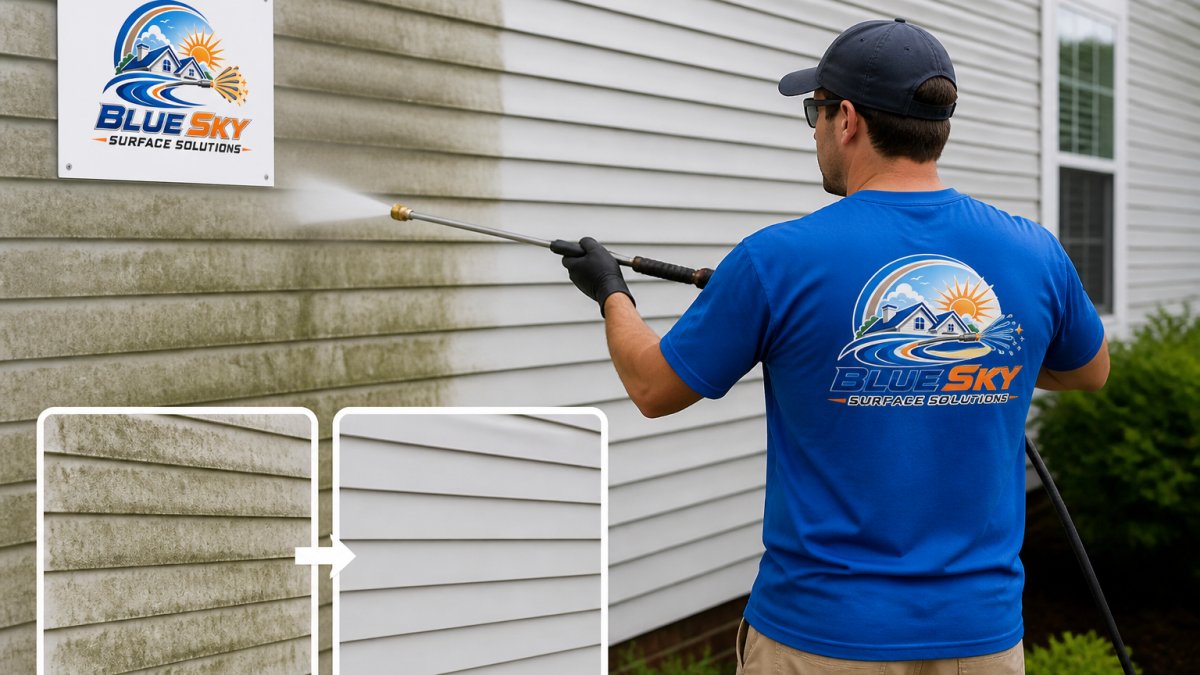
Algae is a green, slimy film that grows on damp siding surfaces. It thrives in moisture and shade.
Algae appears as a bright green or yellowish-green coating. It spreads in patches across the siding. Mold and mildew, by contrast, look darker, usually black, brown, or gray.
Here's how to tell them apart:
- Algae: Bright green film, spreads across large areas, slippery to the touch, appears first on shaded sides
- Mold: Dark spots, grows in clusters, often has a musty smell, thrives in high-moisture areas
- Mildew: Powdery white or gray coating, typically on north-facing surfaces, less slimy than algae
The good news: all three respond to similar cleaning methods. Once you know what you're dealing with, the removal process is straightforward.
Why Algae Grows on Shaded and North-Facing Siding
Algae needs two things to thrive: moisture and shade. North-facing walls get the least direct sunlight, which means they stay damp longer.
Sunlight kills algae. That's why you rarely see it on the sunny south-facing side of a house.
Several factors make certain areas more vulnerable:
- North-facing walls: Receive minimal direct sun exposure
- Areas near trees: Shade from foliage plus moisture from dripping leaves
- Low spots: Water pools and drains slowly, keeping surfaces wet
- Poor air circulation: Blocked by shrubs or fences, preventing drying
- Coastal or humid climates: Higher moisture levels year-round
Understanding why algae grows helps you prevent it. Trimming back branches that shade your siding and improving drainage around your foundation both reduce conditions that encourage algae.
Best Cleaner for Algae on Siding: Your Options
The right cleaning solution depends on your siding type, the severity of the algae, and what you have on hand. Most homeowners find success with one of two main approaches: oxygen bleach or household cleaners like vinegar.
Oxygen Bleach Solutions
Oxygen bleach is gentler than chlorine bleach but still effective at breaking down algae.
Oxygen bleach comes as a powder you mix with water. It's safer for plants and landscaping than chlorine-based cleaners.
To use oxygen bleach:
- Mix according to package directions (typically 1 part bleach to 3-5 parts water)
- Test on a small hidden area first to check for discoloration
- Apply with a pump sprayer and let it sit for 10-15 minutes
- Scrub gently with a soft brush
- Rinse thoroughly with low-pressure water
The main advantage is safety. Oxygen bleach breaks down into water and oxygen, leaving no toxic residue. It's the preferred choice for homes with gardens, pets, or children nearby.
Vinegar and Household Cleaners
Vinegar is a natural alternative that works on light algae growth. White vinegar contains acetic acid, which kills algae spores. It's non-toxic and readily available in most kitchens.
For stubborn algae, you can boost vinegar's effectiveness by adding a small amount of laundry detergent.
Mix vinegar solutions as follows:
- Light cleaning: Equal parts vinegar and water
- Moderate growth: 2 parts vinegar to 1 part water
- With detergent: 1 gallon vinegar + 1 gallon water + 1 cup laundry detergent
Vinegar works best on algae that hasn't been there long. For thick, established growth, oxygen bleach typically delivers faster results.
Step-by-Step: How to Remove Algae From Siding
The process for removing algae from siding follows a logical sequence. Preparation and safety matter as much as the cleaning itself. Here's exactly how to do it right.
Step 1: Prepare Your Equipment and Protect Your Landscaping
Before you mix any solution, gather what you need and protect the areas around your siding.
Equipment you'll need:
- Pump sprayer (1-2 gallon capacity)
- Soft-bristled brush with an extension handle
- Safety glasses
- Gloves
- Bucket for mixing
- Garden hose with low-pressure nozzle
Protect your landscaping:
- Cover plants and soil with plastic sheeting or tarps
- Move potted plants away from the wall
- Wet down nearby plants with fresh water before you start (this dilutes any cleaner runoff)
- Avoid applying cleaner on windy days when spray drifts onto vegetation
Taking 10 minutes to set up properly prevents damage to your landscaping and makes the job safer for you.
Step 2: Mix Your Cleaning Solution to the Right Dilution
Proper dilution matters. Too strong and you risk damaging siding. Too weak and the cleaner won't work.
If using oxygen bleach, follow the manufacturer's instructions exactly. Most products recommend a ratio of 1 part bleach to 3-5 parts water.
Mixing tips:
- Always add cleaner to water, not the reverse
- Stir thoroughly until the powder (if using oxygen bleach) fully dissolves
- Mix in a bucket or container you won't use for food
- Wear gloves while mixing
- Let the solution sit for a few minutes before using
Never mix different cleaners together. Combining bleach with ammonia or other chemicals creates toxic fumes. Stick with one solution at a time.
Step 3: Pre-Wet the Siding and Apply Cleaner
Pre-wetting the siding helps the cleaner spread evenly and prevents it from drying too quickly.
Start at the top of the affected area and work downward. Use your garden hose to lightly wet the siding with low pressure.
Application steps:
- Spray the cleaner evenly across the algae-covered area
- Work from top to bottom so the solution runs downward naturally
- Overlap your spray pattern slightly to avoid missing spots
- Don't oversaturate, the siding should be damp, not dripping
- Spray a wider area than the visible algae to catch spores you can't see
The goal is to coat the entire affected section with cleaner. Let the solution sit on the siding before scrubbing.
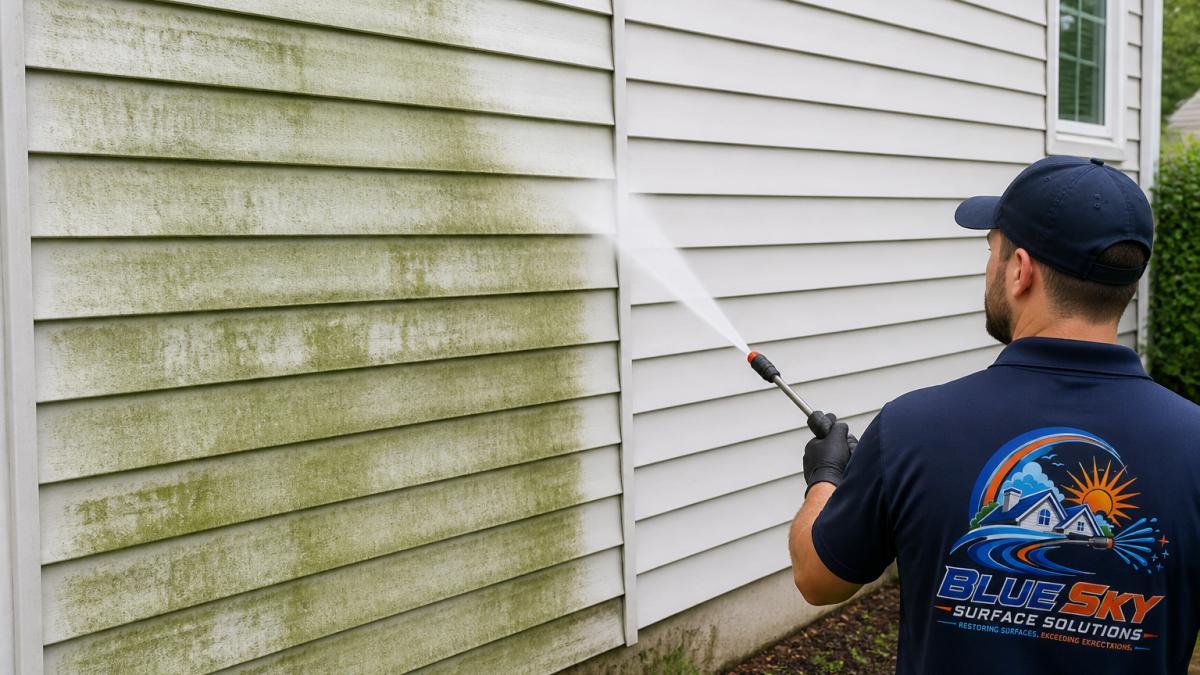
Step 4: Allow Dwell Time and Scrub Gently
Dwell time is how long you let the cleaner sit on the siding.
For oxygen bleach, let it dwell for 10-15 minutes. For vinegar, 15-20 minutes works better since it's less aggressive.
After dwell time, scrub gently with your soft-bristled brush. Use light to medium pressure.
Scrubbing technique:
- Work in small sections (3-4 feet at a time)
- Use circular motions or gentle back-and-forth strokes
- Pay extra attention to areas where algae is thickest
- Don't scrub so hard that you damage the siding surface
- Rinse each section as you finish before moving to the next
Soft brushes protect vinyl and composite siding. Hard-bristled brushes can scratch and damage the surface, especially on older siding.
Step 5: Rinse Thoroughly With Low Pressure
Rinsing removes the cleaner, dead algae, and any residue. Low pressure is essential, high pressure can drive water behind the siding or damage it.
Use your garden hose with a low-pressure nozzle. Start at the top and work downward, letting water run down the siding naturally. Rinse each section thoroughly until the water runs clear.
Rinsing best practices:
- Keep the nozzle at least 12 inches from the siding
- Use a wide spray pattern, not a concentrated stream
- Rinse longer than you think necessary, residual cleaner can leave streaks
- Pay special attention to seams and corners where solution can pool
- Rinse the ground and plants around the base to remove any runoff
Once rinsing is complete, the algae should be gone. If you see remaining growth, you can repeat the process.
Can You Pressure Wash Siding to Remove Algae?
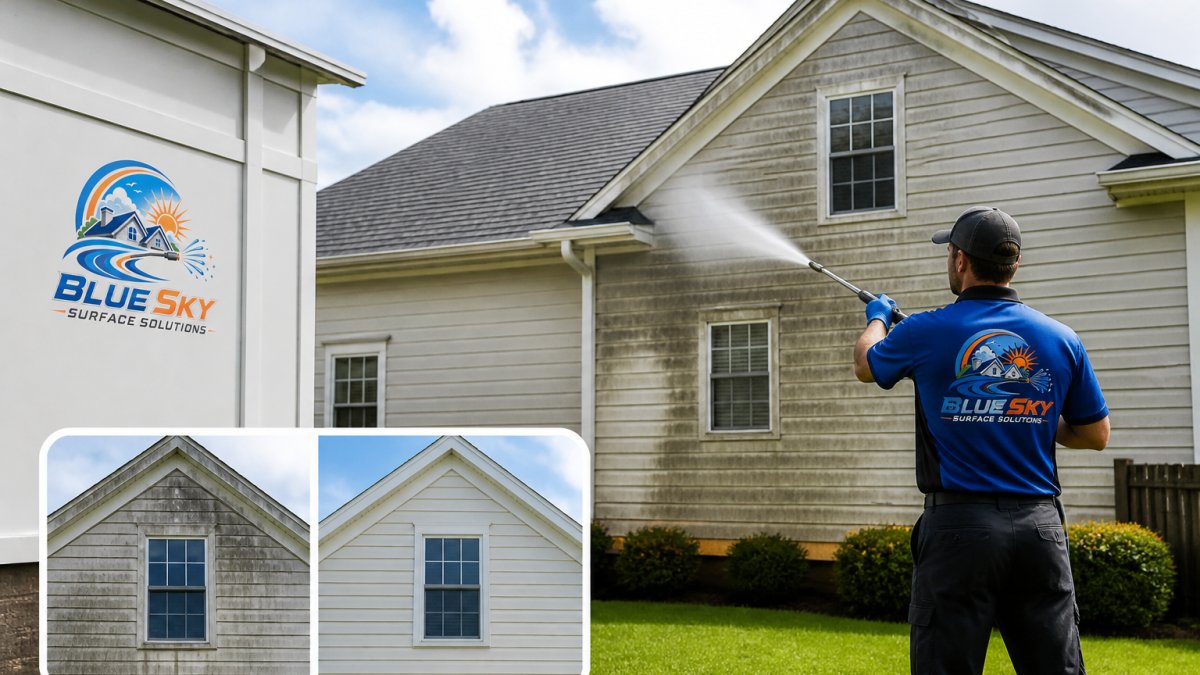
Pressure washing is tempting because it's fast and powerful. However, it's not the best choice for algae removal on most siding types.
High pressure can force water behind the siding, causing rot and mold growth inside the wall.
When pressure washing might work:
- Concrete or brick surfaces
- Heavy-duty commercial siding
- Extremely thick, established algae growth (use lowest pressure setting)
Why soft washing is better:
- Cleaner does the work, not force
- Lower pressure protects siding integrity
- Less risk of water damage behind the walls
- Better for long-term siding health
If you do decide to pressure wash, use the lowest pressure setting available (under 1500 PSI) and keep the nozzle moving. Never hold it in one spot.
How to Prevent Algae From Growing on Siding
Prevention is easier than removal. A few simple steps reduce the conditions algae needs to thrive.
Improve sunlight exposure:
- Trim tree branches that shade your siding
- Remove climbing vines that block sun and trap moisture
- Thin out dense shrubs near the house
Reduce moisture:
- Clean gutters regularly so water drains properly
- Ensure downspouts direct water away from the foundation
- Fix any leaks in roof or gutters
- Improve drainage around the base of your home
Improve air circulation:
- Space shrubs and landscaping away from the siding
- Avoid planting dense vegetation against the house
- Ensure vents and air gaps aren't blocked
Clean regularly:
- Rinse siding with your hose annually
- Address algae growth quickly before it spreads
- Clean north-facing and shaded areas more frequently
These steps don't eliminate algae entirely, it's a natural part of outdoor environments. But they slow its growth significantly and reduce how often you need to clean.
How Often to Clean House Siding to Stop Algae Buildup
How often you need to clean depends on your climate, how much shade your siding gets, and how much moisture is present.
General cleaning schedule:
- Sunny, dry climates: Once every 2-3 years
- Humid or coastal areas: Once per year
- Shaded or north-facing sections: Twice per year
- Areas near trees: Once per year (more debris and moisture)
Most homeowners find that an annual rinse with the hose prevents heavy buildup.
If you notice algae returning quickly, it usually means moisture or shade is the problem. Focus on the prevention steps above rather than cleaning more often.
When to Call a Professional for Algae Removal
DIY cleaning works for most algae problems. However, some situations call for professional help.
Call a professional if:
- The algae covers a large area (more than 500 square feet)
- Your siding is very old or fragile
- The algae is on a second story or roof (safety risk)
- You have health conditions that make climbing or using chemicals risky
- Previous cleaning attempts haven't worked
- You want to protect your landscaping and aren't comfortable handling chemicals
Professional cleaners have equipment, experience, and insurance. They know how to handle different siding types safely. They can also assess whether algae is a symptom of a larger moisture problem.
At Blue Sky Surface Solutions, we help homeowners throughout the Hamilton County area maintain their siding and protect their investment.
Frequently Asked Questions
What takes green algae off siding?
Oxygen bleach, diluted household bleach, or vinegar solutions effectively remove green algae from siding. Oxygen bleach is gentler on most siding materials and works by breaking down the algae's cellular structure. Mix according to product instructions, apply with a pump sprayer, allow 10-15 minutes dwell time, then scrub with a soft brush and rinse thoroughly with low pressure. For stubborn growth, repeat treatment may be necessary.
Can you use a pressure washer to remove algae from siding?
High-pressure washing can damage vinyl, wood, and composite siding by forcing water behind panels or stripping protective coatings. Instead, use low-pressure rinsing (below 1500 PSI) only after the cleaner has done the work. Soft washing, applying cleaner at low pressure, is the safer method. Always check your siding manufacturer's guidance before using any pressure equipment, and consider professional soft washing for best results.
Why does algae keep growing on one side of a house?
Algae thrives on shaded and north-facing sides where moisture lingers and sunlight is limited. These areas stay damp longer after rain or dew, creating ideal conditions for algae growth. Improving air circulation by trimming nearby vegetation, ensuring gutters drain properly, and maintaining consistent cleaning schedules helps reduce recurrence. Prevention is more effective than repeated cleaning alone.
How often should you clean house siding to prevent algae?
Most homes benefit from annual cleaning, though shaded or north-facing siding may need cleaning every 6-12 months depending on moisture levels and local climate. Inspect siding seasonally; if green film appears, clean promptly to prevent deeper growth. Regular maintenance prevents stubborn buildup and extends siding life. Professional cleaning services can establish a schedule tailored to your property's specific conditions.
Algae on your siding doesn't have to be permanent. With the right approach, you can remove it safely and prevent it from returning. Most homeowners can handle light to moderate algae growth themselves using oxygen bleach or vinegar. For larger areas or if you'd rather skip the DIY work, professional cleaning delivers fast, reliable results. Contact Blue Sky Surface Solutions for a free quote and let us help restore your home's curb appeal.