 blog
Best Pressure Washing Service for Concrete Driveway
Table of Contents
- Why Professional Pressure Washing Matters for Concrete Driveways
- The Best Way to Clean a Concrete Driveway
- Pressure Washing Concrete Safely: Methods and Equipment
- Driveway Cleaning Before and After: What Transformation Looks Like
- Choosing the Right Pressure Washing Service
- 1. Verify insurance, and ask for the certificate
- 2. Ask about concrete-specific experience
- 3. Confirm the equipment
- 4. Get a written estimate, and read what it covers
- 5. Understand how the quote is built
- 6. Read reviews for patterns, not stars
- 7. Ask for references on concrete jobs
- 8. Confirm the cleanup and runoff plan
- Pressure Washer Surface Cleaner for Concrete: Why It Matters
- What to Expect During Your Driveway Cleaning
- Protecting Your Driveway After Professional Cleaning
- Frequently Asked Questions
Last Updated: October 20, 2026
Why Professional Pressure Washing Matters for Concrete Driveways
A concrete driveway takes a beating from rain, dirt, algae, and UV exposure. Over time it loses its clean appearance and looks neglected, even when the concrete is structurally sound.
This is where a best pressure washing service for concrete driveway becomes essential. Professional pressure washing removes years of buildup in hours and restores curb appeal without damaging the surface.
The difference between DIY attempts and professional work is significant. A pressure washer in untrained hands can etch concrete, create uneven patterns, or push water into foundation cracks.
The Best Way to Clean a Concrete Driveway
The best approach depends on what's covering your concrete. For general dirt and light buildup, high-pressure water alone lifts debris away without chemicals. For stubborn stains, oil marks, mildew, algae, a cleaning solution applied first breaks down the stain, then pressure washing rinses it away.
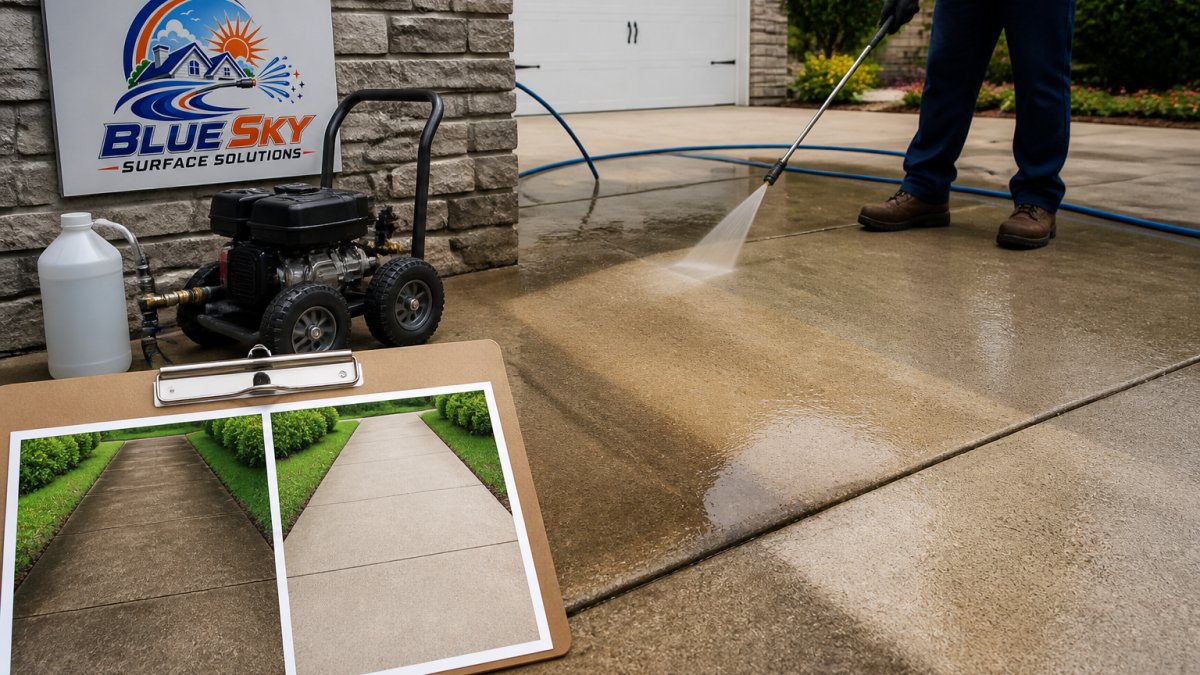
Blue Sky Surface Solutions uses surface cleaners for driveways. These machines apply consistent pressure across a wide area, preventing the streaking handheld wands leave behind, and cover large areas faster. The process typically involves three steps: pre-treatment with cleaning solution if needed, pressure washing at the appropriate PSI, and a final rinse. Letting solution sit 10-15 minutes before washing gives it time to break down stains.
Pressure Washing Concrete Safely: Methods and Equipment
Concrete is durable, but not indestructible. The difference between a clean driveway and a permanently scarred one comes down to three variables: pressure, nozzle choice, and dwell time.
Pressure: the number that matters most
For most residential concrete driveways, roughly 3,000 to 3,500 PSI is the sweet spot, enough to lift embedded dirt, algae, and mildew without opening the surface. Push beyond that and you risk two failure modes:
- Etching, the cement paste is scoured away, leaving a rough, dull patch that traps dirt faster than surrounding concrete.
- Joint and crack damage, high pressure at an angle can widen cracks or blow out sand and sealant in control joints.
Experienced operators start at the lower end and step up only where a test patch shows the stain is not lifting. More pressure is not better cleaning; it is faster damage.
Nozzle angle: the multiplier nobody explains
Nozzle angle changes how concentrated the stream is. A 0-degree nozzle puts full force into a pinpoint, dangerous on concrete. For driveway work, 25 degrees is the general-purpose choice, and 40 degrees is safer for softer or older concrete, decorative overlays, and surfaces of unknown condition. The wider the angle, the gentler the cleaning and the more passes you need.
Surface cleaners: why the pros use them
A surface cleaner is a rotating deck with two or more nozzles spinning under a shroud. It keeps the nozzles at a fixed distance and applies even pressure across a wide path, solving the two most common DIY failures:
- Striping, visible bands left when a handheld wand moves at inconsistent speed or distance.
- Hot spots, small areas where the wand lingered too long and etched the surface.
Surface cleaners also cover ground faster, which is why they are standard equipment on professional driveway jobs.
Detergents and dwell time
Water alone handles loose dirt, not oil, grease, mildew, or algae. Those need a cleaning solution applied first and given 10 to 15 minutes of dwell time before rinsing. The detergent breaks the bond between contaminant and concrete; the pressure washer rinses it away. Skipping dwell time is one of the most common reasons a DIY job looks half-done.
Water temperature
Hot water breaks down oils and grease more effectively than cold, and many professional rigs run hot-water capability for that reason. Most residential driveways still respond well to cold water with the right detergent and adequate dwell time. Hot water is a tool for specific stains, not a requirement for every job.
The takeaway
Safe concrete cleaning is a sequence, not a single setting: test a patch, choose the widest nozzle the stain allows, keep pressure in the 3,000-3,500 PSI range, pre-treat with detergent and respect dwell time, and use a surface cleaner for even coverage. A service that can explain those choices knows what it is doing on concrete.
Driveway Cleaning Before and After: What Transformation Looks Like
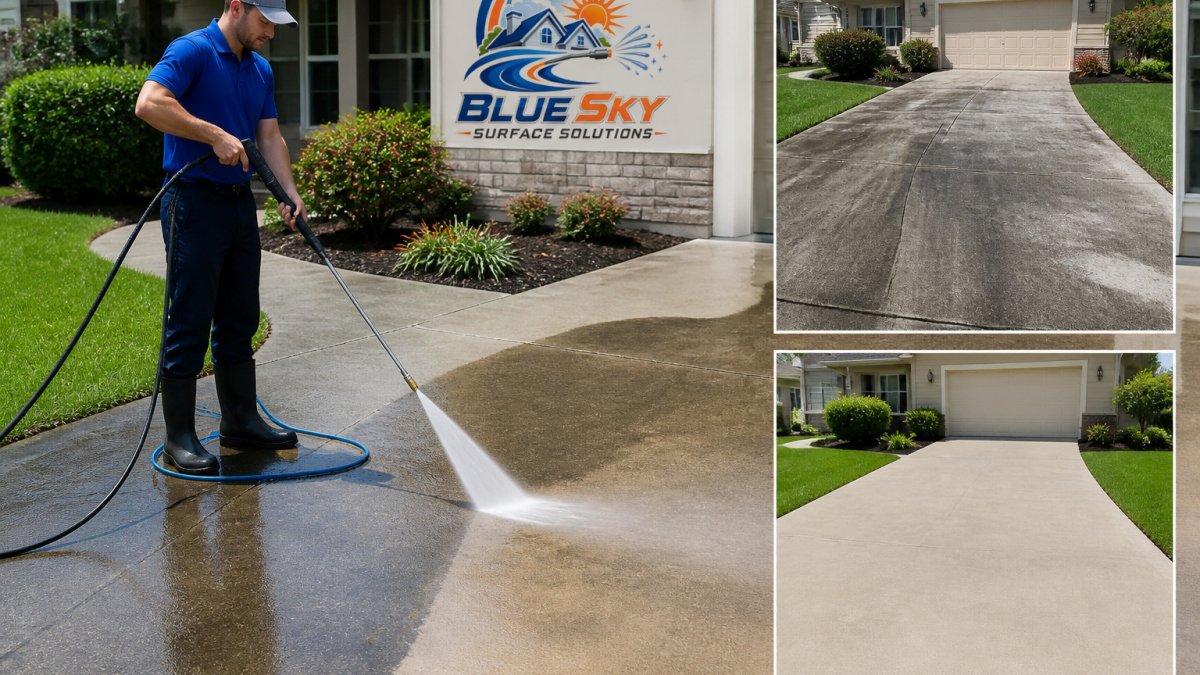
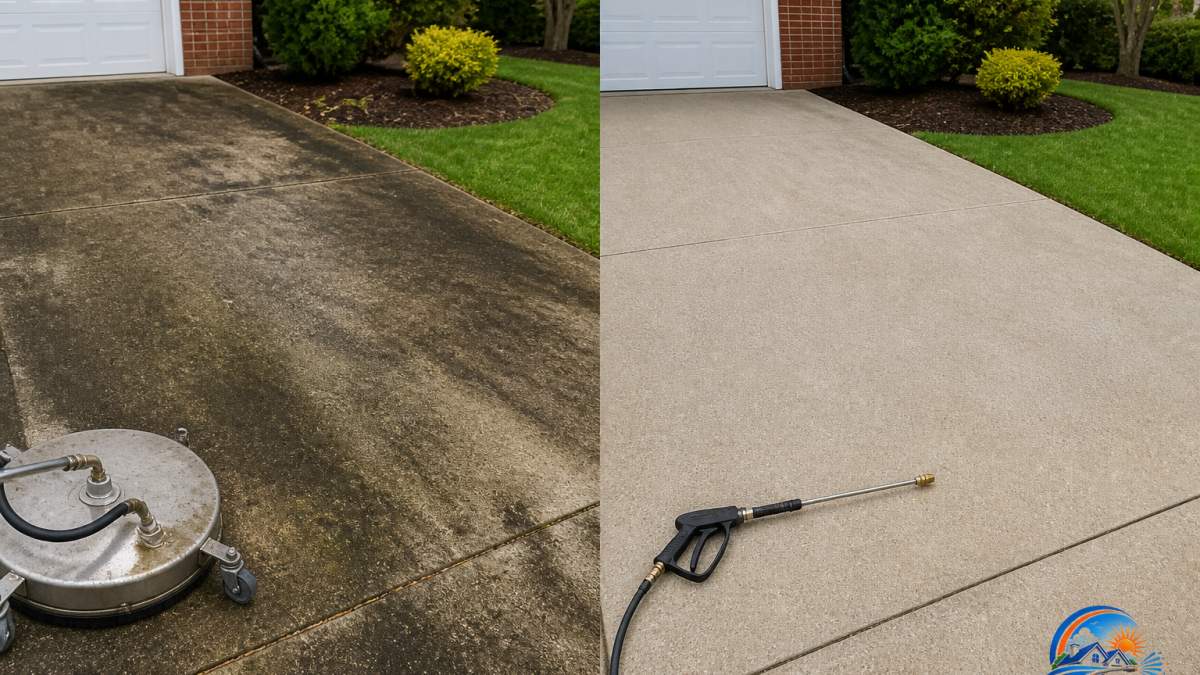
The visual difference between a dirty driveway and a professionally cleaned one is striking. A stained, weathered driveway can look decades old; after professional pressure washing, it looks like new. Oil stains disappear, algae and mildew vanish, and the concrete's true color returns, light driveways brighten, dark ones regain their depth. The driveway looks wider, brighter, and more inviting, and it is safer too, with less slippery algae. The transformation often surprises homeowners who thought their driveway was permanently damaged. In most cases the concrete is fine; it just needed professional cleaning to reveal its condition underneath years of buildup.
Choosing the Right Pressure Washing Service
"Best" is not a badge a company awards itself, it is something you verify before you book. This checklist takes about fifteen minutes and separates a professional concrete cleaner from a guy with a trailer and a wand.
1. Verify insurance, and ask for the certificate
Ask for a current certificate of general liability insurance. If a wand scars your concrete or a hose damages landscaping, insurance is what stands between you and the bill. A professional operation sends the certificate without hesitation; hesitation is your answer.
2. Ask about concrete-specific experience
Exterior cleaning is not one skill. Ask directly: how many concrete driveways have you cleaned this year, and what PSI and nozzle do you use on residential concrete? A confident, specific answer, a range, a nozzle angle, a mention of test patches, tells you more than any review count.
3. Confirm the equipment
Ask whether they use a surface cleaner or a handheld wand. Surface cleaners produce even results and reduce etching risk; a wand-only operation is a red flag. Ask about detergent and dwell time too, if the answer is "water only," oil and mildew stains will not come out.
4. Get a written estimate, and read what it covers
A reputable provider assesses the driveway in person (or from clear photos), identifies problem stains, and puts the scope in writing: pre-treatment, surface cleaning, rinse, and cleanup of landscaping and runoff. Verbal quotes invite scope disputes later.
5. Understand how the quote is built
Driveway cleaning is usually priced by square footage, with adjustments for condition, access, and add-ons. Two driveways of the same size can quote differently because of:
- Condition, heavy oil staining or years of algae require more detergent and more passes.
- Access, a gate, a narrow side yard, or cars that must be moved add labor.
- Add-ons, sidewalks, patios, and front walkways are often quoted together at a better combined rate.
Ask what would change the number. A provider who can explain the variables is pricing the work, not guessing.
6. Read reviews for patterns, not stars
A five-star average means little on its own. Look for review volume, recency, and complaint patterns. One unhappy customer is noise; repeated mentions of late arrivals, surprise charges, or uneven results are signal. Search the company name alongside "review" and "complaint" and see what surfaces.
7. Ask for references on concrete jobs
A provider who has done a lot of driveway work can point you to recent customers with concrete driveways. A short call with one of them tells you more about punctuality and cleanup than any marketing page.
8. Confirm the cleanup and runoff plan
Professional work includes cleanup: landscaping rinsed, runoff managed, and no detergent pooling in the street or storm drain. Ask how they handle wastewater and where it goes. A provider with a plan has done this before.
Blue Sky Surface Solutions welcomes every one of these questions. We will walk you through our PSI and surface-cleaner setup, put the scope in writing, and give you a free estimate so you can compare us fairly against anyone else you are considering. Contact us and let us earn the job.
Pressure Washer Surface Cleaner for Concrete: Why It Matters
A pressure washer surface cleaner is specialized equipment designed for flat surfaces like driveways, patios, and sidewalks. Unlike handheld wands, surface cleaners have two or more rotating nozzles underneath a flat deck, keeping pressure consistent and distance from the concrete uniform. The result is even cleaning without stripes, swirls, or missed spots, and it covers a wider area per pass, so the job goes faster. The even pressure also prevents damage: a handheld wand requires skill to hold the right angle and distance, and a slight change can create uneven results or etch the concrete. For a best pressure washing service for concrete driveway, surface cleaners are standard equipment because they deliver superior results safely and efficiently.
What to Expect During Your Driveway Cleaning
Professional driveway cleaning follows a predictable process. First, the service inspects your driveway, identifies stains, tests the concrete to determine its condition, and checks for cracks that pressure washing might worsen. Next, they protect surrounding areas, landscaping, vehicles, and nearby structures, and check that gutters and downspouts drain properly. Pre-treatment comes next if needed: a cleaning solution is applied to stubborn stains and allowed to sit so it can break down oils, mildew, or algae. Then pressure washing begins, working systematically with consistent pressure and coverage, adjusting levels as needed. Finally, they rinse thoroughly to remove all solution and debris, then inspect to confirm the results.
Protecting Your Driveway After Professional Cleaning
After professional cleaning, protecting your driveway helps maintain that appearance longer. Avoid driving on it for at least 24 hours if possible so residual moisture can evaporate and the concrete fully dries. Seal your concrete if it isn't already sealed, a quality sealer protects against stains, UV damage, and water penetration, extending the time between cleanings.
A clean driveway transforms how your entire home looks. Professional pressure washing removes years of dirt, stains, and buildup, restoring curb appeal and protecting your concrete investment. Blue Sky Surface Solutions specializes in residential exterior cleaning, including professional driveway pressure washing with surface cleaners and proven techniques. We serve homeowners throughout the area with reliable, high-quality results. Contact us for a free estimate and discover how professional cleaning can revitalize your driveway.
Frequently Asked Questions
Can pressure washing damage a concrete driveway?
High-pressure water can damage concrete if applied incorrectly, particularly on newer or weakened surfaces. Professional pressure washing services use appropriate water pressure, nozzle angles, and surface cleaners specifically designed for concrete. Experienced technicians know how to remove stains, dirt, and buildup without compromising the surface. This is why hiring professionals who understand concrete-safe cleaning methods protects your investment while delivering excellent results.
How do you choose a pressure washing service for a concrete driveway?
Look for companies with experience cleaning concrete driveways and verifiable customer reviews. Ask about their equipment, cleaning methods, and whether they use surface cleaners designed for concrete. Request before-and-after examples of similar projects. A reputable service should provide a free quote, explain their process, and stand behind their work. Professional pressure washing services should prioritize protecting your driveway while restoring its curb appeal.
What is the best thing to clean a concrete driveway with?
The best approach combines appropriate water pressure, specialized cleaning solutions, and proper equipment. Professional-grade surface cleaners deliver consistent, even cleaning without streaking or damage. Eco-friendly cleaning solutions remove oil stains, mildew, and algae effectively. The best method depends on your driveway's condition, age, and the type of buildup present. Professional pressure washing services assess your specific situation and select the right combination of pressure, solution, and technique for optimal results.
Should a concrete driveway be sealed after pressure washing?
Sealing after pressure washing can extend your driveway's life by protecting against water penetration, stains, and UV damage. Professional cleaning removes dirt and buildup, preparing the surface for sealer application. Many homeowners choose to seal their driveways following professional pressure washing to maintain that clean appearance longer and prevent new stains from setting. Ask your pressure washing service about sealing recommendations for your specific driveway condition and climate.