 blog
Is Professional Exterior Cleaning Worth It? A 2026 Guide
Table of Contents
- What Professional Exterior Cleaning Actually Includes
- Professional Exterior Cleaning vs DIY: What You Actually Save
- Soft Washing vs Pressure Washing: Which Method Your Home Needs
- Does Exterior Cleaning Improve Home Value? What the Data Shows
- How Often to Clean House Exterior Surfaces
- How to Evaluate a Professional Exterior Cleaning Quote
- The Bottom Line: When Professional Cleaning Pays for Itself
- Frequently Asked Questions
Last Updated: October 12, 2026
What Professional Exterior Cleaning Actually Includes
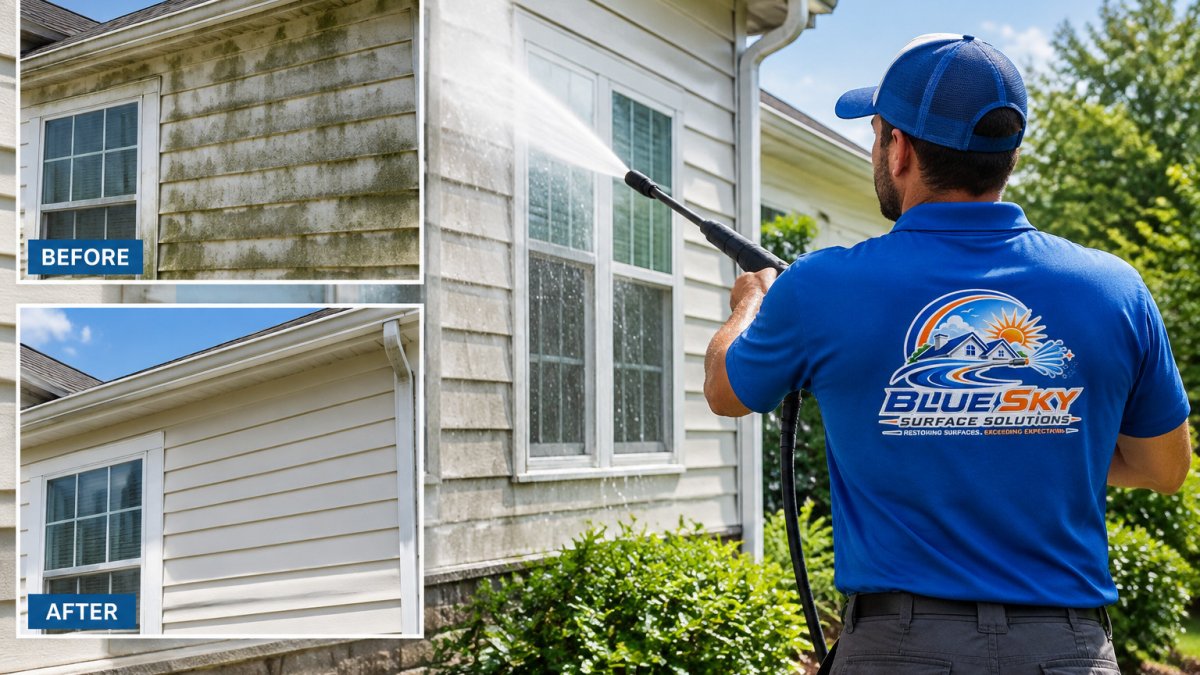
Professional exterior cleaning is the process of removing dirt, algae, mold, mildew, and grime from a home's outside surfaces using specialized equipment and cleaning solutions matched to each material. It covers far more than a garden hose and a bucket ever could.
At Blue Sky Surface Solutions, we offer meticulous house and gutter cleaning, specialized soft washing, and expert tree services for homes and businesses across Hamilton County. Most homeowners are surprised by how much falls under this umbrella.
Beyond the Garden Hose: Services Most Homeowners Overlook
The average homeowner thinks about siding and stops there. In practice, a full exterior cleaning service usually includes:
- House washing for vinyl, brick, and painted surfaces
- Gutter cleaning to clear debris and keep water moving away from the roof
- Soft washing for delicate materials like stucco, wood, and painted trim
Each surface needs a different approach. Pressure that's safe for concrete can strip paint or crack siding. That's why method selection matters as much as the cleaning itself.
Professional Exterior Cleaning vs DIY: What You Actually Save
The honest answer: DIY saves money up front and costs you time, safety, and sometimes your siding. But the more useful question is not which is cheaper in general, it's which one is right for your specific property. Most competitors stop at the trade-off. Here's the decision framework that actually settles it.
The Five Factors That Decide It
Run your property through these before you rent anything:
- Height and access. A single-story ranch with wide, level walkways is DIY-friendly. Two or more stories, steep grades, or surfaces hemmed in by landscaping push you onto ladders and extension poles, where most injuries and most missed spots happen.
- Surface type. Concrete, brick, and most vinyl siding tolerate pressure. Painted wood, stucco, aged trim, and roofing do not. If your exterior is mostly the second group, the method matters more than the effort, and method is where DIY goes wrong.
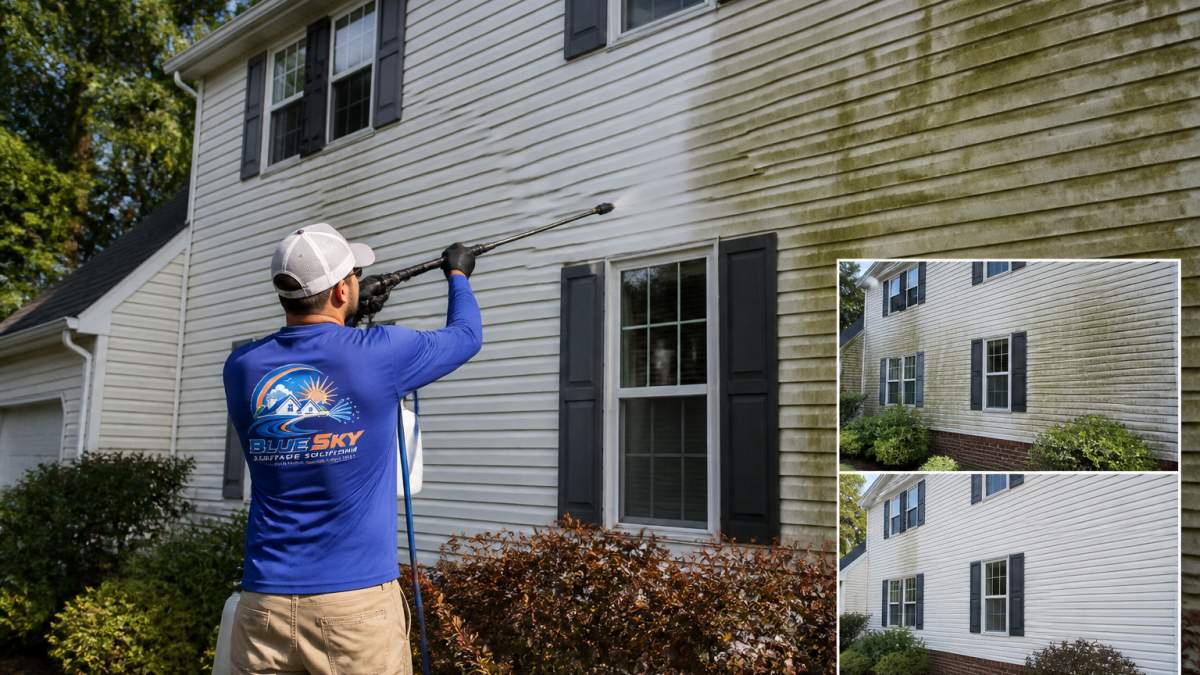
- Severity of buildup. Light dust and pollen rinse off. Established algae, mildew, and lichen have rooted into the surface and need a cleaning solution that kills the growth, not just water that knocks off the top layer. Pressure alone tends to leave the root behind, and it returns within a season.
- Scope. Siding alone is one job. Siding plus gutters plus driveway plus roof is four jobs with four methods and four sets of equipment. The more surfaces you bundle, the wider the gap between a weekend project and a service call.
- Your time and tolerance for risk. Be honest about both. A full weekend on a ladder is not the same as a few hours of someone else's labor.
The Hidden Costs of Doing It Yourself
Most DIY estimates leave out the expensive parts:
- Equipment rental and fuel for a machine strong enough to matter
- Surface damage from too much water pressure on the wrong material
- Injury risk from ladders, roofs, and slippery wet surfaces
- Repeat work when organic growth returns because it wasn't fully killed
- Your weekend, which has a value too
A common mistake is treating exterior cleaning as a one-time chore. It's maintenance, and the results fade if the underlying growth isn't treated properly.
| Factor | DIY | Professional Service |
|---|---|---|
| Upfront cost | Lower | Higher |
| Time required | Full weekend or more | A few hours |
| Surface risk | High on delicate materials | Managed by method |
| Equipment | Rented, limited | Commercial-grade |
| Results | Varies | Consistent |
| Best for | Small, single-story, durable surfaces | Two-story homes, delicate siding, heavy buildup |
When DIY Genuinely Makes Sense
DIY is a reasonable call when all of these are true: single story, durable surfaces, light buildup, no roof or gutter work, and you have the time and a safe way to reach everything. In that narrow case, a rented machine and a free afternoon can get you a decent result.
When Hiring Pays for Itself
Hiring is the better call when any of these are true: two or more stories, delicate or painted surfaces, heavy organic growth, roof or gutter work, or a sale or appraisal on the horizon. In those cases the risk of damage or injury, plus the likelihood of repeat work, usually outweighs the savings.
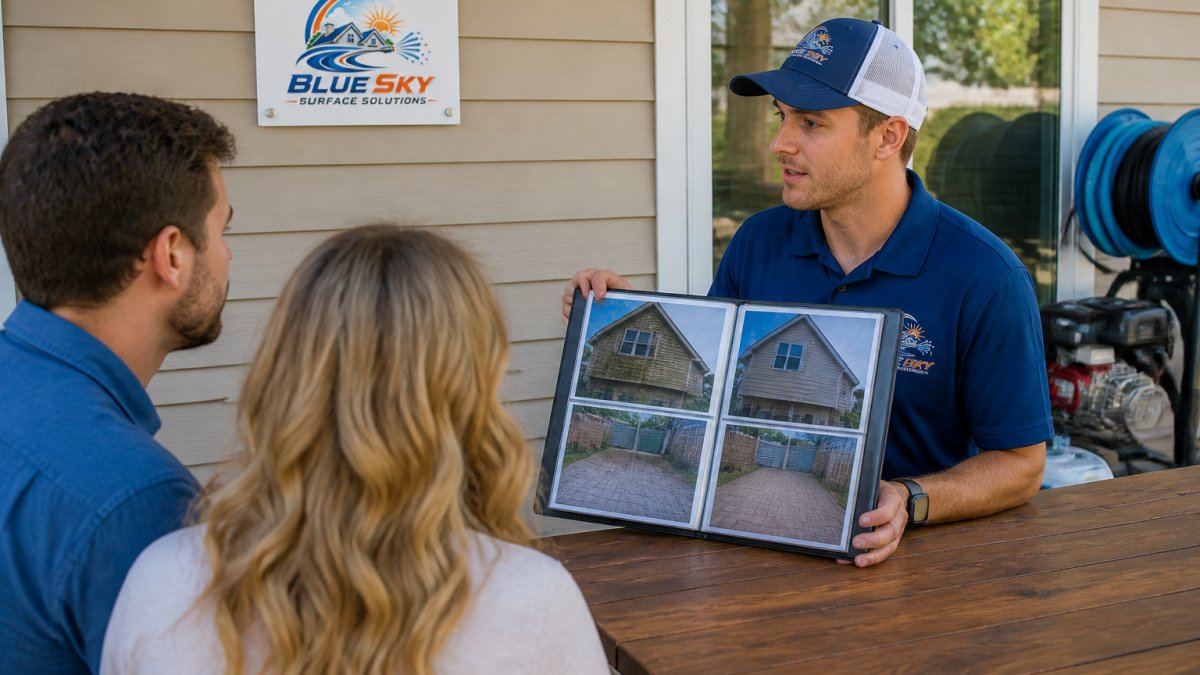
If you're on the fence, the fastest way to settle it is a free quote. We'll tell you honestly whether your property is a DIY job or one worth handing off, and if it's worth handing off, we'll do it at a great price.
Soft Washing vs Pressure Washing: Which Method Your Home Needs
Soft washing uses low pressure and specialized cleaning solutions to kill and remove organic growth. Pressure washing uses high-pressure water to blast away grime. Choosing between soft washing vs pressure washing is about matching the method to the material, not picking the stronger option.
Here's the practical breakdown:
- Soft washing suits siding, stucco, painted wood, roofs, and anything that could be damaged by force
The thing nobody tells you about exterior cleaning is that the cleaning solution does most of the work on organic growth. Pressure only removes what's already loose. Kill the algae at the root and it stays gone longer.
Does Exterior Cleaning Improve Home Value? What the Data Shows
Exterior cleaning improves curb appeal, and curb appeal shapes how buyers and appraisers see a property. Does exterior cleaning improve home value? It supports value by making the home present better, not by adding square footage.
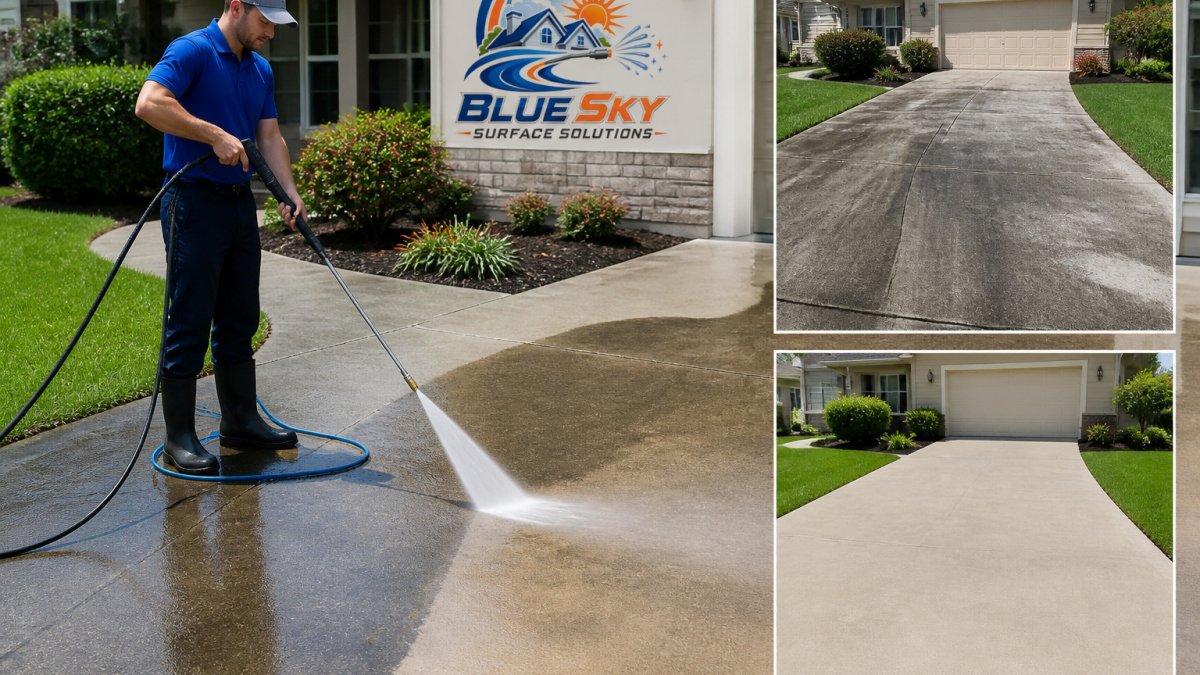
Real estate professionals consistently note that a well-maintained exterior creates a stronger first impression and supports resale presentation. Buyers form opinions in the first few seconds, and a stained driveway or green-streaked siding reads as deferred maintenance.
The measurable return shows up in three places:
- Faster sales when a home shows well from the street
- Stronger offers when buyers don't mentally subtract repair costs
- Longer material lifespan because dirt and organic growth aren't sitting on surfaces
National Association of Realtors guidance on curb appeal and home value
How Often to Clean House Exterior Surfaces
Most homes need exterior cleaning once a year, with some surfaces cleaned more often. How often to clean house exterior surfaces depends on your climate, tree cover, and how much shade your home gets.
A general schedule:
- Siding and house washing: annually
- Gutters: twice a year, spring and fall
Homes under heavy tree cover or in humid conditions may need more frequent service. North-facing walls stay damp longer and tend to grow algae faster.
How to Evaluate a Professional Exterior Cleaning Quote
A good quote tells you exactly what's being cleaned, how, and what it costs. Evaluating a professional exterior cleaning quote means reading past the total and checking the scope. Most competitors tell you to 'get several quotes' and stop there. The real skill is knowing what a complete quote looks like so you can compare providers on the same terms.
What a Complete Quote Should Include
A quote you can actually compare against another one should spell out:
- Every surface in scope. Siding, gutters, downspouts, soffits, fascia, named individually, not lumped into 'exterior.'
- The method for each surface. Soft wash, pressure wash, or manual. If a provider can't tell you which method goes on which surface, they haven't thought it through.
- Preparation. Are plants covered or pre-wet? Are windows and doors closed and sealed? Is furniture moved?
- Cleanup. Is runoff managed? Are plants rinsed afterward? Is debris from gutters hauled away or left on the lawn?
- Insurance and licensing. A legitimate provider carries liability coverage and can show it. Ask for the certificate, not just a verbal yes.
- Timeline and weather policy. What happens if it rains? Is the date firm or a window?
- Price structure. Firm price or estimate? Any add-ons that could change the total?
Questions to Ask Before You Sign
- What surfaces are included? Siding, gutters, or only some?
- Which method for each surface? Soft wash, pressure, or a mix?
- Is the price firm or an estimate? Get it in writing.
- Are they insured? A legitimate provider carries liability coverage.
- What's the timeline? Weather delays should be explained up front.
Red Flags in a Quote
- A single price with no surface-by-surface breakdown
- 'We use pressure on everything', that's a paint and siding risk
- No mention of insurance when you ask
- No written scope, only a verbal estimate
- A price that's dramatically lower than every other quote, with no explanation of what's excluded
Pricing depends on the size of your home, the number of surfaces, and how much buildup has accumulated. We recommend getting a free quote so the scope is clear before any work begins, and we'll walk you through exactly what's included so you can compare it fairly against anyone else.
U.S. Environmental Protection Agency guidance on safe outdoor cleaning practices
The Bottom Line: When Professional Cleaning Pays for Itself
Professional exterior cleaning pays for itself when your home has delicate surfaces, heavy organic buildup, two or more stories, or a sale on the horizon. For a small single-story home with durable siding, DIY can work fine.
The calculation is simple. If the job involves ladders, roofs, or materials that damage easily, the risk of doing it yourself outweighs the savings. If you want consistent results and a schedule you don't have to think about, professional service earns its place in your maintenance budget.
Frequently Asked Questions
Is it better to hire a professional or clean your home's exterior yourself?
It depends on your home's height, siding material, and how much buildup you're dealing with. Single-story homes with light dirt can be handled with a garden hose and mild detergent. But two-story homes, heavy mold or algae growth, and delicate surfaces like stucco or painted wood usually call for professional exterior cleaning. Professionals have the right equipment, know which cleaning method suits each surface, and carry insurance if something goes wrong. For most homeowners, the risk of streaking, water damage, or injury outweighs the savings.
Can exterior cleaning improve curb appeal or home value?
Yes. A clean exterior makes a strong first impression on buyers and appraisers. Removing dirt, mold, and mildew from siding and brick restores the home's original appearance and signals that the property has been well maintained. Real estate agents consistently rank curb appeal among the top factors influencing buyer interest. While no cleaning service guarantees a specific dollar increase in appraised value, a well-maintained exterior supports stronger resale presentation and can help your home compete in a crowded market.
How often should a house exterior be cleaned?
Most homes benefit from a full exterior cleaning once a year. Homes surrounded by trees, near bodies of water, or in humid climates may need cleaning every six to eight months. Vinyl siding tends to show algae faster than brick. Gutters should be cleared at least twice a year, typically in spring and fall. Your specific schedule depends on local weather, tree coverage, and the materials on your home.
What should I look for in a professional exterior cleaning service?
Ask about their cleaning methods, insurance coverage, and whether they adjust technique based on surface type. A reputable provider will explain the difference between soft washing and pressure washing and recommend the right approach for your siding or paint. Request a written quote that lists what's included: siding, gutters, and any add-ons. Confirm they carry liability insurance and can provide references from similar properties. Avoid any provider who quotes a price without seeing your home or who uses the same pressure setting on every surface.
Your home's exterior takes the brunt of every season, and keeping up with it is a real challenge. Blue Sky Surface Solutions makes it simple with house washing, gutter cleaning, specialized soft washing, and tree services, all handled by a team that knows how to protect your siding, brick, and paint. We serve the Hamilton County area with dependable service year-round. Get started with Blue Sky Surface Solutions and a free quote, and see what a well-maintained exterior does for your property.