 ultimate-guide
Roof Washing Guide: Soft Wash vs DIY Dangers (2026)
Table of Contents
- Why Roof Washing Protects Your Biggest Investment
- Soft Wash Roof Cleaning: How Low-Pressure Washing Works
- Roof Algae Removal: Stopping Black Streaks at the Source
- The Dangers of DIY Roof Cleaning
- Roof Material Matters: Shingle, Tile, and Metal Protocols
- Will Roof Washing Void Your Warranty? What to Check First
- After the Wash: A Maintenance Schedule That Keeps Roofs Clean
- Frequently Asked Questions
Last Updated: September 20, 2026
Why Roof Washing Protects Your Biggest Investment
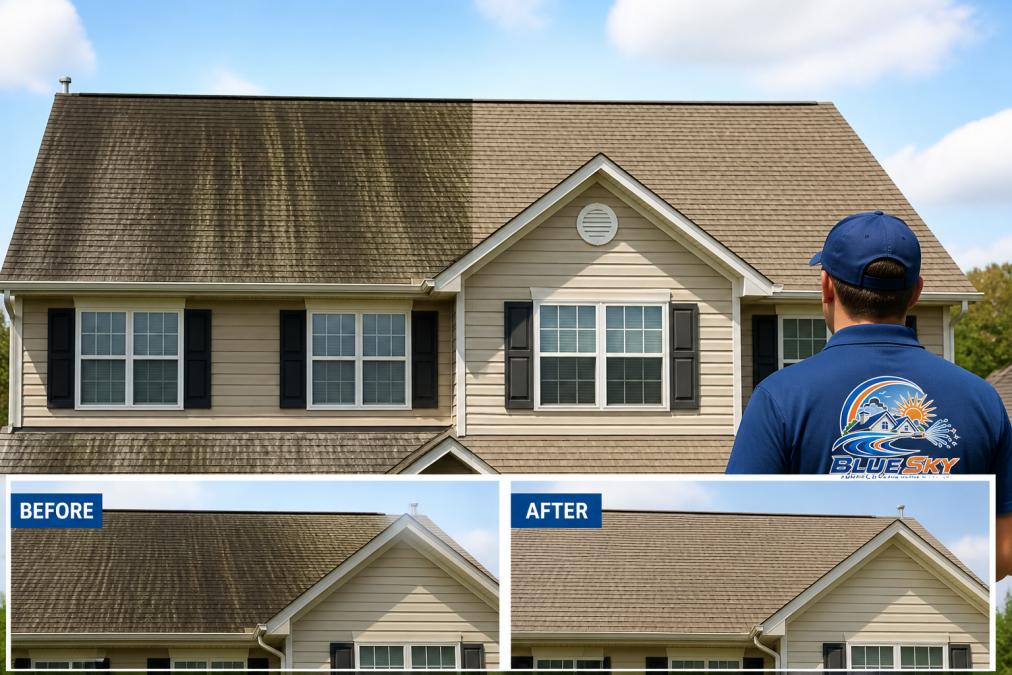
Roof washing is the controlled removal of algae, moss, lichen, and organic growth using low-pressure methods and solutions formulated for the material underneath. At Blue Sky Surface Solutions, we treat it as preventative maintenance, not cosmetic work. The black streaking most homeowners notice first is not dirt, it is a living organism feeding on the limestone filler in asphalt shingles.
A roof fails invisibly, you rarely see the damage until water is already inside. Regular roof washing removes the growth that holds moisture against shingles and lets a professional spot failing flashing, cracked sealant, and lifted shingles years before they become a ceiling stain.
Here is the truth most homeowners learn too late: professional roof washing costs a fraction of a premature roof replacement, and the DIY route done wrong accelerates the very replacement you were trying to avoid.
Soft Wash Roof Cleaning: How Low-Pressure Washing Works
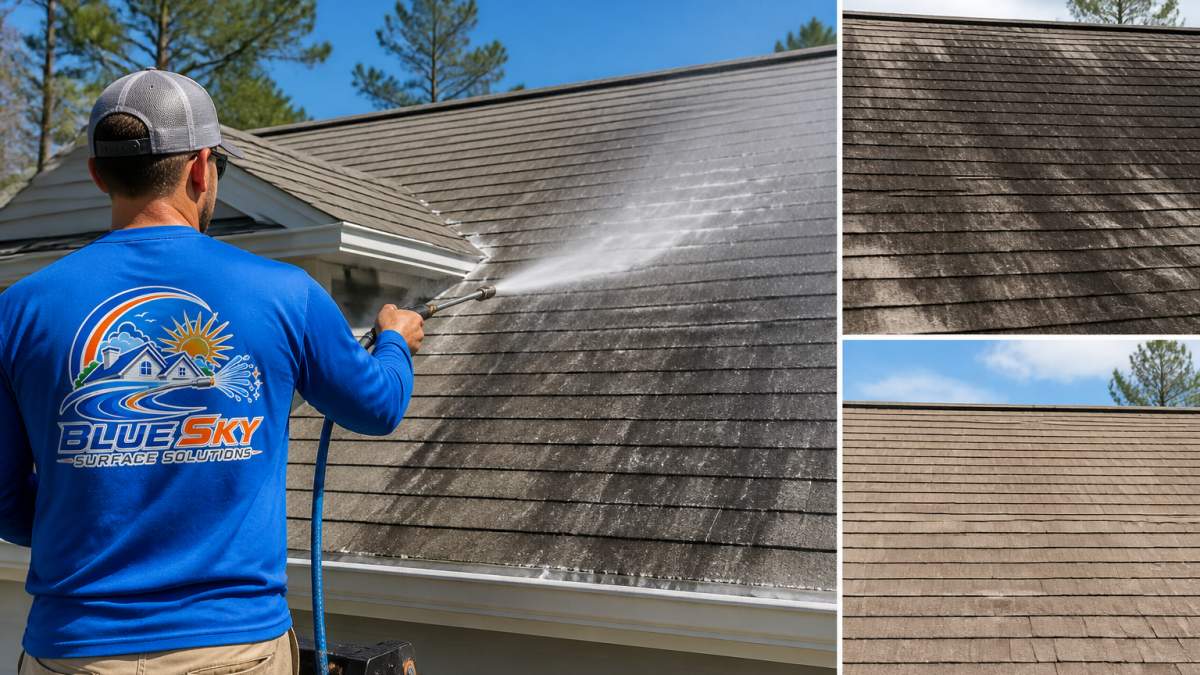
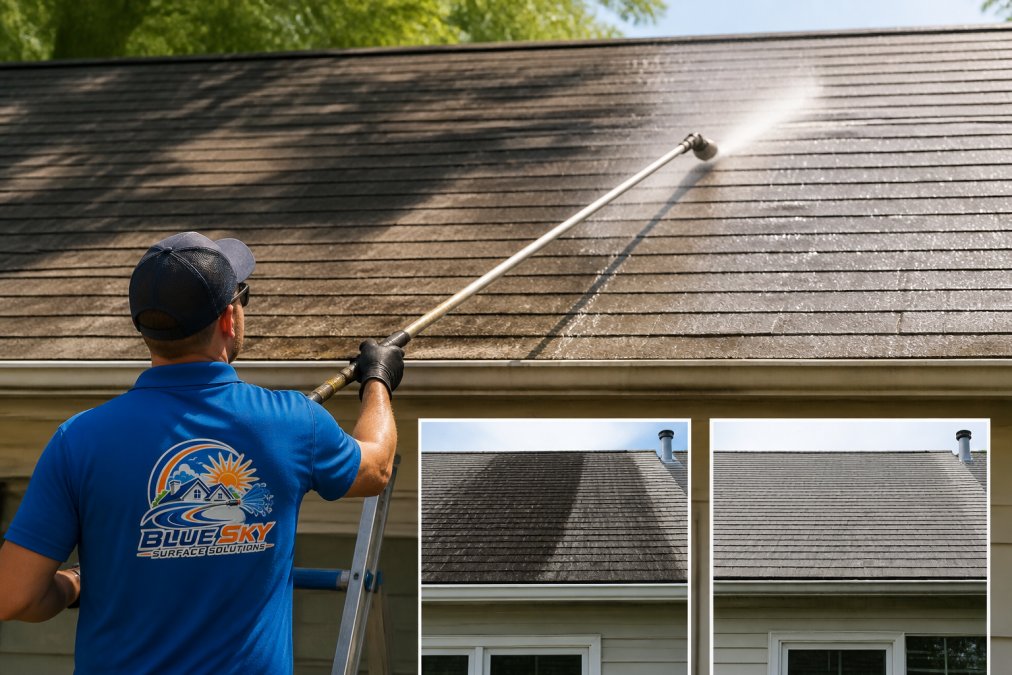
Soft wash roof cleaning relies on chemistry rather than force. A technician applies a diluted sodium hypochlorite mix with surfactants, lets it dwell long enough to kill the organism at the root, then rinses at low pressure a shingle can tolerate.
Dwell time is the whole game.
What Soft Washing Removes That a Garden Hose Cannot
A garden hose knocks off loose debris and nothing more. It cannot touch gloeocapsa magma, the cyanobacteria behind those black streaks, because the organism anchors into the shingle granule layer. It cannot remove moss that has sent rhizoids under shingle edges, or lift lichen bonded to tile and metal.
Roof Algae Removal: Stopping Black Streaks at the Source
Roof algae removal starts with understanding that the streaks are a symptom, not the problem. The organism colonizes the shaded, north-facing, and moisture-retaining slopes first. Kill it there, and you stop the spread before it reaches the sunnier planes.
The Dangers of DIY Roof Cleaning
The dangers of DIY roof cleaning fall into two categories, and homeowners usually only worry about one. The obvious danger is the fall; the one that costs more is the damage.
Why Pressure Washing Your Own Roof Damages Shingles
Pressure washing your own roof damages shingles because asphalt shingles are designed to shed water, not withstand a concentrated stream. A pressure washer at close range blasts the protective granule layer off the mat, granules that are the shingle's UV protection and first line of defense. Once gone, the asphalt underneath degrades fast.
Roof Material Matters: Shingle, Tile, and Metal Protocols
Most roof washing guides hand you one method and tell you to apply it everywhere. That advice fails the moment your roof is not asphalt shingle. The material under the growth determines solution strength, dwell time, rinse pressure, and the failure mode you are trying to avoid, treating every roof the same is how homeowners end up with etched metal panels, cracked tile, or stripped shingles.
Here is what actually changes from material to material.
Asphalt Shingles
Asphalt shingles are the most common roof in the country and the most forgiving of a properly diluted soft wash. The shingle is a fiberglass mat coated in asphalt and embedded with mineral granules, the UV shield and wear layer. The algae you see as black streaking, gloeocapsa magma, feeds on the limestone filler and anchors into the granule layer, which is why a garden hose cannot remove it.
Clay and Concrete Tile
Tile roofs shed water through overlapping channels, and those channels are exactly where organic growth hides. Moss sends rhizoids into the gaps between tiles, lichen bonds to the tile face, and moisture lingers in the channels long after the rest of the roof has dried. A shingle protocol will work on tile, but it needs a gentler dilution and more attention to the channels, because the goal is to kill growth without driving water or solution under the tile field.
Metal Roofs
Roof Material | Solution Strength | Pressure Level | Primary Failure Mode |
|---|---|---|---|
Asphalt shingle | Standard soft wash mix | Low-pressure rinse only | Granule loss from pressure |
Clay / concrete tile | Gentler dilution | Low-pressure rinse only | Cracked tile, water behind the field |
Metal | Mildest mix | Low-pressure rinse only | Finish damage and oxidation |
Will Roof Washing Void Your Warranty? What to Check First
This is the question most homeowners do not ask until it is too late, and it decides whether a roof failure at year twelve is covered or comes out of your pocket. The short answer: roof washing does not void your warranty, improper roof washing does. The distinction is method and documentation, not the act of cleaning.
What Roofing Warranties Actually Say
Most asphalt shingle manufacturers publish maintenance requirements as a condition of coverage. Those requirements call for reasonable maintenance to keep the roof free of debris and organic growth, and they exclude damage caused by improper cleaning methods. Pressure washing is the method that gets claims denied, because it strips granules, the shingle's wear surface. Soft washing, performed to the manufacturer's recommended method for your specific product, does not trigger that exclusion.
The Two Things That Protect Your Coverage
First, use a contractor who follows the manufacturer's recommended cleaning method for your specific shingle, tile, or metal product, matching solution strength to material, keeping pressure at soft-wash levels, and knowing which products the manufacturer approves. A contractor who cannot tell you what method they use and why is a risk to your coverage.
Why This Is the Question to Ask Before You Book
A roof that fails at year twelve instead of year twenty-five is a warranty conversation, and the wrong cleaning method ends it before it starts. Homeowners who get claims paid can show the roof was maintained correctly; those denied pressure washed it themselves or hired whoever was cheapest without asking what method they would use.
After the Wash: A Maintenance Schedule That Keeps Roofs Clean
Roof washing is not a one-time event if you want the results to hold. A maintenance schedule keeps growth from re-establishing and turns a major cleaning into routine care.
- Annually: Inspect the roof and gutters, ideally in spring, and clear debris from valleys and behind chimneys.
- Every 12 to 24 months: Schedule a professional soft wash, sooner on shaded or north-facing slopes where organic growth returns first.
- Every 2 to 3 years: Have the roof inspected for flashing, sealant, and shingle condition alongside the cleaning.
- Ongoing: Trim tree limbs back from the roof line and confirm downspouts discharge well away from the foundation.
Frequently Asked Questions
What is the best way to wash your roof without damaging shingles?
Soft washing is the safest method for asphalt shingles. It uses low pressure (under 100 PSI, similar to a garden hose) combined with a cleaning solution of sodium hypochlorite and surfactants. The solution dwells on the surface for several minutes, killing algae, moss, and lichen at the root. A gentle rinse then carries the dead organic growth away. High-pressure washing strips the protective granules from shingles and can void manufacturer warranties, so it should never be used on asphalt roofs.
How much does it cost to have a roof cleaned?
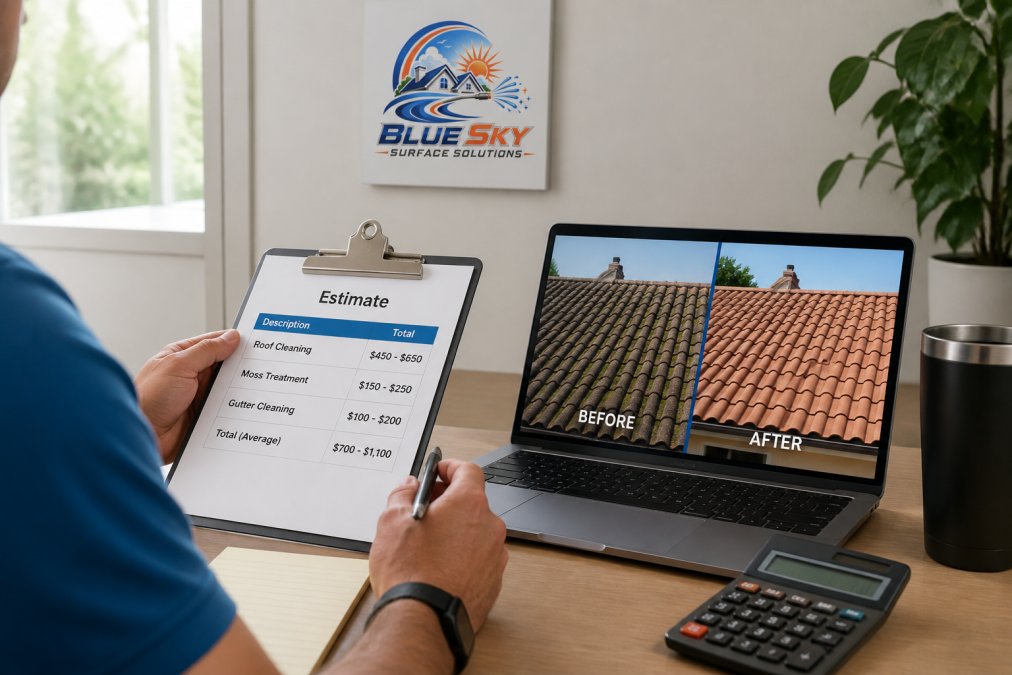
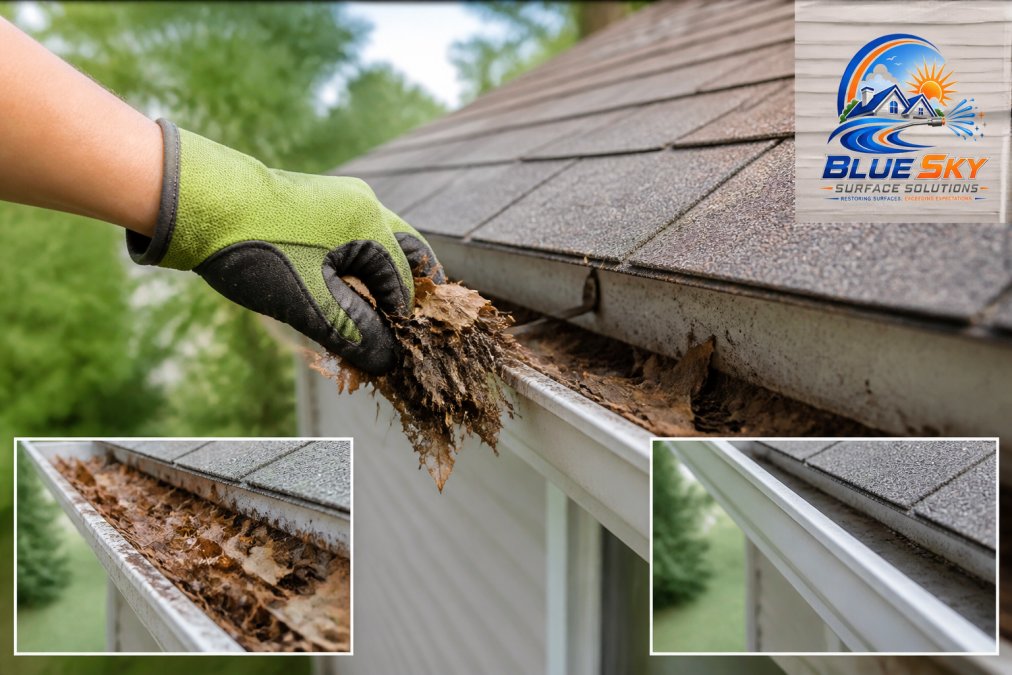
Roof washing pricing depends on roof size, pitch, material, and how much organic growth has built up. Square footage is the biggest factor, followed by accessibility and whether gutters need clearing afterward. Because every property is different, the most accurate figure comes from an on-site or satellite-based quote. Contact Blue Sky Surface Solutions for a free estimate tailored to your home.
What are the risks of DIY roof cleaning?
The dangers of DIY roof cleaning include falls from height, which the CDC identifies as a leading cause of home injury deaths, plus chemical burns from improper bleach handling and shingle damage from wrong pressure or concentration. Walking a wet, pitched roof without a safety harness or fall protection is especially risky. Many homeowners also accidentally kill landscaping below by letting runoff flow unchecked. Professional crews carry insurance, use proper fall protection, and protect plants before starting.
How often should you have your roof professionally cleaned?
Most homes benefit from professional roof washing every 18 to 36 months, depending on shade, humidity, and tree cover. Homes surrounded by mature trees or on the north side of a hill may need annual service because algae and moss return faster in damp, shaded conditions. Scheduling a soft wash before black streaks spread keeps the growth from rooting into shingle pores, which extends roof lifespan and protects curb appeal.