 blog
House Washing in Fishers: A Complete Guide
Last Updated: October 22, 2026
Quick Summary
House washing in fishers in Indiana removes dirt, algae, and mildew that damage your home's exterior and curb appeal. Professional cleaning protects siding and other surfaces, extends their lifespan, and prevents costly repairs down the road. Most homes benefit from one thorough wash per year, with timing adjusted based on shade, moisture, and nearby vegetation.
- Most single-family homes benefit from one thorough wash per year, adjusted based on shade and moisture exposure
- Soft washing is gentler on delicate surfaces like older siding and stucco, while pressure washing works best on concrete and brick
- Residential pressure washing typically uses 1,500-3,000 PSI to avoid damage while removing stubborn buildup
- Late spring and early fall are the best times to schedule, after winter debris settles and before summer humidity accelerates growth
- Get a written estimate that names the method for each surface, proof of insurance, and a stated guarantee before booking
Table of Contents
- Why House Washing Matters for Your Property
- House Washing Benefits: Protecting Your Investment
- Soft Washing for Houses: When and Why It's the Right Choice
- Pressure Washing House Siding: Method, Safety, and Results
- How Often to Wash a House: A Seasonal Schedule
- What to Look for in a Professional House Washing Service
- Frequently Asked Questions
Why House Washing Matters for Your Property
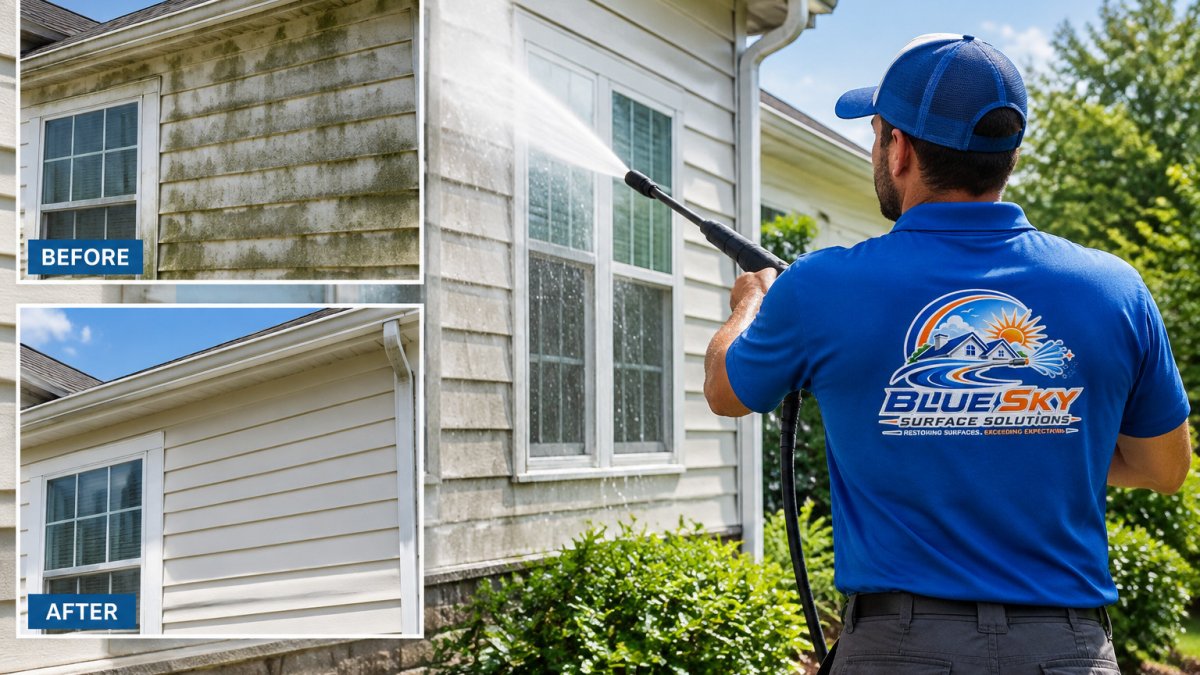
Your home's exterior takes a beating. Weather, dirt, algae, and mildew accumulate over months and years, gradually dulling your property's appearance and potentially damaging surfaces. Professional house washing in fishers in Indiana restores that curb appeal and protects your investment.
A clean exterior isn't just about looks. Algae and mold growth can compromise siding integrity, while dirt buildup traps moisture against surfaces. Professional house washing removes these threats before they become costly repairs. Regular exterior cleaning extends the life of siding, roofing, and other surfaces.
The difference between a well-maintained home and a neglected one is visible from the street. When you're ready to sell, that first impression matters. When you're staying put, you deserve to enjoy your property looking its best year-round.
House Washing Benefits: Protecting Your Investment
House washing does more than improve curb appeal. It's preventative maintenance that saves money over time.
Protects surfaces from deterioration. Dirt, algae, and mildew trap moisture against siding, gutters, and trim. This moisture accelerates decay and creates conditions for rot. Removing these contaminants keeps water from pooling where it shouldn't.
Extends the life of exterior materials. Siding, roofing, and trim last longer when they're not constantly exposed to biological growth and environmental grime. A clean surface is a protected surface.
Improves property value. A well-maintained exterior signals that the entire home is cared for. Whether you're selling or refinancing, a clean property commands better offers and terms.
Prevents costly repairs. Addressing surface dirt and algae now costs far less than replacing compromised siding or repairing water damage later. Regular house washing in Fishers, Indiana is an investment that pays dividends.
Enhances safety. Algae and mold on decks, patios, and walkways create slip hazards. Removing these contaminants makes your property safer for family and guests.
Soft Washing for Houses: When and Why It's the Right Choice
Not every surface can handle high-pressure water. Soft washing is a gentler alternative that uses lower pressure combined with specialized cleaning solutions to safely remove dirt, algae, and mildew.
Soft washing works best on delicate surfaces. Older siding, composite materials, painted trim, and stucco can be damaged by pressure washing. Soft washing cleans these surfaces without risk of gouging, splintering, or stripping paint.
It's more effective on biological growth. Algae and mold are living organisms. High pressure blasts them away temporarily, but soft washing solutions kill them at the root, preventing faster regrowth. The cleaning lasts longer.
Soft washing is safer for your landscape. Pressure washing can damage plants, wash away mulch, and harm soil. Soft washing uses lower pressure and biodegradable solutions, making it gentler on your landscaping.
It reaches difficult areas. Soft washing solutions can be applied to gutters, roof edges, and other hard-to-reach spots without the risk of pressure washing damage.
When you're choosing between pressure washing house siding and soft washing, the material matters. Newer, harder surfaces like concrete and brick can handle pressure. Older siding, stucco, and composite materials need the gentler soft washing approach. Blue Sky Surface Solutions evaluates each surface and recommends the right method for your home.
Pressure Washing House Siding: Method, Safety, and Results
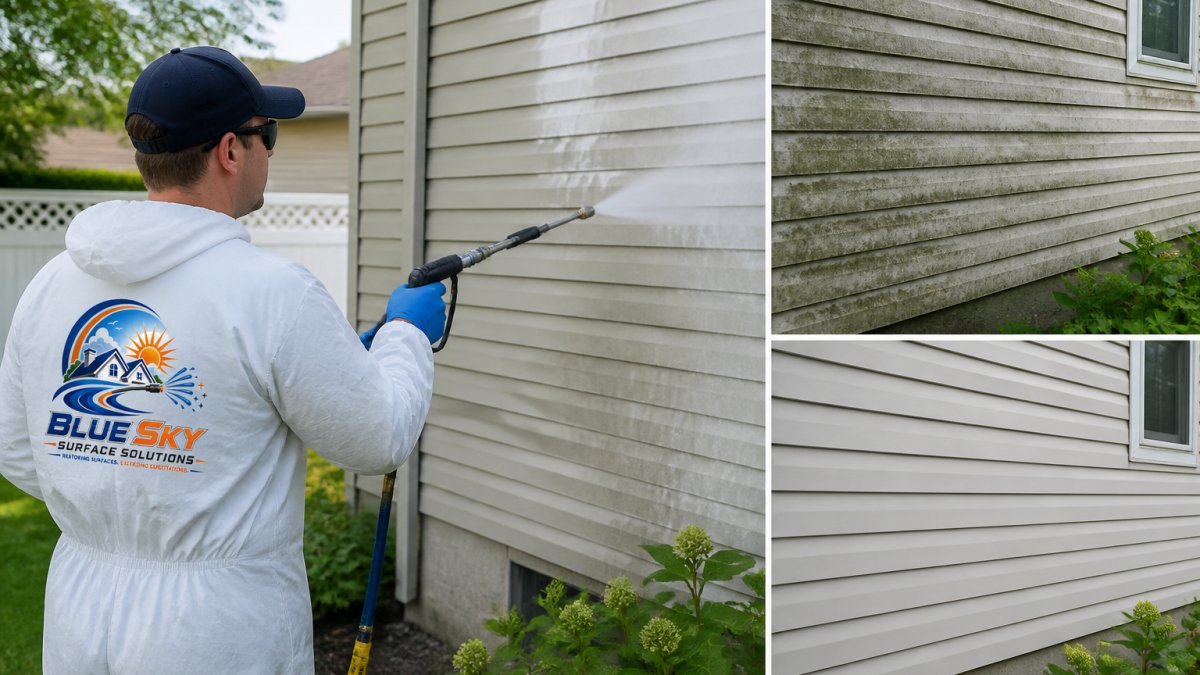
Pressure washing uses high-velocity water to blast away dirt, grime, and surface contaminants. When done correctly on appropriate surfaces, it delivers dramatic results. When done incorrectly, it can cause damage.
The right pressure matters. Residential house washing typically uses 1,500-3,000 PSI (pounds per square inch). Too high, and you risk gouging wood or damaging siding. Too low, and you won't remove stubborn buildup. The surface type determines the right pressure level.
Technique prevents damage. Professional cleaners maintain proper distance from surfaces, use appropriate nozzles, and move methodically to avoid concentrated pressure on one spot. Rushing or holding the nozzle too close causes streaking, splintering, and permanent marks.
Safety equipment is non-negotiable. Protective eyewear, gloves, and proper footwear prevent injury. The operator controls a powerful tool, one slip can cause serious harm. Professional crews know how to handle equipment safely.
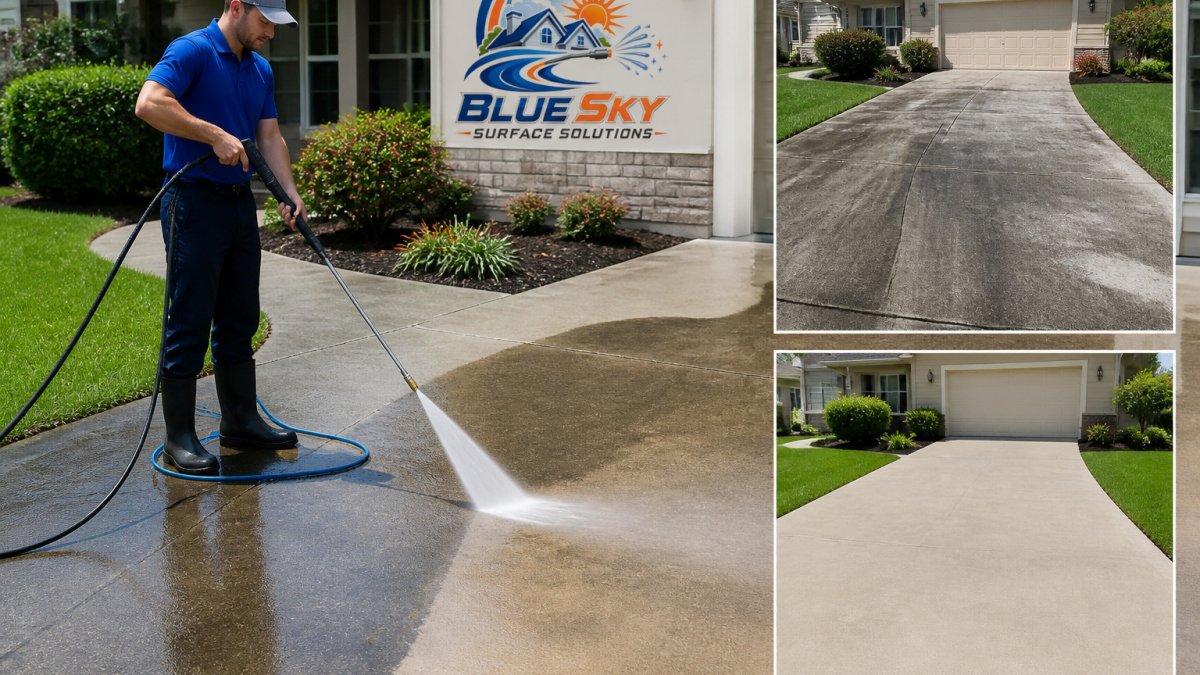
Results are immediate and visible. Pressure washing removes years of buildup in hours, which is why many homeowners choose house washing in fishers in Indiana when surfaces can handle it. Siding brightens, concrete looks new, and the entire property transforms. The visual impact is one reason homeowners choose this method for house washing in Fishers, Indiana when surfaces can handle it.
Blue Sky Surface Solutions handles the technical details so you don't have to. We assess your siding material, select the appropriate pressure level, and deliver clean results without damage.
How Often to Wash a House: A Seasonal Schedule
Frequency depends on what your exterior is exposed to. A few patterns hold across most properties, and understanding the drivers helps you time a wash instead of guessing.
What actually drives buildup. Three factors do most of the work: shade, moisture, and organic food sources. North-facing walls and sides under heavy tree canopy stay damp longer, which lets algae and mildew establish faster. Homes near ponds, creeks, or irrigated lawns see more airborne moisture. And trees that drop pollen, sap, or seed pods feed the growth directly.
A practical baseline. Most single-family homes benefit from one thorough wash per year. Treat that as a starting point, then adjust:
| Condition | Typical Frequency |
|---|---|
| Standard suburban lot, mixed sun and shade | Once annually |
| Heavy shade, mature canopy, or near water | Every 6-9 months |
| Driveways, patios, walkways (horizontal, high traffic) | Twice yearly or more |
| Open, sunny lot with good drainage and airflow | Every 12-18 months |
Seasonal timing that works. Late spring is the most common window: winter has finished depositing road film and debris, pollen has settled, and you get ahead of summer humidity that accelerates growth. Early fall is the second-best window, clearing summer buildup before winter.
Horizontal surfaces run on a different clock. Driveways, patios, and walkways collect dirt, pollen, and tire film far faster than vertical siding. They also show it more. Plan on twice yearly for a busy driveway, and spot-treat oil or rust stains as they appear rather than waiting for the next full wash.
Before the crew arrives. Clear vehicles from the driveway, move patio furniture and grills off the wash area, close windows, and cover or move anything fragile near the foundation. Trim back any plant material touching the siding so the crew can clean behind it. Let the provider know about outdoor outlets, hose bibs, and any recently painted or stained surfaces.
After the wash. Give surfaces time to dry before judging the result, some brightening continues as residue rinses away. Check that downspouts are flowing and that landscaping was rinsed. If you notice a missed spot, most reputable providers will return within a short window to correct it; ask about that policy before booking.
The single best scheduling habit is to book the wash before you can see the buildup. Once algae is visible across a whole wall, it has had months to establish, and removal takes longer and costs more than routine maintenance.
Waiting too long between cleanings lets algae and mildew establish deeper in porous surfaces, making removal harder and more time-consuming. Regular maintenance prevents this buildup and keeps your property looking better year-round.
If you're unsure where your home falls on this schedule, Blue Sky Surface Solutions will assess your lot, shade, and siding and recommend a realistic interval, no guesswork, no upselling.
What to Look for in a Professional House Washing Service
Most homeowners compare house washing quotes on price alone. A better approach is to compare providers on a short, concrete checklist, and to ask the same questions of each one so the answers are actually comparable.
1. Ask how they'll clean each surface, and why. A professional should be able to tell you, before the job, which surfaces get soft washing and which get pressure, and what pressure range they'll use on your siding.
2. Confirm insurance in writing. Ask for a certificate of liability insurance and confirm it's current. This protects you if a crew member is injured or a surface is damaged. A legitimate company will provide it without hesitation.
3. Get a written, itemized estimate. The estimate should list the surfaces being cleaned, the method for each, what's included (rinsing landscaping, gutter face cleaning, etc.), and what's excluded. Verbal quotes and one-line prices make it impossible to compare bids fairly.
4. Ask what detergents they use and how they protect landscaping. Soft washing relies on cleaning solutions, so ask what's being applied, how plants and grass are protected, and how runoff is managed.
5. Ask about their guarantee and their return policy. What happens if a spot is missed or a stain doesn't come out?
6. Check references for homes like yours. Reviews are useful, but ask for references from properties with similar siding, age, and shade conditions. A company that has cleaned homes like yours knows the local buildup patterns and how to handle them.
7. Look at equipment and crew size. Commercial-grade equipment, proper hoses and nozzles, and a crew sized to the job all affect results and safety.
8. Ask about scheduling and weather policy. Exterior washing depends on weather. Ask how they handle rain delays, how far out they're booked, and whether they'll reschedule without penalty.
The best defense against a bad wash is a written estimate that names the method for each surface, proof of insurance, and a stated guarantee. If a provider won't put those in writing, keep looking.
Blue Sky Surface Solutions welcomes these questions. We'll walk your property, explain the method for each surface, and put the scope in writing before any work begins.
Frequently Asked Questions
How often should you have your house washed?
Most homes benefit from house washing once per year, though this depends on your local climate, tree coverage, and exposure to dirt and algae. Homes near water or in humid areas may need cleaning twice yearly. A professional can assess your property and recommend a schedule that keeps your exterior looking clean while preventing buildup that can damage surfaces.
What is the difference between soft washing and pressure washing?
Soft washing uses low-pressure water mixed with specialized cleaning solutions to safely remove algae, mold, and mildew from delicate surfaces like vinyl siding, stucco, and shingles. Pressure washing applies high-pressure water jets to remove stubborn stains from concrete, driveways, and hard surfaces. Soft washing is gentler and prevents damage to painted or fragile materials, while pressure washing tackles tougher buildup on durable surfaces.
Can pressure washing damage siding?
Yes, excessive pressure can damage vinyl siding, wood, and other delicate materials. Professional house washing services know the correct pressure settings and techniques for each surface type. This is why soft washing is often recommended for siding, while pressure washing works better for concrete and driveways. Hiring experienced professionals protects your home from costly damage.
Is house washing worth the investment?
House washing delivers real value by extending the life of your exterior surfaces, improving curb appeal, and preventing damage from algae and mold growth. Regular cleaning protects your investment and can help maintain property value. Professional services save you time and ensure the job is done safely and effectively, making it a worthwhile expense for most homeowners.